
Plague: A Comprehensive Review of Historical Perspectives, Contemporary Epidemiology, Pathophysiology, and Evidence-Based Management
1. Nishankulova Elnura
2. Ayush Singh
Mohd. Ayaaz
Abdullah Alim Khan
Malik Shoaib
Khan Kashish Haroon
Maryam Ashfaq
Md Fujail Ansari
Jamali Mohd Javed
(1. Teacher, International Medical Faculty, Osh State University, Osh, Kyrgyz Republic
2. Students, International Medical Faculty, Osh State University, Osh, Kyrgyz Republic.)
Abstract
Plague, caused by the gram-negative bacterium Yersinia pestis, remains a persistent zoonotic threat with pandemic potential, disproportionately affecting populations in Madagascar and the Democratic Republic of the Congo while maintaining enzootic foci across Asia, Africa, and the Americas. This review examines the contemporary understanding of plague, integrating recent advances in epidemiological surveillance, pathophysiological mechanisms, diagnostic methodologies, and therapeutic interventions. A comprehensive literature search was conducted focusing on publications from 2017 to 2025, with particular emphasis on the landmark 2025 IMASOY randomized controlled trial and updated World Health Organization guidelines. The analysis reveals that plague manifests in three principal clinical forms: bubonic, septicemic, and pneumonic with untreated mortality ranging from 30% to 60% for bubonic plague and approaching 100% for pneumonic and septicemic forms. The recent IMASOY trial demonstrated that oral ciprofloxacin monotherapy for ten days is noninferior to sequential injectable aminoglycoside followed by ciprofloxacin for bubonic plague, with both regimens achieving approximately 90% efficacy and 4% case fatality rates substantially lower than the 23% mortality observed among non-trial patients in the same setting. Antimicrobial resistance remains uncommon in naturally occurring strains, though historical and contemporary concerns regarding engineered resistance for bioterrorism applications persist. Prevention strategies focus on flea and rodent control, chemoprophylaxis for exposed contacts, and pending further development of vaccination for high-risk populations. Early recognition, immediate empirical antibiotic therapy, and robust public health infrastructure remain essential to reducing the substantial mortality attributable to this ancient yet persistent pathogen.
Introduction
The “Plague” isn’t just a word, it’s a reminder of some of the darkest moments in human history. You hear it, and your mind goes straight to the Black Death, when a third of Europe died in the fourteenth century and nothing was ever quite the same afterwards. But the story doesn’t end back then. Plague is still around. It’s a living problem, especially in places where resources are scarce and the ancient trio: rodents, fleas, humans keep its cycle going.
Yersinia pestis, the bacterium behind all this trouble, was first identified by Alexandre Yersin and Shibasaburo Kitasato in Hong Kong in 1894, working separately. It’s incredibly resilient, still lurking in animal populations across continents and reappearing from time to time to spark anything from isolated cases to major outbreaks.
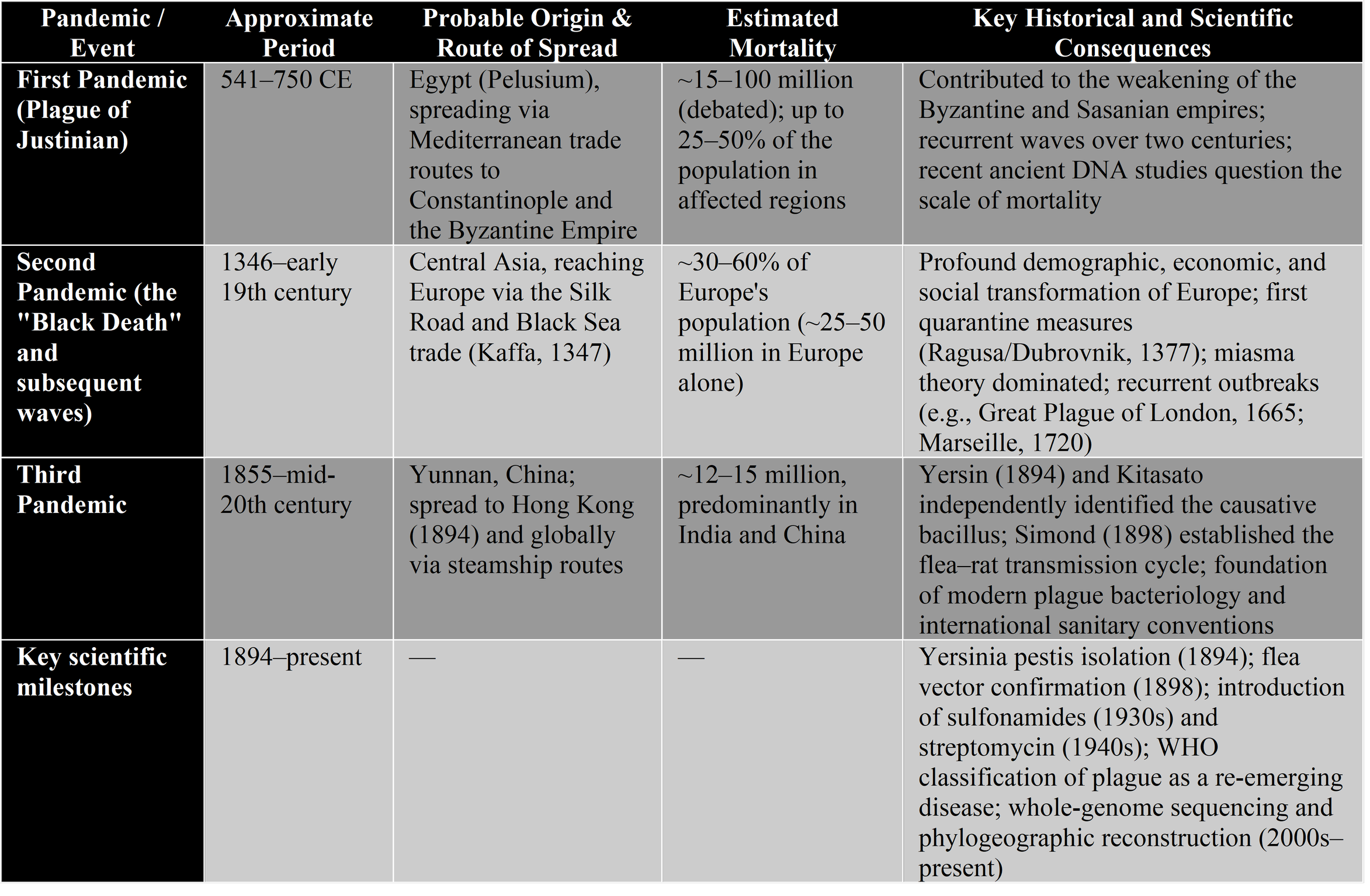
Today, plague sits in this weird spot: we’ve made huge strides to control it, but it’s not gone. Better sanitation, housing, and controlling fleas have wiped it out in lots of places, but the disease hangs on in around 20 countries. The Democratic Republic of the Congo and Madagascar get the brunt of it, with most cases reported between 2019 and 2025. Every year, the World Health Organization gets reports of a few hundred cases, probably more, since many outbreaks happen in remote places where surveillance is limited. So, nobody really knows the true scale, but given how fast pneumonic plague can spread, it’s still on the list of diseases that require urgent reporting to global health authorities. On the molecular level, scientists have figured out a lot about how plague works. Yersinia pestis packs some nasty weapons: a type III secretion system that injects proteins directly into host cells, and the plasminogen activator Pla, which helps it spread. These make it tough for the body’s defenses to fight off, leading to three main forms: bubonic (with painful, swollen lymph nodes), septicemic (a full-blown sepsis that moves fast), and pneumonic (a rapidly worsening pneumonia). Each has its own implications for patients and public health.
Antibiotics changed how plague is treated, but hurdles remain. A landmark study by the IMASOY trial, published in the New England Journal of Medicine, finally gave us solid evidence on treatments. Turns out, oral ciprofloxacin alone works just as well as the older, more complicated regimen using injectable aminoglycosides followed by ciprofloxacin. This is huge: it means simpler and cheaper treatments, which is a game-changer for remote or poor areas. This review dives into everything plague-related: what makes Yersinia pestis tick, how it causes disease, where outbreaks happen, what symptoms to look for, how to diagnose it, the latest on effective treatments, and how to prevent both natural outbreaks and potential bioterrorism. The goal is to showcase the real progress we’ve made and also the stubborn challenges that are still out there, pushing us to stay alert and keep pressing forward.
Methods
A comprehensive literature search was conducted to identify relevant publications addressing plague from clinical, epidemiological, microbiological, and public health perspectives. The search encompassed databases including PubMed, MEDLINE, and the Cochrane Library, with primary focus on literature published between January 2017 and October 2025 to ensure inclusion of contemporary guidelines and emerging evidence. Search terms incorporated "plague," "Yersinia pestis," "bubonic plague," "pneumonic plague," "septicemic plague," "antimicrobial treatment," "ciprofloxacin," "gentamicin," "epidemiology," "Madagascar," "Democratic Republic of Congo," "diagnosis," "prevention," and "bioterrorism."
Inclusion criteria prioritized original research articles, randomized controlled trials, systematic reviews, clinical practice guidelines, and surveillance reports from authoritative sources including the World Health Organization, Centers for Disease Control and Prevention, and peer-reviewed scientific journals. The methodological framework emphasized evidence-based guidelines including the WHO guidelines for plague management, the CDC's antimicrobial treatment and prophylaxis recommendations, and the landmark IMASOY trial published in the New England Journal of Medicine in 2025. Particular attention was directed toward studies characterizing treatment outcomes, antimicrobial susceptibility patterns, diagnostic methodologies, and implementation challenges in endemic settings.
The analysis synthesized data from multiple study designs, acknowledging the inherent challenges of plague research including the rarity of cases in many settings, the emergency context of outbreak investigations, ethical constraints on randomized trials during public health emergencies, and the remote locations where many cases occur. Where evidence was limited or conflicting, findings were interpreted with appropriate caveats regarding the certainty of conclusions.
Results
Microbiology and Molecular Pathogenesis
Yersinia pestis is a gram-negative, non-motile coccobacillus. It’s part of the Enterobacteriaceae family and does well without oxygen if needed. When you look at it under the microscope with Wright or Giemsa stain, it shows a classic “safety pin” pattern, something lots of lab techs notice right away when checking clinical samples. In culture, Y. pestis grows into small colonies, usually grey-white to yellow, that look kind of like hammered copper after a couple days at 28°C. It doesn’t ferment lactose, is urease and oxidase negative, and these traits make it stand out from its Enterobacteriaceae cousins.
Digging into its genetics, Y. pestis has one chromosome (about 4.6 megabases) and three plasmids crucial for its nasty reputation. First, there’s pCD1 (or pYV), which packs the instructions for the type III secretion system which basically is a molecular syringe. Then you’ve got pMT1 (or pFra), responsible for the murine toxin and the F1 capsule. Lastly, there’s pPCP1 (or pPla), which carries the gene for the Pla plasminogen activator. Picking up these plasmids, along with changes in the chromosome that knocked out some old genes, turned Y. pestis into something very different from its ancestor, Yersinia pseudotuberculosis. This transformation happened somewhere between 1,500 and 20,000 years ago.
The type III secretion system is key to Y. pestis causing disease. This “syringe” injects a bunch of Yops (Yersinia outer proteins) straight into host cells. Yops mess with the immune system, stopping phagocytosis, blocking cytokine production, and triggering cell death. For example, YopH is a protein tyrosine phosphatase that disrupts phagocytic signaling and focal adhesions. YopE, YopT, and YopO wreck the actin cytoskeleton, while YopJ (or YopP in some strains) is an acetyltransferase that shuts down critical inflammatory pathways, helping Y. pestis kill macrophages.
The F1 capsule antigen (made thanks to pMT1) builds a thick capsule around the bacterium, so neutrophils and macrophages can’t gobble it up. This capsule shows up mostly at 37°C, which tells you it’s tuned to thrive in mammals. The F1 antigen matters for immunity as antibodies against it can protect you, and it’s used both for diagnosis and vaccine development. The caf1 gene cluster controls F1 production, turning it on or off depending on temperature.
Pla, coded by the pPCP1 plasmid, is another power move. It’s a surface protease that turns plasminogen into plasmin further helping Y. pestis break through tissues and spread around. Pla also breaks down complement proteins and the extracellular matrix, giving the bacteria more room to invade. Getting this plasmid was a game changer; it helped Y. pestis shift from gut infections to being carried by fleas and causing systemic disease.
Speaking of fleas, Y. pestis is built to survive in the oriental rat flea, Xenopsylla cheopis. After a flea drinks infected blood, the bacteria make a biofilm in the flea’s proventriculus, which blocks blood flow. When the flea bites again, it regurgitates bacteria into its new host. This “blocked flea” effect isn’t strictly required for transmission, but it makes it much easier for Y. pestis to hitch a ride. The bacterium also uses the flea’s feeding habits and hemin storage to hang on between meals, keeping its transmission cycle going.
Epidemiology and Transmission Dynamics
Plague remains endemic in approximately 20 countries across Africa, Asia, and the Americas, with the majority of human cases reported from Madagascar and the Democratic Republic of the Congo. During 2019-2025, these two countries accounted for most cases reported to the World Health Organization, with Madagascar experiencing annual seasonal outbreaks and the Democratic Republic of the Congo reporting cases from endemic foci in the eastern provinces. Other countries reporting cases include Peru, China, India, Mongolia, and the United States, where sporadic cases occur primarily in the western states.
The transmission of plague involves complex interactions between the bacterium, flea vectors, and mammalian hosts. The enzootic cycle involves maintenance hosts, typically resistant rodent species such as voles and gerbils, and their fleas. Epizootics occur when susceptible rodent species, including rats and mice, become infected, experiencing high mortality and creating opportunities for fleas to seek alternative hosts, including humans. The transition from enzootic to epizootic to human involvement depends on ecological factors including rodent population dynamics, flea abundance, and environmental conditions.
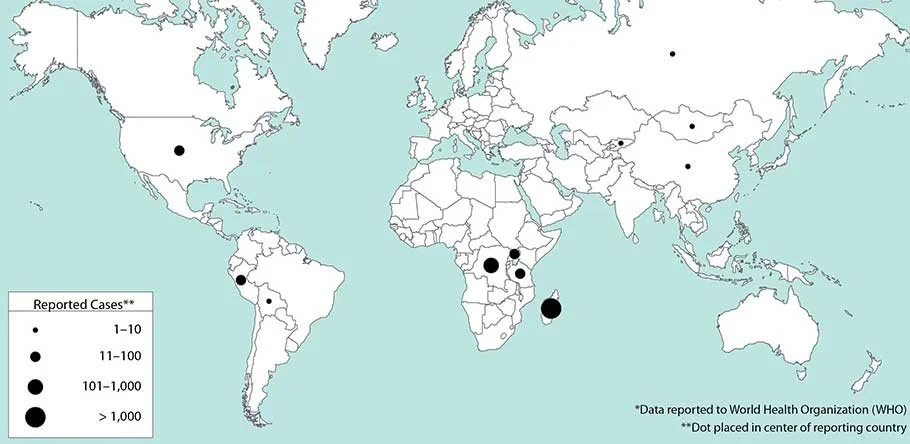
(Fig.1 Distribution of plague cases, worldwide. Data from WHO.)
People usually get infected with plague in three main ways. Bubonic plague shows up after an infected flea bites someone and the bacteria get into the skin and travel to nearby lymph nodes. Handling animal carcasses or coming in contact with infected tissues and fluids can also lead to bubonic or septicemic plague, especially if someone has cuts or scrapes. Pneumonic plague is a bit different. It sometimes develops as a complication from bubonic or septicemic plague, but more often people catch it by breathing in droplets from someone or even an animal with pneumonic plague. That last way spreads fast and is why pneumonic plague can turn into major outbreaks.
Take Madagascar, for example. The country deals with outbreaks every year during the rainy season, September through April. Most cases pop up in the central highlands, where wild rodents keep the plague circulating. Plague can flare up in cities too, like in 2017, when a huge epidemic erupted, leading to over 2,400 cases and 200 deaths. That outbreak hit hard because so many cases were pneumonic, and the crowded cities made it tough to control. The world had to step in to help keep things from getting worse.
Over in the US, plague hangs around in pockets across the western states. On average, about seven people get it each year, mostly in rural areas, after run-ins with infected rodents or fleas. Thankfully, quick medical care makes a big difference, so the disease rarely turns deadly here. Advanced healthcare and strong public health systems really help keep the risk low.
Clinical Manifestations
The clinical presentation of plague depends on the route of infection and host response, with three principal forms recognized: bubonic, septicemic, and pneumonic. The incubation period typically ranges from one to seven days for bubonic plague and one to three days for pneumonic plague, reflecting the more direct route of infection and rapid progression of the respiratory form.
Bubonic plague, the most common form, presents with sudden onset of fever, chills, headache, and profound malaise, followed within hours by the development of painful lymphadenopathy. The affected lymph nodes, termed buboes, are typically located in the groin, axilla, or cervical region depending on the site of the flea bite. Buboes are characterized by extreme tenderness, with pain so severe that patients often adopt positions that minimize pressure on the affected area. The overlying skin is usually warm and erythematous but without the fluctuance typical of pyogenic abscesses. Without treatment, bubonic plague progresses to septicemic plague in a substantial proportion of cases, with mortality historically reaching 50% or higher.
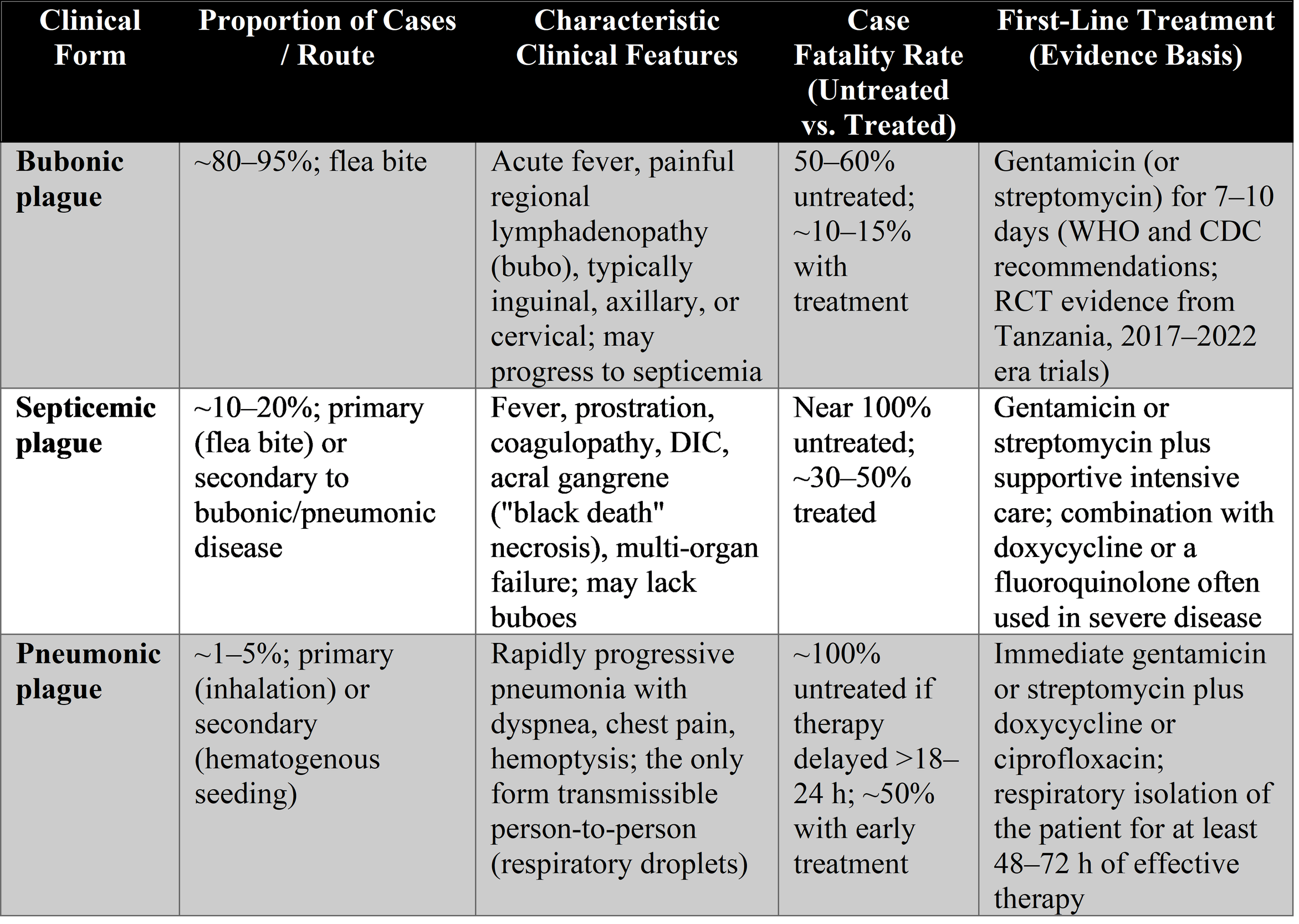
Septicemic plague presents as a fulminant gram-negative sepsis without preceding lymphadenopathy in many cases. Clinical features include high fever, tachycardia, hypotension, altered mental status, and evidence of disseminated intravascular coagulation including purpura, petechiae, and acral gangrene. The latter manifestation, historically termed "black death" for the necrotic discoloration of extremities, reflects the microvascular thrombosis and tissue ischemia induced by bacterial endotoxin. Septicemic plague carries the highest mortality of all forms, approaching 100% without treatment and remaining substantial even with appropriate antibiotic therapy when diagnosis is delayed.
Pneumonic plague, the most immediately life-threatening form, presents with sudden onset of fever, headache, weakness, and rapidly progressive respiratory symptoms including cough, chest pain, dyspnea, and hemoptysis. The pneumonia is typically severe, with radiographic evidence of consolidation and pleural effusion. Without treatment, death occurs within 18 to 24 hours of symptom onset in many cases, and the disease can be fatal even with treatment when initiated late. The potential for person-to-person transmission through respiratory droplets makes pneumonic plague a public health emergency requiring immediate isolation, contact tracing, and chemoprophylaxis.
Additional clinical forms include pharyngeal plague, following ingestion of contaminated food or water, presenting with severe pharyngitis and cervical lymphadenitis; and ocular plague following direct inoculation of the eye. These forms are rare but important to recognize in appropriate epidemiological contexts.
Diagnosis
You need to stay alert for plague, especially in places where it’s common or when someone has risk factors like recent travel to those areas, contact with rodents or fleas, or handling sick or dead animals. Bubonic plague can look a lot like other causes of swollen lymph nodes, including staph and strep infections, cat-scratch disease, tularemia, or lymphogranuloma venereum. Pneumonic plague also overlaps with other severe lung infections like bacterial and viral pneumonia or even inhalational anthrax.
To confirm plague, lab tests help a lot. If you do a Gram stain of samples, whether it’s from a bubo, sputum, or blood, you can spot the classic bipolar-staining, gram-negative coccobacilli. That’s a big clue, but it’s not enough. Culturing Y. pestis on blood agar, MacConkey, or specialized media like CIN agar gives a definite answer. You’ll see colonies after about two or three days, and then confirm the bug through biochemical tests, bacteriophage lysis, or antigen detection.
If you need a quick answer, immunochromatographic lateral flow tests that pick up the F1 capsular antigen are a good option. The World Health Organization recommends them in areas where plague pops up or during outbreaks. You can run these tests on different samples, and they work fast results in about 15 minutes. They’re pretty accurate, though really early infections sometimes slip through before enough antigen appears.
Serology checking for antibodies against the F1 antigen helps confirm the diagnosis after the fact. If you see a big jump in antibody levels between early and late blood samples, that clinches it. Molecular methods like PCR are another powerful tool. They zoom in on genes such as pla, caf1, and 3a, giving you a rapid, specific ID for Y. pestis DNA. This is great for samples where the bacteria aren’t alive anymore and really helps confirm what you found in cultures.
It’s important that any work with suspected plague bacteria happens under strict biosafety conditions. Handling cultures demands Biosafety Level 2 or 3, depending on what you’re doing. Make sure lab staff know there’s a risk, so everyone follows safety steps and takes extra care with the samples.
Treatment
The management of plague requires immediate initiation of appropriate antibiotic therapy upon clinical suspicion, without waiting for laboratory confirmation. The rapid progression of the disease, particularly the pneumonic and septicemic forms, leaves no window for delay. The choice of antibiotic, route of administration, and duration of therapy depend on the clinical form, severity of illness, patient characteristics, and local antimicrobial susceptibility patterns.
The recent publication of the IMASOY trial represents a landmark achievement in plague therapeutics, providing the first rigorous randomized controlled evidence comparing treatment regimens. This open-label, noninferiority trial conducted in Madagascar between 2020 and 2024 enrolled 450 patients with clinically suspected bubonic plague, of whom 222 were laboratory-confirmed. Patients were randomized to receive either oral ciprofloxacin 500 mg twice daily for ten days or injectable aminoglycoside (gentamicin) for three days followed by oral ciprofloxacin for seven days. The primary endpoint was treatment failure at day 11, defined as death, persistent fever, development of secondary pneumonic plague, or requirement for alternative or prolonged treatment.
The trial demonstrated that ciprofloxacin monotherapy was noninferior to the sequential aminoglycoside-ciprofloxacin regimen, with treatment failure occurring in 13.5% of patients in the ciprofloxacin group versus 14.4% in the sequential group, yielding a risk difference of -0.9 percentage points with a 95% confidence interval well within the noninferiority margin of 15 percentage points. Both regimens were highly effective, with overall efficacy of approximately 90% and case fatality rate of only 4% among trial participants. This contrasts dramatically with the 23% case fatality rate observed among bubonic plague patients outside the trial sites during the same period, highlighting the life-saving impact of structured treatment protocols and clinical trial participation.
The implications of the IMASOY trial extend beyond the specific findings to the broader challenge of generating evidence for rare diseases. The trial demonstrates that rigorous clinical research is feasible even in resource-limited, remote settings where plague is endemic, provided appropriate infrastructure, training, and community engagement are established. The simplicity of the oral ciprofloxacin regimen in eliminating the need for injections, hospitalization, and the associated costs and logistical challenges which offers particular advantages for treatment in peripheral health facilities and for patients who cannot remain hospitalized.
The World Health Organization guidelines for plague management recommend streptomycin or gentamicin as first-line treatment for severe plague, with ciprofloxacin, doxycycline, and chloramphenicol as alternatives. For bubonic plague without severe manifestations, oral ciprofloxacin or doxycycline are recommended. The CDC guidelines similarly recommend gentamicin and fluoroquinolones as first-line options in the United States, with doxycycline and streptomycin as alternatives. Chloramphenicol is preferred for plague meningitis due to its superior central nervous system penetration.
The duration of antibiotic therapy for plague is typically 10 to 14 days, though the IMASOY trial demonstrated efficacy of a 10-day course for bubonic plague. Treatment should be extended for patients with persistent fever or other concerning signs. Supportive care including fluid resuscitation, vasopressor support for septic shock, and management of complications is essential, particularly for septicemic and pneumonic plague.
Prevention and Control
The prevention of plague requires a multifaceted approach addressing the enzootic cycle, human exposure, and epidemic response. Vector control through insecticide application to rodent burrows and domestic environments reduces flea populations and the risk of transmission to humans. Rodent control, while important, must be implemented carefully to avoid the "flea escape" phenomenon where killing rodents before fleas causes the fleas to seek alternative hosts, potentially increasing human exposure. The World Health Organization recommends flea control before rodent control in outbreak settings.
Chemoprophylaxis is indicated for persons with close contact with pneumonic plague patients, including household members and healthcare workers exposed without appropriate personal protective equipment. Post-exposure prophylaxis with doxycycline, ciprofloxacin, or trimethoprim-sulfamethoxazole for seven days reduces the risk of secondary cases. Pre-exposure prophylaxis is not routinely recommended but may be considered for high-risk groups including laboratory personnel working with Y. pestis and healthcare workers in endemic areas during outbreaks.
Vaccination against plague has a long history, with killed whole-cell vaccines used in the past but discontinued due to reactogenicity and incomplete protection, particularly against pneumonic plague. As of 2025, more than 20 candidate plague vaccines are in development, including subunit vaccines targeting the F1 and V antigens, live-attenuated vaccines, and vectored vaccines. The World Health Organization does not currently recommend vaccination except for high-risk groups, pending the availability of vaccines with demonstrated efficacy against pneumonic plague.
Surveillance for plague requires integration of human and animal health monitoring, with early detection of rodent die-offs providing warning of epizootic activity and potential human risk. Community education regarding the risks of handling sick or dead animals, the importance of flea control, and the need for prompt medical attention for febrile illness is essential. Healthcare worker training regarding the clinical recognition of plague, appropriate infection control measures, and the importance of immediate treatment can substantially reduce mortality.
The bioterrorism dimension of plague requires continued attention. Yersinia pestis is classified as a Category A bioterrorism agent by the CDC due to its potential for aerosol dissemination, person-to-person transmission of pneumonic plague, high mortality, and capacity to cause public panic. Preparedness efforts include stockpiling of antibiotics, development of rapid diagnostic methods, and maintenance of surveillance systems capable of detecting unusual clusters of pneumonia that might indicate an intentional release.
Discussion
The contemporary landscape of plague reflects both the remarkable progress achieved through scientific understanding and the persistent challenges of addressing a zoonotic disease maintained in complex ecological cycles. The identification of Y. pestis as the causative agent, the elucidation of its transmission cycle, and the development of effective antimicrobial therapy represent triumphs of medical science. Yet the continued occurrence of cases and outbreaks, particularly in resource-limited settings, demonstrates the gap between technical capability and practical implementation.
The IMASOY trial represents a watershed moment in plague research, demonstrating that rigorous randomized controlled trials are feasible even for rare diseases in challenging settings. The finding that oral ciprofloxacin monotherapy is noninferior to injectable aminoglycoside-based therapy has immediate practical implications, offering a simpler, cheaper, and more accessible treatment option that can be deployed in peripheral health facilities. The trial also highlights the dramatic mortality reduction achievable through structured treatment protocols, with trial participants experiencing 4% mortality compared to 23% among non-participants in the same setting.
The antimicrobial resistance situation in Y. pestis remains favorable compared to many bacterial pathogens, with naturally occurring strains generally susceptible to recommended agents. However, the historical precedent of antibiotic-resistant strains being developed for bioterrorism purposes, and the theoretical possibility of resistance emerging through horizontal gene transfer from other Enterobacteriaceae, warrant continued surveillance. The development of resistance would severely compromise treatment options, particularly given the limited number of effective agents and the rapid progression of the disease.
The diagnostic challenges of plague in endemic settings remain substantial. The reliance on clinical suspicion, the limited availability of laboratory confirmation in remote areas, and the overlap of symptoms with other febrile illnesses create opportunities for missed or delayed diagnosis. The development and deployment of rapid diagnostic tests, as recommended by the World Health Organization, offer promise for improving early detection and treatment initiation. However, these tests require appropriate training, quality control, and integration into clinical algorithms to achieve their potential impact.
The vaccine development pipeline, while active, has yet to produce a licensed vaccine offering reliable protection against pneumonic plague. The historical killed whole-cell vaccines provided some protection against bubonic plague but not against the pneumonic form, limiting their utility for outbreak control and bioterrorism preparedness. The development of subunit vaccines targeting F1 and V antigens has shown promise in animal models, but human efficacy data are lacking. The challenge of demonstrating vaccine efficacy for a rare disease, where traditional phase III trials are impractical, requires innovative approaches including the use of surrogate endpoints and the Animal Efficacy Rule.
The ecological dimensions of plague transmission demand continued research. The factors triggering epizootics, the role of climate and environmental change in altering transmission dynamics, and the potential for plague to emerge in new regions or re-emerge in areas where it has been controlled are incompletely understood. The integration of ecological modeling, remote sensing, and field surveillance could enhance predictive capacity and enable targeted prevention efforts.
1. Global case burden in the second decade of the 21st century. From 2010 through 2019, the six leading countries reporting human plague to the WHO: Madagascar, the Democratic Republic of the Congo, Uganda, Peru, Tanzania, and the United States together recorded a combined total of 4,547 cases, of which 786 (17%) were fatal. Madagascar alone accounted for 3,396 cases and 652 deaths, followed by the DRC with 892 cases and 101 deaths. This is the most recent complete decade-level dataset and works well as a headline figure for your epidemiology section.
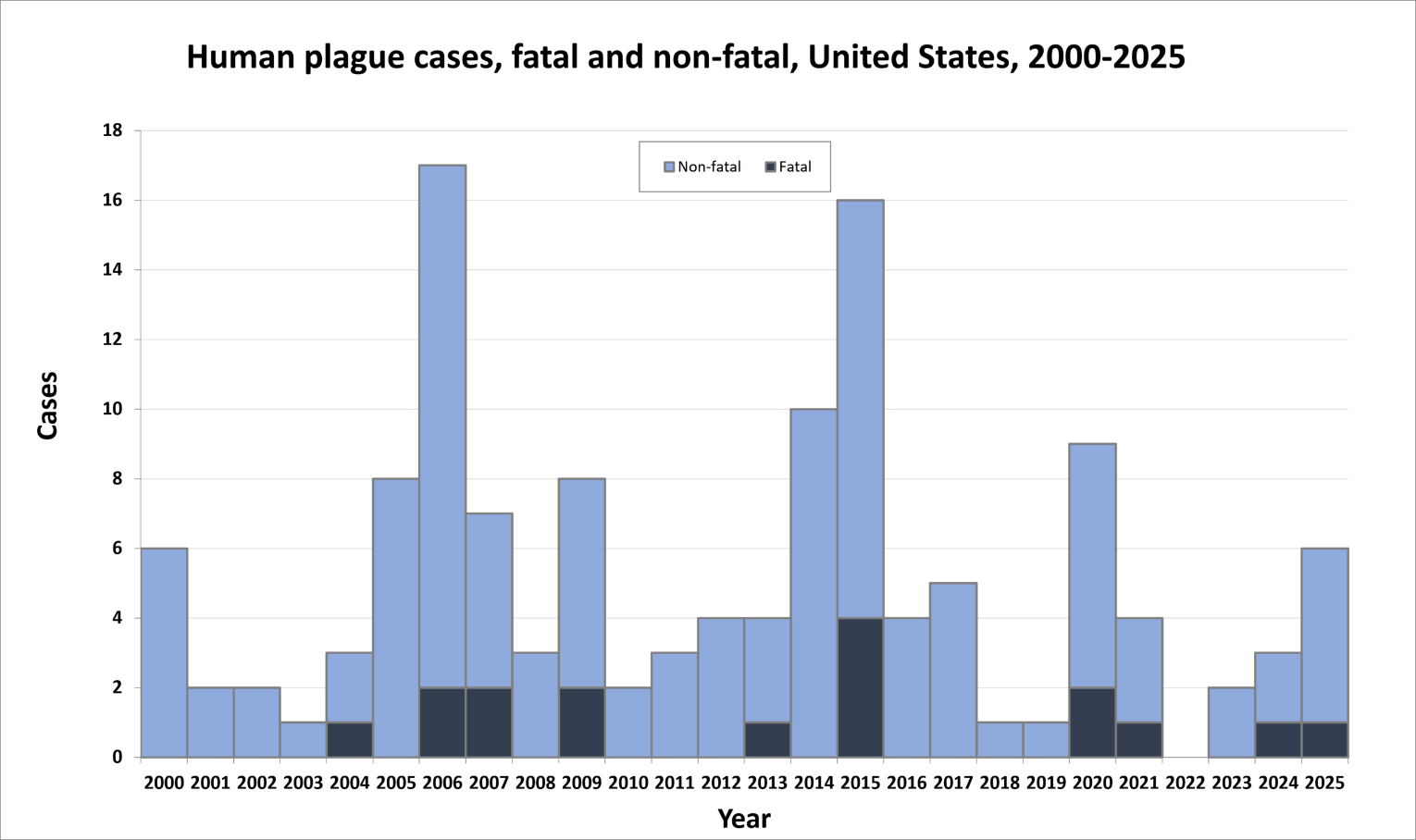
(Fig.2 Graph of human plague cases showing fatal and non-fatal outcomes, United States, 2000-2025.)
2. The 2017 Madagascar urban pneumonic outbreak. Between August and December 2017, Madagascar experienced the largest pneumonic plague outbreak of the modern era, with 2,348 confirmed, probable, and suspected cases and 202 deaths (case-fatality rate 8.6%). Notably, pneumonic cases (~1,100) outnumbered bubonic cases, and the outbreak spread to urban centers including Antananarivo and the port of Toamasina, affecting 114 districts, a marked departure from the usual rural pattern.
The human dimension of plague must not be forgotten amid the scientific and public health considerations. For the rural communities in Madagascar, the Democratic Republic of the Congo, and other endemic regions where plague remains a reality, the disease represents not merely a medical diagnosis but a threat to livelihoods, a source of fear and stigma, and a reminder of the persistent inequalities that leave certain populations vulnerable to ancient scourges. The mothers who carry their feverish children for hours to reach health facilities, the farmers who encounter infected rodents in their fields, and the families who lose loved ones to a disease that should be readily treatable deserve our sustained attention and commitment.
Conclusion
Plague still poses a real threat, especially in places where it’s never fully gone away. Even though we have treatments that work, people keep dying in these regions. The IMASOY trial recently changed the game, showing that oral ciprofloxacin works just as well as injectable aminoglycosides for treating bubonic plague. That’s huge since it means treatment can get simpler and more available, which really matters where resources are tight.
But quick diagnosis, fast antibiotic treatment, and strong public health systems are still key if we want to save lives. We can’t let up on tracking outbreaks, improving diagnostics, developing vaccines, and learning how plague survives in its environment. People living with this risk are usually some of the world’s most vulnerable who serve not just medical advances, but real support from public health systems. They should have the same shot at good care and protection as anyone else.
References
Randremanana RV, et al. Ciprofloxacin versus Aminoglycoside–Ciprofloxacin for Bubonic Plague. N Engl J Med. 2025;392(24):2298-2309.
World Health Organization. Plague. Fact sheet. Geneva: WHO; 2025.
World Health Organization. WHO guidelines for plague management. Geneva: WHO; 2021.
Centers for Disease Control and Prevention. Clinical Care of Plague. Atlanta: CDC; 2024.
Nelson CA, Meaney-Delman D, Fleck-Derderian S, et al. Antimicrobial Treatment and Prophylaxis of Plague: Recommendations for Naturally Acquired Infections and Bioterrorism Response. MMWR Recomm Rep. 2021;70(RR-3):1-27.
Dillard RL, Saaybi S, Saaybi S. Plague (Yersinia pestis Infection). StatPearls. Treasure Island (FL): StatPearls Publishing; 2025.
Rajerison M, Andrianaivoarimanana V, Olliaro P. Plague. In: Farrar J, Hotez P, Junghanss T, et al., eds. Manson's Tropical Diseases. 24th ed. Philadelphia: Elsevier; 2024:447-454.
Bourner J, Andriamarohasina L, Salam A, Kayem ND, Randremanana R, Olliaro P. A systematic review of the clinical profile of patients with bubonic plague and the outcome measures used in research settings. PLoS Negl Trop Dis. 2023;17(11):e0011509.
World Health Organization. Manual for plague surveillance, diagnosis, prevention and control. Geneva: WHO; 2024.
London School of Hygiene and Tropical Medicine. Cost-effective treatment for bubonic plague shown to be highly effective and safe. London: LSHTM; 2025.
Apangu T, Griffith K, Abaru J, et al. Successful treatment of human plague with oral ciprofloxacin. Emerg Infect Dis. 2017;23(3):553-555.
Boulanger LL, Ettestad P, Fogarty JD, Dennis DT, Romig D, Mertz G. Gentamicin and tetracyclines for the treatment of human plague: review of 75 cases in New Mexico, 1985-1999. Clin Infect Dis. 2004;38(5):663-669.
Mwengee W, Butler T, Mgema S, Mhina G, Almasi Y, Bradley C, Formanik JB, Rochester CG. Treatment of plague with gentamicin or doxycycline in a randomized clinical trial in Tanzania. Clin Infect Dis. 2006;42(5):614-621.
World Organisation for Animal Health. Yersinia pestis (Plague). Paris: OIE; 2021.
National Emerging Special Pathogens Training and Education Center. Plague: What Healthcare Professionals Need to Know. Omaha: NETEC; 2026.
Washington State Department of Health. Plague Guideline. Olympia: WSDOH; 2025.
World Health Organization. Plague – Multi-country. Disease Outbreak News. Geneva: WHO; 2025.
Anisimov AP, Amoako KK. Treatment of plague: promising alternatives to antibiotics. Expert Rev Anti Infect Ther. 2012;10(5):561-564.
Sun W, Singh AK. Plague vaccine: recent progress and prospects. NPJ Vaccines. 2019;4:11.
Stenseth NC, Atshabar BB, Begon M, et al. Plague: past, present, and future. PLoS Med. 2008;5(1):e3.