
The Real-World Impact of Electrolyte Versus Plain-Water Rehydration on Core Body Temperature and Physical Output in Hot Environments
1. Sarfraz Alam
2. Prince Kumar
3. Rahul
4. Rakesh Kumar
5. Yrysbaev Erzamat Yrysbaevich
(1,2,3,4. Student, International Medical Faculty, Osh State University, Osh, Kyrgyz Republic
5. Lecturer, International Medical Faculty, Osh State University, Osh, Kyrgyz Republic.)
Abstract
Background: Rehydration during work or exercise in hot environments is commonly framed as a choice between plain water and electrolyte-containing beverages. Commercial messaging often implies that electrolyte drinks provide superior cooling and performance benefits. However, thermoregulation depends primarily on metabolic heat production, environmental heat gain, evaporative capacity, cardiovascular function, and hydration status. Beverage composition may influence fluid retention and substrate availability without necessarily altering core temperature.
Objective: This review evaluates whether electrolyte-containing rehydration provides clinically or functionally meaningful advantages over plain water for core body temperature, physical or occupational output, fluid retention, urine output, and safety during heat exposure.
Methods: A structured narrative review was conducted using PubMed/MEDLINE, scholarly literature indexes, reference lists, and publications from sports-medicine and occupational-health organisations. Searches were finalised on 27 October 2026. Priority was given to current guidelines, systematic reviews, randomised crossover trials, controlled field studies, and landmark experiments examining water, sodium-containing drinks, carbohydrate–electrolyte beverages, oral rehydration solutions, or potassium-rich drinks. Evidence was organised according to during-exercise thermoregulation, physical performance, post-exercise rehydration, and real-world applicability. No participant-level data were generated.
Results: When fluid volume and hydration status were adequately controlled, electrolyte beverages generally did not lower core temperature more than water. Both fluids reduced thermal and cardiovascular strain compared with no hydration. Electrolyte–carbohydrate drinks sometimes improved endurance or task completion, but these effects could not reliably be attributed to electrolytes because carbohydrate, palatability, drinking behaviour, and fluid volume frequently differed. A 2026 meta-analysis found a small average aerobic-performance advantage for carbohydrate–electrolyte supplementation over water or non-caloric placebo, with low certainty and prediction intervals crossing no effect. Sodium-containing beverages showed a more consistent advantage after exercise by reducing urine output and increasing fluid retention. In one trial, oral rehydration solution and sports drink retained 76.9% and 73.9% of ingested fluid, respectively, compared with 58.1% for water; nevertheless, improved retention did not consistently enhance subsequent performance. Excessive intake of any hypotonic beverage, including sports drinks, can contribute to exercise-associated hyponatraemia.
Conclusion: Plain water is usually sufficient for shorter heat exposures when normal meals are available. Electrolyte-containing drinks are most useful during prolonged heavy sweating, repeated work sessions, rapid recovery, or when food is unavailable. Neither beverage replaces heat acclimatisation, work–rest scheduling, environmental control, or emergency cooling.
Keywords: Rehydration; electrolytes; heat stress; core temperature; exercise performance; sodium
Introduction
Hot environments challenge the body to dissipate metabolic and environmental heat while maintaining circulation to working muscle, vital organs, and skin. Sweating is central to this response, but it creates a physiological cost: water and electrolytes are lost, plasma volume may contract, and cardiovascular strain can increase. As dehydration progresses, sweating and cutaneous vasodilatation may become less effective for a given thermal stimulus, allowing core temperature and heart rate to rise more rapidly [1,24]. Rehydration is therefore an important heat-management measure, but it is only one component of a broader system that includes acclimatisation, workload regulation, clothing, ventilation, rest, shade, and cooling.
The practical question is not whether fluid is useful, but whether adding electrolytes produces benefits beyond those obtained from an appropriate volume of plain water. This distinction is clinically important because “electrolyte drink” is not a single intervention. Commercial sports drinks usually contain carbohydrate, sodium, potassium, flavouring, and sometimes additional ingredients; oral rehydration solutions generally contain more sodium and less carbohydrate; sodium-loading products may contain no energy; and coconut water or potassium-rich drinks have different electrolyte profiles. A performance effect from a carbohydrate–electrolyte beverage cannot automatically be attributed to sodium, just as improved post-exercise fluid retention cannot automatically be interpreted as improved thermoregulation.
The distinction between during-exercise and post-exercise effects is equally important. During activity, the priority is to limit an excessive body-water deficit while avoiding overdrinking and gastrointestinal discomfort. After activity, particularly when another shift or exercise session is approaching, the priority becomes restoring and retaining fluid while ongoing urine losses continue. Plain water is readily absorbed, but rapid ingestion can reduce plasma osmolality and thirst and promote urine production. Sodium helps preserve extracellular osmolality and supports fluid retention, potentially offering an advantage during recovery [11–15]. Whether that advantage translates into a lower core temperature or greater output during subsequent heat exposure is less certain.
“Output” also requires careful definition. In sports research it may refer to time-trial performance, time to exhaustion, power, completed distance, strength, or repeated-sprint capacity. In occupational settings it may mean work duration, task completion, accelerometer-measured activity, productivity, or safety. Urine output is another meaningful outcome because it reflects retention of ingested fluid. This review therefore examines physical output as the principal functional outcome and urine output as a secondary rehydration outcome. Its central aim is to determine when electrolyte rehydration offers a genuine real-world advantage over water, when both are broadly equivalent, and when neither is sufficient to prevent heat illness.
Materials and Methods
Review design and search strategy
A structured narrative review was undertaken to integrate thermoregulatory physiology, randomised beverage comparisons, post-exercise rehydration experiments, field research, and clinical guidance. This design was appropriate because the interventions and outcomes were heterogeneous and could not be reduced to one pooled estimate. The review was not registered as a systematic review and does not claim exhaustive study identification or a new meta-analysis.
PubMed/MEDLINE, scholarly literature indexes, citation chains, and authoritative organisational sources were searched, with the search finalised on 27 October 2026. Search terms included “electrolyte,” “sodium,” “plain water,” “rehydration,” “oral rehydration solution,” “sports drink,” “carbohydrate electrolyte,” “heat stress,” “hot environment,” “core temperature,” “rectal temperature,” “thermoregulation,” “physical performance,” “work output,” “urine output,” and “fluid retention.” These were combined with terms for randomised trials, crossover studies, field studies, occupational heat, firefighting, military activity, and endurance exercise. Reference lists of major reviews and position statements were examined to identify foundational experiments and direct head-to-head comparisons.
Eligibility and outcome definition
Studies were considered when they compared an electrolyte-containing intervention with plain water, a low-electrolyte beverage, a non-caloric placebo, or no hydration during or after heat exposure. Guidelines and reviews were included when they addressed fluid replacement, heat illness, exercise-associated hyponatraemia, occupational hydration, or the physiological relationship between dehydration and thermoregulation. Greater weight was assigned to randomised crossover trials, controlled field studies, systematic reviews, and experiments using rectal or gastrointestinal temperature rather than peripheral estimates alone. Older studies were retained when they established dose–response relationships for sodium and fluid retention or remained directly relevant to current practice.
The primary outcomes were core body temperature and physical output, including endurance time, time-trial completion, work capacity, strength, power, task completion, or accelerometer-measured occupational activity. Secondary outcomes were body-mass change, plasma volume, sweat loss, heart rate, perceived exertion, urine volume, and the percentage of ingested fluid retained. Studies of oral rehydration for diarrhoeal disease were excluded unless their formulation or physiology directly informed exercise rehydration; clinical oral rehydration for gastrointestinal illness was not treated as interchangeable with routine sports hydration.
Data interpretation and quality assessment
Information was extracted concerning participants, environmental conditions, exercise or occupational task, beverage composition, fluid volume, timing, comparator, temperature-measurement method, and principal outcomes. Particular attention was paid to whether fluid volumes were matched, whether carbohydrate differed between treatments, and whether participants began euhydrated or hypohydrated. These factors determine whether an observed effect can reasonably be assigned to electrolytes.
Randomised trials were interpreted with attention to sample size, blinding, taste differences, crossover washout, familiarisation, and statistical power. Field studies were assessed for ecological validity but also for confounding by workload, weather, diet, and self-selected drinking. Absence of statistical significance was not treated as proof of exact equivalence, particularly in studies involving fewer than 15 participants. Conversely, statistically significant surrogate outcomes were not assumed to demonstrate better performance or reduced heat-illness risk. Evidence was synthesised narratively, and no new statistical pooling was performed.
Results
Effects on core temperature during heat exposure
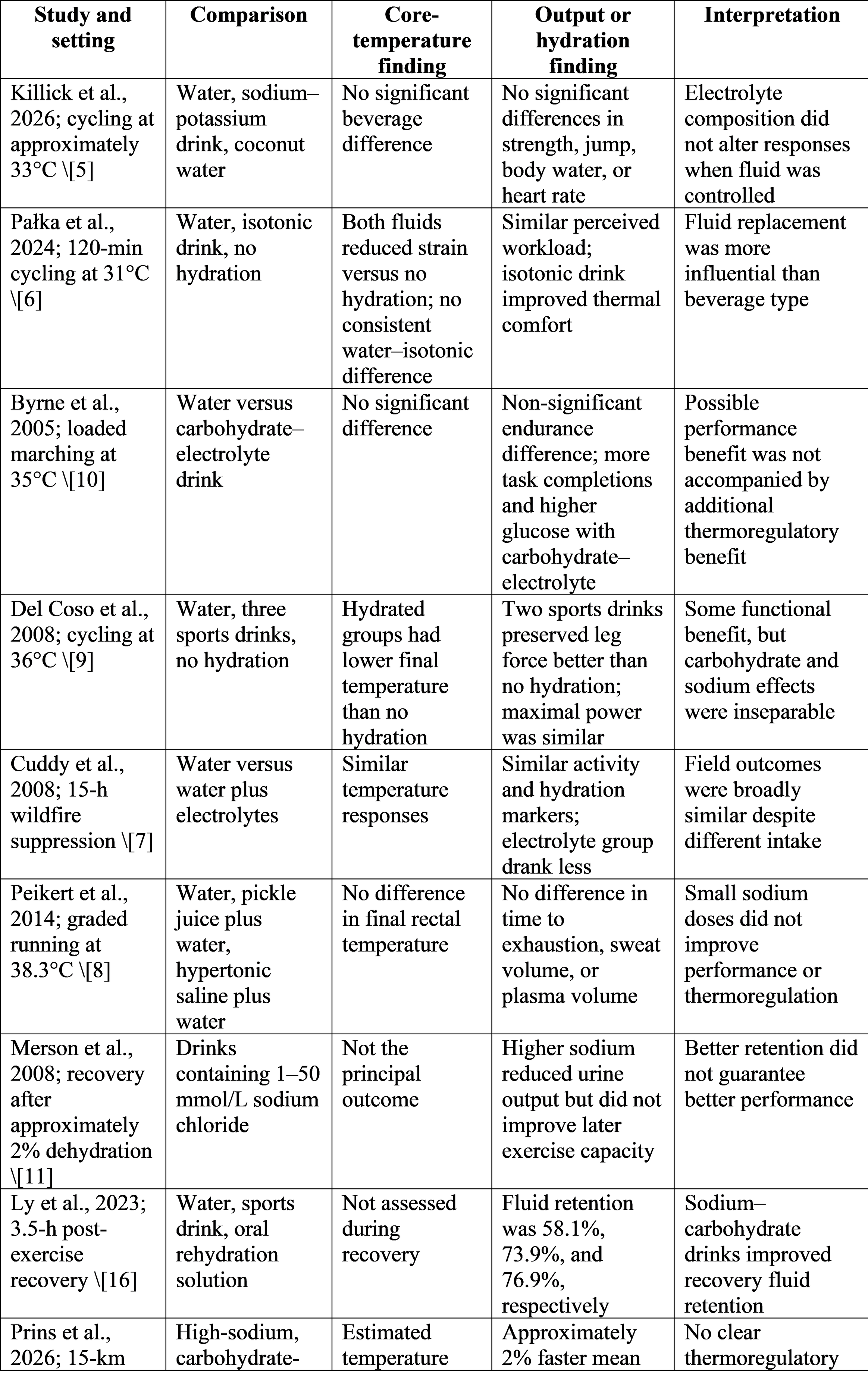
The direct evidence did not support a consistent core-temperature advantage for electrolyte beverages over water when fluid intake was adequately controlled. In the newest direct comparison, Killick and colleagues randomised 12 participants to water, a sodium–potassium drink, or potassium-rich coconut water during a triple-blind crossover study involving 60 minutes of cycling at approximately 33°C. Heat exposure produced significant thermal strain, fatigue, cardiovascular responses, and leukocyte changes, but no significant differences between hydration strategies were observed for temperature, body water, heart rate, strength, jump performance, or other measured outcomes [5].
A 2024 crossover study of 12 men cycling for 120 minutes at 31°C and 60% relative humidity found that both water and an isotonic drink reduced physiological strain compared with no hydration. Rectal temperature and heart-rate differences between the two hydrated conditions were not consistently significant, and the isotonic drink did not provide a clear thermoregulatory advantage [6]. Similar findings were reported during loaded marching at 35°C: carbohydrate–electrolyte replacement did not significantly alter core temperature, heart rate, plasma-volume change, urine loss, or dehydration compared with water [10].
Field evidence supported this interpretation. Among 16 wildland firefighters working for 15 hours, water and water plus electrolytes produced similar body-temperature responses, body-mass changes, urine specific gravity, and accelerometer-measured activity. Participants receiving electrolytes drank approximately 220 mL/h less fluid without detectable deterioration in the measured outcomes, although the small sample limited precision [7]. In a separate laboratory study, small pre-exercise volumes of pickle juice or hypertonic saline consumed with water did not change final rectal temperature, sweat volume, plasma volume, or time to exhaustion compared with water alone [8].
Effects on physical output
Performance findings were less uniform than temperature findings. Del Coso and colleagues studied seven heat-acclimatised cyclists exercising for 120 minutes at 36°C. All hydrated conditions limited body-mass loss to approximately 0.8%, compared with 3.7% without fluid, and final rectal temperature was lower with hydration than without it. Two carbohydrate–electrolyte drinks preserved maximal voluntary leg force better than no hydration, whereas water and a lower-sodium drink did not; maximal cycling power nevertheless remained similar across conditions [9]. Because carbohydrate and beverage composition differed, the experiment could not isolate a sodium-specific mechanism.
Byrne and colleagues found no significant difference in endurance time between water and carbohydrate–electrolyte replacement during loaded marching, although task completion occurred more frequently with carbohydrate–electrolyte intake and blood glucose was higher [10]. These findings illustrate why a combined sports drink may assist performance through fuel availability rather than superior cooling.
A 2026 systematic review and three-level meta-analysis provided the broadest current performance synthesis. Across 21 studies involving 316 participants, acute carbohydrate–electrolyte supplementation produced a small average advantage over water or non-caloric placebo, with Hedges’ g of 0.37. The clearest effect was in aerobic endurance, where g was 0.45, while evidence for anaerobic performance, explosive power, and strength was inconclusive. Prediction intervals crossed no effect, certainty was low or very low, and the analysis did not establish that supplementation specifically offsets heat-induced impairment [17].
Electrolyte-only evidence was also mixed. In a 2026 trial of ten trained male runners, a high-sodium, carbohydrate-free supplement produced an approximately 2% faster mean 15-km completion time, but the primary paired comparison was not significant. Estimated core temperature was slightly higher late in the electrolyte trial, and no differences were detected in hydration, cardiovascular, metabolic, or perceptual measures [18]. These results argue against assuming that more sodium necessarily improves either output or temperature control.
Post-exercise fluid retention and urine output
The clearest advantage for sodium appeared during recovery rather than during the initial heat exposure. Merson and colleagues dehydrated eight men by approximately 2% of body mass and then provided 150% of the loss using drinks containing 1, 31, 40, or 50 mmol/L sodium chloride. Urine output was lower with 40 or 50 mmol/L than with 1 mmol/L, indicating more effective retention, but subsequent exercise capacity did not differ [11].
A 2023 randomised trial involving 26 male athletes similarly found that an oral rehydration solution and sports drink retained 76.9% and 73.9% of ingested fluid after 3.5 hours, respectively, compared with 58.1% for water [16]. Foundational experiments confirmed that both volume and sodium matter: drinking only the volume lost may be insufficient because urine and other water losses continue, while larger volumes of very-low-sodium fluid can provoke diuresis [12–15]. Normal food can partly compensate by supplying sodium and other solutes alongside water.
Table 1. Representative comparisons of electrolyte-containing rehydration and plain water in hot environments
Discussion
Principal interpretation
The most defensible conclusion is that electrolyte rehydration and water are not competing universal solutions; they are tools whose value depends on timing, sweat loss, food intake, and the next period of heat exposure. During exercise or occupational work, adequate fluid replacement is usually more important for core-temperature control than whether that fluid contains electrolytes. Water and electrolyte drinks both outperform no hydration when sweating is substantial, but direct comparisons rarely demonstrate an additional reduction in core temperature from electrolytes alone [5–10]. After exercise, sodium has a clearer physiological role in retaining ingested fluid and restoring extracellular volume, particularly when large sweat losses must be replaced quickly [11–16].
This distinction resolves an apparent contradiction in the literature. Electrolyte beverages can be superior for rehydration while being no better for immediate temperature control. Rehydration is not simply the act of swallowing fluid; it requires absorption, distribution, and retention. Core temperature during exercise, however, is governed by the balance between heat production and heat loss. A beverage may reduce urine output during recovery without materially changing evaporative capacity, skin blood flow, metabolic rate, humidity, radiant heat, or clothing-related heat retention during an earlier or later work period.
The real-world implication is reassuringly practical. A worker undertaking a relatively short shift with access to meals does not automatically need a commercial electrolyte product to remain safe or productive. Conversely, an endurance athlete or firefighter with several hours of heavy sweating, limited food, and another session approaching may benefit from sodium-containing fluid even if the drink does not acutely lower core temperature. The purpose in that situation is better recovery and fluid retention, not pharmaceutical-style cooling.
Why fluid volume usually dominates thermoregulation
Core temperature rises when heat storage exceeds heat dissipation. Exercise increases metabolic heat production, while high ambient temperature and solar radiation add environmental heat. Evaporation of sweat is often the principal avenue of heat loss, but its effectiveness declines when humidity is high, airflow is poor, or clothing restricts evaporation. Dehydration compounds the problem by reducing plasma volume and increasing cardiovascular strain, with higher heart rate and reduced ability to maintain skin blood flow and sweating at a given workload [1,24].
Replacing water helps defend this system. Sodium can support plasma osmolality and extracellular volume, but it cannot remove heat directly. Nor can it overcome a situation in which sweat remains on the skin or clothing without evaporating. This explains why an electrolyte drink may improve biochemical or fluid-balance markers without lowering rectal temperature. It also explains why heat acclimatisation, which increases sweating capacity and plasma volume while reducing physiological strain, generally has a larger thermoregulatory effect than changing beverage composition [1,4].
Core-temperature measurement adds another layer of caution. Rectal and gastrointestinal measurements are more appropriate for exercise–heat research than oral, axillary, or tympanic measurements, which can be influenced by drinking, ventilation, skin temperature, and device limitations. Some recent trials used estimated wearable temperature rather than a criterion method, making small between-beverage differences difficult to interpret [18]. Furthermore, a statistically detectable difference of 0.1–0.2°C may not be clinically meaningful when compared with the much larger effects of workload, acclimatisation, and environmental control.
Interpreting performance benefits without attributing everything to sodium
The small average endurance advantage reported for carbohydrate–electrolyte supplementation should not be dismissed, but it requires careful attribution [17]. Carbohydrate provides oxidisable fuel and may maintain blood glucose, carbohydrate oxidation, and central drive during prolonged exercise. Sodium may support fluid balance, while flavouring and temperature can influence voluntary drinking. These mechanisms are different, and a trial comparing a sweetened sports drink with water cannot identify which component produced the benefit.
The loaded-marching study illustrates this distinction: carbohydrate–electrolyte intake improved some functional outcomes without improving hydration or core temperature [10]. The likely explanation is substrate availability or fatigue modulation rather than enhanced cooling. Similarly, preservation of leg force in the Del Coso experiment is functionally interesting, but the small sample and multiple beverage formulations prevent a general conclusion that all electrolyte drinks preserve strength [9].
Output must also be matched to the task. Time to exhaustion is sensitive to motivation and protocol and does not necessarily predict time-trial performance, occupational productivity, or safe work capacity. Strength, sprint performance, and aerobic endurance respond to different physiological constraints. A beverage that helps a cyclist complete two hours of exercise may offer little to a construction worker whose principal problem is radiant heat and protective clothing. In occupational settings, safety, cognitive function, and the ability to recognise heat illness may be more important than maximal physical output.
Individual variability further weakens universal prescriptions. Sweat rates and sweat sodium concentrations vary substantially between people and within the same person under different conditions [2,19]. Heat acclimatisation usually increases sweat capacity while conserving sodium, changing both fluid and electrolyte requirements. A high sweater with visible salt residue may have different recovery needs from a person with modest sweating, but appearance alone is not a precise diagnostic tool. Formal sweat testing can be useful for athletes with recurrent hydration problems, although it is unnecessary for most recreational exercisers.
When electrolytes offer the greatest practical advantage
The strongest case for electrolyte-containing rehydration occurs after substantial sweating when recovery time is short, food is unavailable, or repeated heat exposure is expected. Sodium ingestion helps maintain extracellular osmolality and arginine-vasopressin–mediated water conservation, reducing the tendency for a large water bolus to be rapidly excreted [11–15]. This is particularly relevant between two training sessions on the same day, during multi-day occupational heat exposure, or when an individual must begin the next shift close to euhydration.
Fluid volume remains indispensable. Supplying a concentrated electrolyte product without enough water does not correct a body-water deficit and may cause gastrointestinal discomfort. Post-exercise recovery often requires more fluid than the immediate sweat loss because urine, respiratory, and ongoing sweat losses continue [13,15]. However, replacing 150% of body-mass loss should not be interpreted as a command to drink rapidly. Spreading intake over several hours improves tolerability and may improve retention. With ample recovery time and normal meals, water consumed with food is usually effective because the meal supplies sodium, potassium, carbohydrate, and other solutes.
Electrolyte composition also matters more than the word “electrolyte” on a label. Sodium is the principal extracellular cation and the electrolyte with the clearest evidence for improving post-exercise fluid retention. Potassium is lost in smaller quantities and has less consistent evidence for enhancing whole-body rehydration. Magnesium is frequently marketed for cramps and performance, but current comparative heat evidence does not establish a routine thermoregulatory advantage. Products containing very high sodium concentrations are not automatically superior; excessive intake can produce nausea, thirst, gastrointestinal symptoms, and an unnecessary solute load.
Safety, hyponatraemia, and the limits of sports drinks
Electrolyte drinks are often presented as protection against exercise-associated hyponatraemia, but this message is incomplete. The dominant mechanism in most symptomatic cases is excessive consumption of hypotonic fluid combined with non-osmotic arginine-vasopressin secretion and impaired free-water excretion [20]. Sports drinks are themselves hypotonic relative to plasma and generally contain much less sodium than would be required to make unlimited drinking safe. Overconsumption of water, sports drinks, or other low-solute beverages can therefore contribute to hyponatraemia.
Body-mass gain during prolonged exercise is a warning sign of excessive fluid intake, not evidence of superior hydration. Guidance should avoid both severe dehydration and forced overdrinking [2,3,20]. For shorter, lower-intensity activity, drinking according to thirst is often reasonable. During prolonged intense exercise with high sweat rates, a planned but individualised strategy may be useful, provided it does not prescribe intake beyond losses. Symptoms such as increasing headache, nausea, confusion, unusual behaviour, seizures, or respiratory distress require urgent medical assessment rather than simply more water or another electrolyte drink.
Heat illness must also be distinguished from routine dehydration. A person with suspected exertional heat stroke—particularly central nervous-system dysfunction with marked hyperthermia—requires immediate emergency response and rapid whole-body cooling. Oral fluids are secondary and may be unsafe when consciousness is impaired [21,22]. Neither water nor electrolyte beverages are treatments for heat stroke, and time spent preparing or consuming them must never delay cooling.
Real-world occupational and athletic application
For healthy adults performing moderate work in heat for relatively short periods, plain water and normal meals are generally sufficient. Occupational guidance emphasises accessible cool water, regular small drinks, acclimatisation, rest, and environmental controls; prolonged sweating over several hours may justify balanced electrolyte replacement [25]. These recommendations should be adapted to workload and individual sweat loss rather than applied as an inflexible volume target. Excessive scheduled intake can be just as inappropriate as inadequate access to fluid.
For endurance exercise lasting beyond approximately one to two hours in hot conditions, a beverage containing sodium and carbohydrate may be practical when it supplies both fluid and needed fuel. This is not proof that it will lower core temperature more than water. Its value lies in the combination of hydration, energy delivery, palatability, and replacement of sodium losses. For short sessions, the additional sugar and cost may provide little benefit. For people with diabetes, hypertension, kidney disease, heart failure, or conditions requiring fluid or sodium restriction, routine high-sodium or high-sugar products should not be adopted without clinical consideration.
Real-world adherence depends on more than composition. A drink that is available, palatable, cool, and tolerated is more useful than an theoretically optimal beverage left in a bottle. Electrolyte products may encourage drinking in some people but reduce intake in others, as illustrated by the wildland-firefighter study [7]. Gastrointestinal comfort, bottle access, work breaks, and opportunities to urinate also influence behaviour. Education should therefore focus on recognising individual patterns rather than promoting a brand or fixed recipe.
Heat management beyond beverage choice
The comparative literature should not distract from interventions with larger effects on heat strain. Acclimatisation over successive days improves heat tolerance, plasma-volume regulation, sweating, and cardiovascular stability [1,4]. Scheduling heavy work for cooler periods, adjusting pace, providing shade or air conditioning, improving ventilation, modifying protective clothing, and using work–rest cycles address the sources of heat storage directly. Pre-cooling and cooling during activity may also be valuable in selected athletic or occupational settings.
A worker wearing impermeable protective equipment in humid heat cannot be made safe simply by switching from water to an electrolyte drink. Likewise, an unacclimatised athlete who maintains an excessive pace can develop dangerous hyperthermia despite excellent hydration. Hydration supports thermoregulation; it does not guarantee it. The most responsible message is therefore integrated: begin appropriately hydrated, replace fluid according to context, use sodium when losses and recovery demands justify it, and modify the environment and workload before heat strain becomes dangerous.
Strengths, limitations, and research priorities
This review incorporated current evidence through October 2026, direct temperature and performance comparisons, field research, and established post-exercise sodium experiments. Its principal strength is the separation of thermoregulatory, functional, and renal outcomes rather than treating “hydration” as a single endpoint. It also distinguishes combined carbohydrate–electrolyte effects from electrolyte-specific effects.
Several limitations remain. It was a narrative rather than registered systematic review, and duplicate screening and quantitative pooling were not undertaken. Many direct trials involved small samples, young trained men, short laboratory exposures, and different beverage formulations. Women, older adults, children, people with cardiometabolic disease, and occupational populations are underrepresented. Field studies offer realism but less experimental control, while laboratory studies offer control but may not reproduce long shifts, variable workloads, sleep restriction, meals, or protective clothing.
Future trials should compare sodium-containing and sodium-free drinks with identical carbohydrate, flavour, temperature, and fluid volume. They should use validated core-temperature measurements, prespecified performance outcomes, adequate sample sizes, and occupational as well as athletic settings. Longer studies should examine repeated daily heat exposure, heat-illness outcomes, gastrointestinal tolerance, kidney health, and whether improved fluid retention produces meaningful next-day benefits. Greater representation of women and workers with diverse ages and health conditions is essential.
Conclusion
Electrolyte-containing rehydration does not consistently lower core body temperature more than plain water when fluid intake is matched. During heat exposure, replacing an appropriate volume of fluid is usually the dominant factor, while workload, acclimatisation, humidity, clothing, and cooling opportunities exert greater influence on thermal strain. Carbohydrate–electrolyte drinks may provide a small endurance advantage in some settings, but this cannot reliably be attributed to electrolytes or interpreted as superior cooling. Sodium-containing beverages have their clearest benefit after substantial sweating, when they reduce urine output and improve fluid retention during rapid recovery. Plain water with normal food is sufficient for most shorter exposures, whereas electrolyte drinks are reasonable during prolonged heavy sweating, repeated sessions, or limited food access. Neither should be consumed excessively, and neither replaces heat acclimatisation, work–rest controls, or emergency cooling when heat illness is suspected.
References
Périard JD, Eijsvogels TMH, Daanen HAM. Exercise under heat stress: thermoregulation, hydration, performance implications, and mitigation strategies. Physiol Rev. 2021;101(4):1873–1979. doi:10.1152/physrev.00038.2020.
Sawka MN, Burke LM, Eichner ER, Maughan RJ, Montain SJ, Stachenfeld NS. American College of Sports Medicine position stand: exercise and fluid replacement. Med Sci Sports Exerc. 2007;39(2):377–390. doi:10.1249/mss.0b013e31802ca597.
McDermott BP, Anderson SA, Armstrong LE, et al. National Athletic Trainers’ Association position statement: fluid replacement for the physically active. J Athl Train. 2017;52(9):877–895. doi:10.4085/1062-6050-52.9.02.
Racinais S, Alonso JM, Coutts AJ, et al. Consensus recommendations on training and competing in the heat. Br J Sports Med. 2015;49(18):1164–1173. doi:10.1136/bjsports-2015-094915.
Killick JA, Jenkins EJ, Benson J, Macciochi J, Corr L. Comparing the effects of water, sodium-potassium, and potassium-rich solutions on fluid balance and thermal strain following exercise in the heat: a randomized triple-blind crossover study. Int J Sport Nutr Exerc Metab. 2026. Online ahead of print. doi:10.1123/ijsnem.2026-0016.
Pałka T, Rydzik Ł, Koteja PM, et al. Effect of various hydration strategies on work intensity and selected physiological indices in young male athletes during prolonged physical exercise at high ambient temperatures. J Clin Med. 2024;13(4):982. doi:10.3390/jcm13040982.
Cuddy JS, Ham JA, Harger SG, Slivka DR, Ruby BC. Effects of an electrolyte additive on hydration and drinking behavior during wildfire suppression. Wilderness Environ Med. 2008;19(3):172–180. doi:10.1580/07-WEME-OR-114.1.
Peikert J, Miller KC, Albrecht J, Tucker J, Deal J. Pre-exercise ingestion of pickle juice, hypertonic saline, or water and aerobic performance and thermoregulation. J Athl Train. 2014;49(2):204–209. doi:10.4085/1062-6050-49.2.11.
Del Coso J, Estevez E, Baquero RA, Mora-Rodriguez R. Anaerobic performance when rehydrating with water or commercially available sports drinks during prolonged exercise in the heat. Appl Physiol Nutr Metab. 2008;33(2):290–298. doi:10.1139/H07-188.
Byrne C, Lim CL, Chew SAN, Ming ETY. Water versus carbohydrate-electrolyte fluid replacement during loaded marching under heat stress. Mil Med. 2005;170(8):715–721. doi:10.7205/MILMED.170.8.715.
Merson SJ, Maughan RJ, Shirreffs SM. Rehydration with drinks differing in sodium concentration and recovery from moderate exercise-induced hypohydration in man. Eur J Appl Physiol. 2008;103(5):585–594. doi:10.1007/s00421-008-0748-0.
Shirreffs SM, Maughan RJ. Volume repletion after exercise-induced volume depletion in humans: replacement of water and sodium losses. Am J Physiol. 1998;274(5):F868–F875. doi:10.1152/ajprenal.1998.274.5.F868.
Shirreffs SM, Taylor AJ, Leiper JB, Maughan RJ. Post-exercise rehydration in man: effects of volume consumed and drink sodium content. Med Sci Sports Exerc. 1996;28(10):1260–1271. doi:10.1097/00005768-199610000-00007.
Maughan RJ, Leiper JB. Sodium intake and post-exercise rehydration in man. Eur J Appl Physiol Occup Physiol. 1995;71(4):311–319. doi:10.1007/BF00240410.
Evans GH, James LJ, Shirreffs SM, Maughan RJ. Optimizing the restoration and maintenance of fluid balance after exercise-induced dehydration. J Appl Physiol. 2017;122(4):945–951. doi:10.1152/japplphysiol.00745.2016.
Ly NQ, Hamstra-Wright KL, Horswill CA. Post-exercise rehydration in athletes: effects of sodium and carbohydrate in commercial hydration beverages. Nutrients. 2023;15(22):4759. doi:10.3390/nu15224759.
Wang X, Liang T, Liu Y, et al. Effects of acute carbohydrate–electrolyte supplementation on exercise performance in moderate-to-hot ambient conditions: a systematic review and meta-analysis. Nutrients. 2026;18(19):3200. doi:10.3390/nu18193200.
Prins P, Buxton JD, Helsel A, et al. Effects of a high-sodium, carbohydrate-free multi-electrolyte supplement on 15 km treadmill time-trial performance in warm and humid conditions: a randomized, single-blind, placebo-controlled crossover trial. Sports. 2026;14(10):435. doi:10.3390/sports14100435.
Baker LB. Sweating rate and sweat sodium concentration in athletes: a review of methodology and intra/interindividual variability. Sports Med. 2017;47(Suppl 1):111–128. doi:10.1007/s40279-017-0691-5.
Hew-Butler T, Rosner MH, Fowkes-Godek S, et al. Statement of the Third International Exercise-Associated Hyponatremia Consensus Development Conference, Carlsbad, California, 2015. Clin J Sport Med. 2015;25(4):303–320. doi:10.1097/JSM.0000000000000221.
Casa DJ, DeMartini JK, Bergeron MF, et al. National Athletic Trainers’ Association position statement: exertional heat illnesses. J Athl Train. 2015;50(9):986–1000. doi:10.4085/1062-6050-50.9.07.
Lipman GS, Gaudio FG, Eifling KP, Ellis MA, Otten EM, Grissom CK. Wilderness Medical Society clinical practice guidelines for the prevention and treatment of heat illness: 2019 update. Wilderness Environ Med. 2019;30(4S):S33–S46.
Belval LN, Hosokawa Y, Casa DJ, et al. Practical hydration solutions for sports. Nutrients. 2019;11(7):1550. doi:10.3390/nu11071550.
Montain SJ, Coyle EF. Influence of graded dehydration on hyperthermia and cardiovascular drift during exercise. J Appl Physiol. 1992;73(4):1340–1350. doi:10.1152/jappl.1992.73.4.1340.
National Institute for Occupational Safety and Health. Criteria for a Recommended Standard: Occupational Exposure to Heat and Hot Environments. Cincinnati, OH: US Department of Health and Human Services, Centers for Disease Control and Prevention, NIOSH; 2016. DHHS (NIOSH) Publication No. 2016-106.