
Bone Tissue: Structure, Composition, Development and Clinical Significance
1. Alimbekova Aiperi Alimbekovna
2. Mohamed Kasim
(1. Lecturer, International Medical Faculty, Osh State University, Osh, Kyrgyz Republic.
2. Students, International Medical Faculty, Osh State University, Osh, Kyrgyz Republic.)
Abstract
Bone tissue is a special kind of tissue that helps our body stay strong and healthy. It is made up of an outer layer and a soft inner layer. Bone tissue is always. Growing, which helps it stay strong. It does things for our body like helping us move, protecting our important organs and storing minerals. This article will tell you all about bone tissue, including what it's made of, how it grows and why it is important for our health.
Keywords: Bone tissue, osteoclast osteocyte, bone histology, ossification, bone growth, compact bone, spongy bone, bone remodeling, calcium metabolism
Introduction
Bone tissue is a strong tissue that has a special outer layer. This outer layer is made up of minerals like calcium and phosphate. Bone tissue is not just a hard-dead thing. It is actually a living tissue that is always changing and growing. It helps our body stay strong and healthy. Bone tissue starts growing from cells called mesoderm cells. It grows through a process called ossification.
General Features and Functions of Bone
Bone tissue is very special because it is strong and can fix itself if it gets broken. It has an outer layer and a soft inner layer. The hard-outer layer is made up of a protein called collagen and minerals like calcium and phosphate. The soft inner layer is made up of cells called osteocytes and a jelly-like substance called ground substance. Bone tissue does things for our body. It helps us move, protects our organs and stores minerals like calcium and phosphate.
One of the important things about bone tissue is that it is always changing and growing. This helps it stay strong and healthy. It can even fix itself if it gets broken. Bone tissue is also very good at storing minerals like calcium and phosphate. It can release these minerals into our blood if our body needs them.
Composition of Bone Tissue
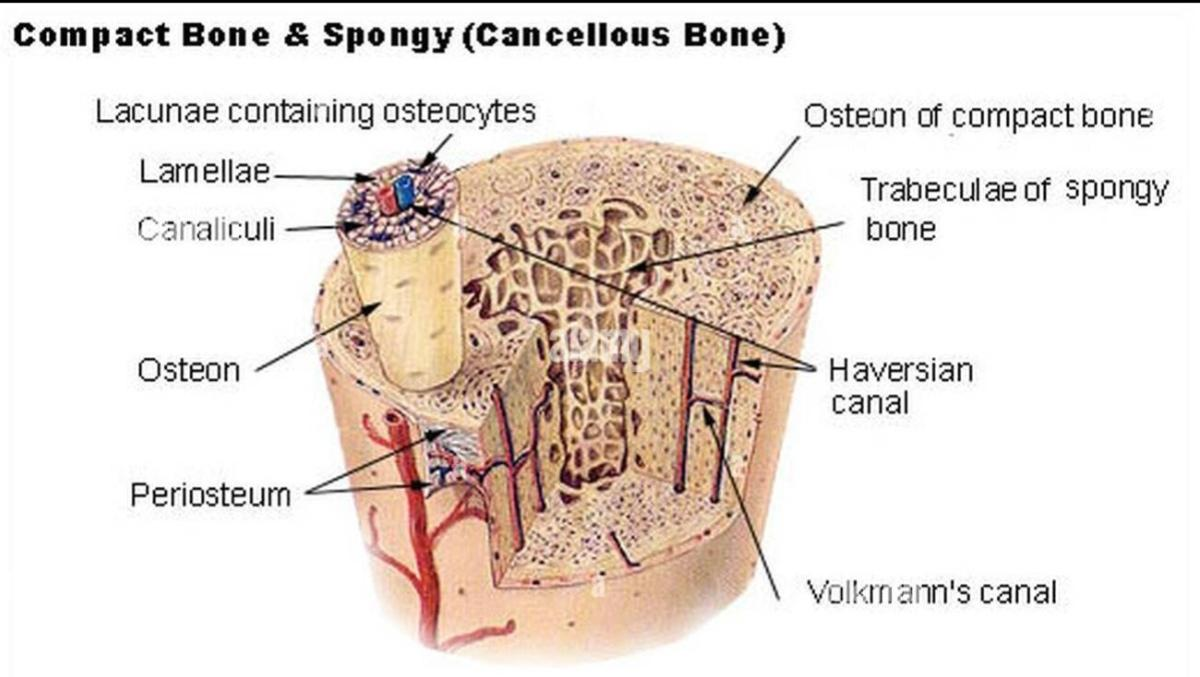
Bone tissue is made up of two parts: cells and a special outer layer called the matrix. The matrix is made up of collagen and minerals like calcium and phosphate. The cells are called osteoblasts, osteocytes and osteoclasts. Osteoblasts help make the matrix. Osteocytes live in the matrix. Help keep it healthy. Osteoclasts help break down the matrix when it gets old or damaged.
The matrix is very important because it gives bone tissue its strength and hardness. It is made up of collagen and minerals like calcium and phosphate. The collagen gives bone tissue its flexibility while the minerals give it its hardness.
Bone Membranes
There are two membranes that cover bone tissue: the periosteum and the endosteum. The periosteum covers the outside of bone tissue while the endosteum covers the inside. Both membranes have cells called osteoprogenitor cells that can turn into osteoblasts. These membranes help bone tissue grow and repair itself.
The periosteum is a membrane that covers the outside of bone tissue. It has a lot of blood vessels and nerves which help keep bone tissue healthy. The endosteum is a membrane that covers the inside of bone tissue. It has cells called osteoprogenitor cells that can turn into osteoblasts.
Microscopic Structure of Bone
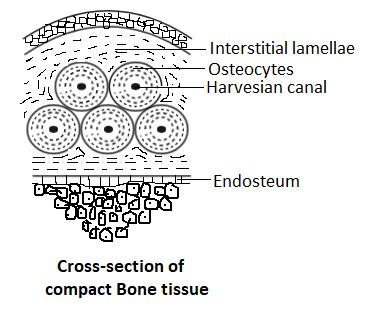
When we look at bone tissue under a microscope we can see that it is made up of two types: compact bone and spongy bone. Compact bone is dense and hard while spongy bone is lighter and more porous. Compact bone has a structure called the osteon, which is made up of layers of collagen and minerals. Spongy bone has a random structure with trabeculae that are connected by thin strands of tissue.
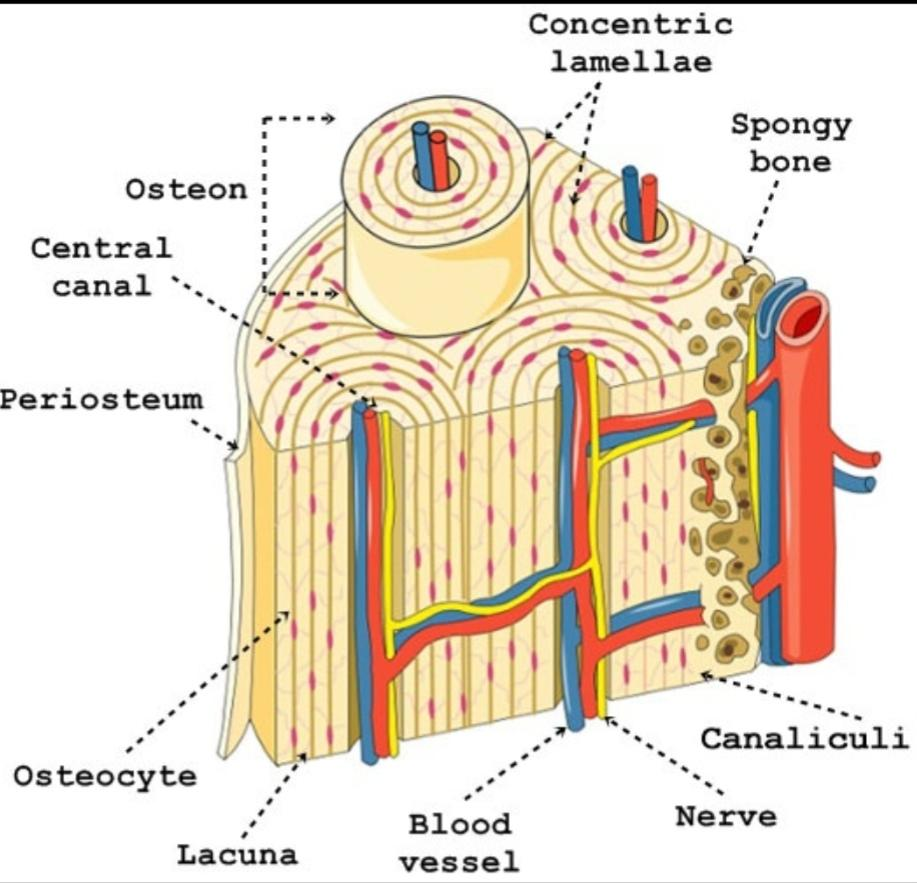
Compact bones are very strong and hard. It is made up of layers of collagen and minerals that are arranged in a pattern. Spongy bone is lighter and more porous. It has a random structure with trabeculae that are connected by thin strands of tissue.
Bone Formation (Ossification)
Bone tissue grows through a process called ossification. There are two types of ossification: intramembranous ossification and endochondral ossification. Intramembranous ossification happens when mesenchymal cells turn directly into bone cells. This type of ossification happens in bones like the bones in our skull.
Endochondral ossification happens when a cartilage model is replaced by bone tissue. This type of ossification happens in bones like the bones in our arms and legs. It starts with a cartilage model that is made up of cells called chondrocytes. The cartilage model is then replaced by bone tissue, which is made up of cells called osteoblasts.
Growth of Bone
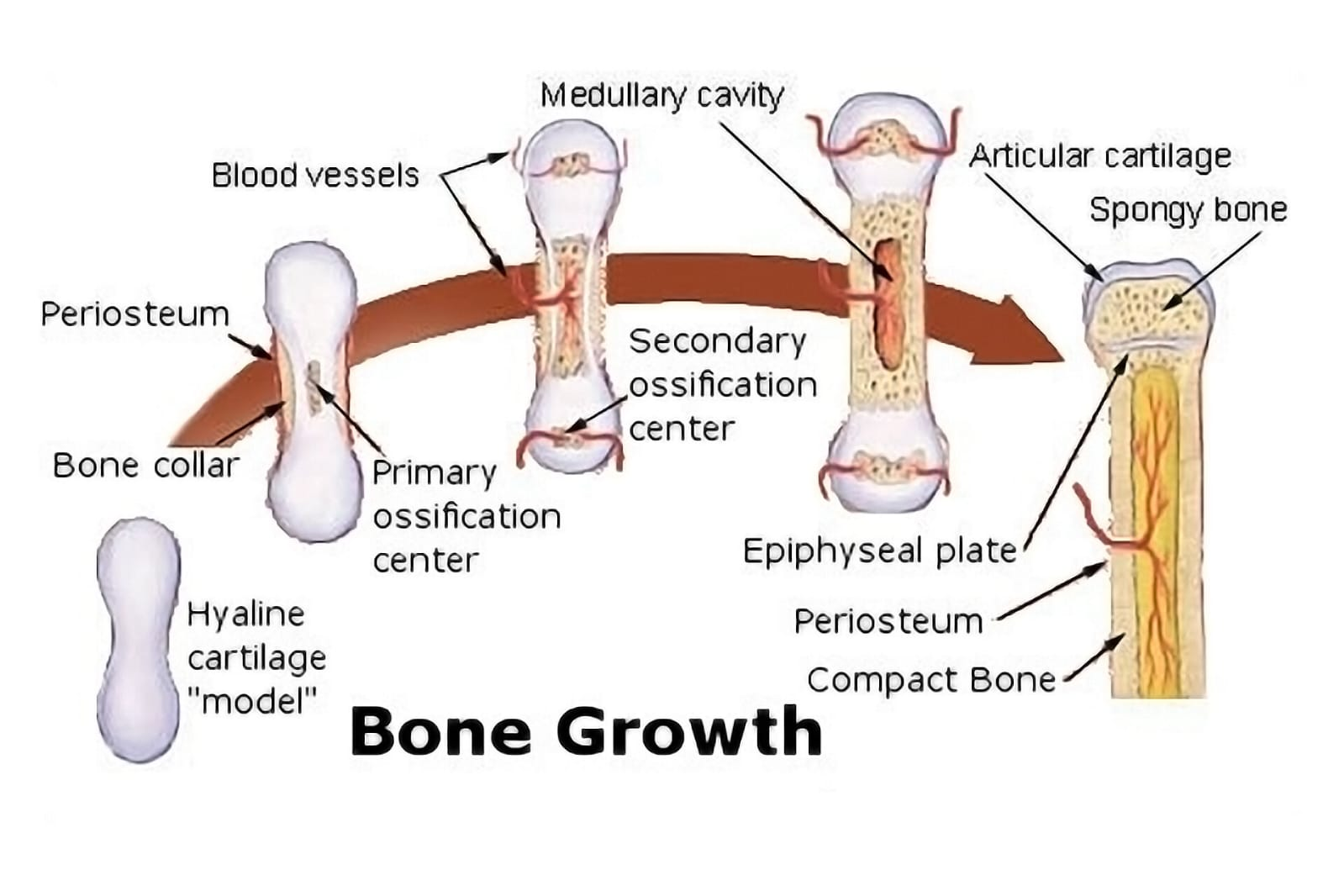
Bone tissue grows in two ways: in length and in thickness. It grows in length when new bone cells are added to the ends of the bone. It grows in thickness when new bone cells are added to the outside of the bone. Bone tissue can also get bigger when it is exercised. This is because exercise stimulates the bone cells to grow and make bone tissue.
When bone tissue grows in length it does so through a process called growth. This happens when new bone cells are added to the ends of the bone. When bone tissue grows in thickness it does so through a process called ossification. This happens when new bone cells are added to the outside of the bone.
Bone Remodeling and Mineral Homeostasis
Bone tissue is always being remodeled, which means that old bone tissue is being broken down and replaced with bone tissue. This process is very important because it helps keep our bones strong and healthy. It is controlled by hormones like parathyroid hormone and calcitonin. These hormones help regulate the amount of calcium and phosphate in our blood.
Bone tissue is also very important for maintaining the levels of minerals like calcium and phosphate in our blood. When the levels of these minerals get too low bone tissue releases them into the blood. When the levels get too high bone tissue absorbs them.
Significance
There are many diseases that can affect bone tissue, like osteoporosis and rickets. Osteoporosis is a disease that makes bone tissue weak and brittle. Rickets is a disease that makes bone tissue soft and weak. Both of these diseases can be treated with medicines and exercises.
Other diseases that can affect bone tissue include osteosarcoma and Paget's disease. Osteosarcoma is a type of cancer that affects bone tissue. Paget's disease is a disease that affects the way bone tissue is remodeled. Both of these diseases can be very serious. I need to be treated by a doctor.
Conclusion
Bone tissue is a special and important part of our body. It helps us move, protects our organs 9and stores minerals like calcium and phosphate. It is always growing, which helps it stay strong and healthy. We need to take care of our bone tissue by eating a diet, exercising regularly and getting enough sleep.
By taking care of our bone tissue we can help prevent diseases like osteoporosis and rickets. We can also help keep our bones strong and healthy which is very important for our health.
REFERENCES:
1) Inderbir Singh's Textbook of Human Histology 9th Edition
2) Textbook of Human Histology with color Atlas, 3D illustrations and Flow charts by: Yogesh Sontakke
3) Wikipedia: https://en.wikipedia.org/wiki/Bone
4) Wiley. (2015). Biology of bone tissue: Structure, function, and factors that influence bone cells. BioMed Research International, 2015, Article 421746.