
Incidence of Imposter Syndrome Among Medical Students
1. Dr. Muhammad Yasir
2. John Britto Hervin Maria Joshva
3. Pandiyan Thendral Shriram
4. Prabhu Jenisha
5. Vadivel Divya
6. Kumar Harini
(1. Lecturer, International Medical Faculty, Osh State University, Osh, Kyrgyz Republic
2. Student, International Medical Faculty, Osh State University, Osh, Kyrgyz Republic
3. Student, International Medical Faculty, Osh State University, Osh, Kyrgyz Republic
4. Student, International Medical Faculty, Osh State University, Osh, Kyrgyz Republic
5. Student, International Medical Faculty, Osh State University, Osh, Kyrgyz Republic
6. Student, International Medical Faculty, Osh State University, Osh, Kyrgyz Republic.)
ABSTRACT
Imposter syndrome is a psychological phenomenon in which individuals doubt their abilities, achievements, and competence despite evidence of success. Medical students are particularly vulnerable to imposter syndrome due to high academic expectations, competitive environments, frequent evaluations, and fear of failure. These feelings may negatively affect academic performance, mental health, self-confidence, and professional development. The present study aims to assess the incidence of imposter syndrome among medical students and identify factors associated with its occurrence. A cross-sectional study design can be employed using standardized assessment tools such as the Clance Impostor Phenomenon Scale (CIPS). Sociodemographic characteristics, academic factors, and psychological stressors may be analyzed to determine their relationship with imposter syndrome. Previous studies have reported a high incidence of imposter syndrome among medical students worldwide. Factors such as perfectionism, academic pressure, low self-esteem, fear of failure, and social comparison have been associated with increased imposter feelings. The findings of this study are expected to provide valuable insights into the psychological well-being of medical students and emphasize the need for counseling services, mentorship programs, and mental health support initiatives. Addressing imposter syndrome is essential for promoting confidence, resilience, and academic success among future healthcare professionals.
Keywords: Imposter Syndrome, Medical Students, Mental Health, Academic Stress, Self-Esteem, Medical Education, Psychological Well-being.
INTRODUCTION
Imposter syndrome refers to the persistent belief that one's achievements are undeserved and that success is due to luck rather than ability. Individuals experiencing imposter syndrome often fear being exposed as frauds despite objective evidence of competence and accomplishment. Medical education is recognized as a highly demanding and competitive field [1]. Medical students face numerous academic challenges, including extensive coursework, examinations, clinical responsibilities, and expectations for excellence [2]. These pressures may contribute to the development of imposter feelingsImposter syndrome has been associated with increased anxiety, depression, burnout, reduced self-confidence, and decreased academic satisfaction among students. It may also affect future professional performance and career development Despite growing awareness of mental health issues in medical education, imposter syndrome often remains underrecognized [3]. Students may hesitate to discuss their experiences due to fear of judgment or stigma. Assessing the incidence of imposter syndrome among medical students is important for understanding its impact and developing appropriate interventions [4].Early identification and support can enhance student well-being, academic performance, and professional growth .
MATERIALS AND METHODS
A descriptive cross-sectional study was conducted among medical students enrolled in a medical university to determine the incidence of imposter syndrome [1]. Students from different academic years who voluntarily agreed to participate were included in the study [2]. Data were collected using a structured questionnaire consisting of sociodemographic information such as age, gender, academic year, and academic performance [3]. The Clance Impostor Phenomenon Scale (CIPS), a validated instrument used to assess imposter syndrome, was employed to evaluate participants' experiences of imposter feelings. The questionnaires were distributed after explaining the purpose of the study, and confidentiality was maintained throughout the research process [3]. Based on CIPS scores, students were categorized into low, moderate, frequent, or intense imposter syndrome groups according to standard guidelines [4]. The collected data were entered into Microsoft Excel and analyzed using appropriate statistical methods [4]. Descriptive statistics including frequencies, percentages, means, and standard deviations were used to summarize the findings. Ethical approval was obtained from the Institutional Ethics Committee, and informed consent was obtained from all participants before data collection
RESULTS
A total of 59 medical students participated in the study. The majority of respondents reported good academic performance; however, many also reported experiencing feelings associated with imposter syndrome.
Table 1 shows the distribution of participants according to academic performance. Among the 59 respondents, 69.5% rated their academic performance as good, 20.3% as average, and 10.2% as excellent. No participant rated their performance as below average.

Table 2 shows the frequency of self-doubt among participants despite academic success. Nearly half of the students (45.8%) reported often experiencing self-doubt, while 42.4% reported experiencing it sometimes. These findings indicate a substantial presence of imposter-related feelings among medical students.

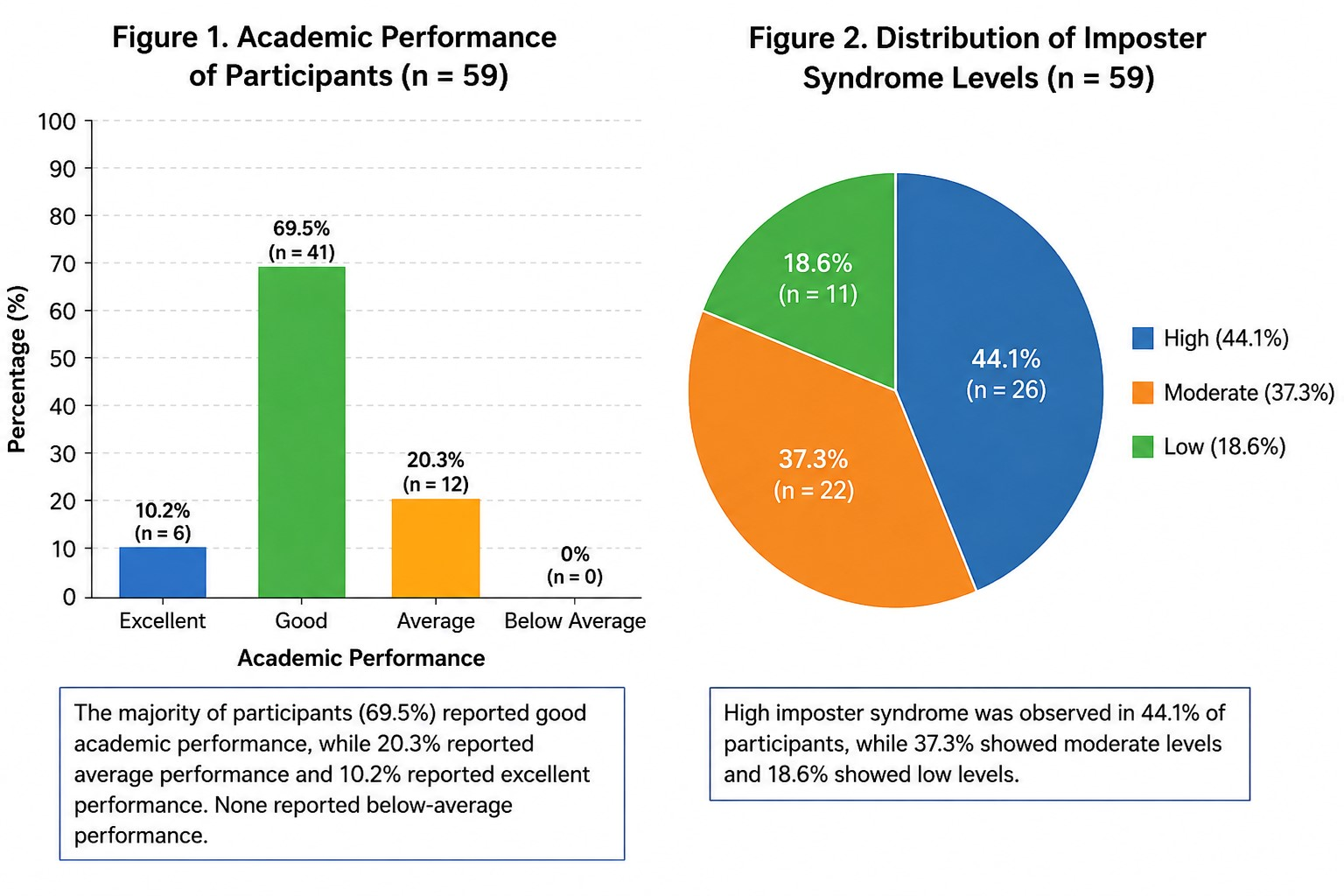
Table 3 shows the distribution of participants according to imposter syndrome levels. Among the respondents, 44.1% demonstrated high levels of imposter syndrome, 37.3% showed moderate levels, and 18.6% reported low levels. These findings suggest that imposter syndrome is common among medical students.

CONCLUSION
The present study concludes that imposter syndrome is highly prevalent among medical students. Despite satisfactory academic performance, many students experience persistent feelings of self-doubt, fear of failure, and difficulty recognizing their achievements. These feelings may adversely affect confidence, academic performance, and psychological well-being. The findings highlight the need for mentoring programs, psychological support services, and awareness initiatives within medical institutions to help students overcome imposter-related thoughts and foster healthy self-confidence.
REFERENCES
1. Alwatban J, Bajaeifer Y, Alamoudi S, Alzendi N, AlHilali S. Prevalence of imposter syndrome among Saudi ophthalmology residents: urgent need for support. BMC Medical Education. https://pubmed.ncbi.nlm.nih.gov/41168731/
2. Thomas M, Bigatti S. Perfectionism, impostor phenomenon, and mental health in medicine: a literature review. International Journal of Medical Education https://pubmed.ncbi.nlm.nih.gov/32996466/
3. Wang J, Shi W, Huang X, Jiao Y. The prevalence of imposter syndrome and associated factors in Chinese medical students and residents: A single-center pilot study. Medical Teacher https://pubmed.ncbi.nlm.nih.gov/37722837/
4. Villwock JA, Sobin LB, Koester LA, Harris TM. Impostor syndrome and burnout among American medical students: a pilot study. International Journal of Medical Education. https://pubmed.ncbi.nlm.nih.gov/27802178/