
Cancer Mortality in India and Kyrgyzstan: A Comparative Public Health Analysis
1. Dr. Aiperi Tanabaeva
2. Preet Pareshkumar Patel
3. Varun Kiritkumar Thakor
4. Garva Sumit Mohanlal
(1. Research Supervisor, International Medical Faculty, Osh State University, Osh, Kyrgyz Republic
2. Student, International Medical Faculty, Osh State University, Osh, Kyrgyz Republic
3. Student, International Medical Faculty, Osh State University, Osh, Kyrgyz Republic
4. Student, International Medical Faculty, Osh State University, Osh, Kyrgyz Republic)
Abstract
Background: Cancer is a major public health challenge worldwide and an important cause of premature mortality. Differences in population size, demographic structure, lifestyle, environmental exposures, healthcare infrastructure, cancer screening, and access to treatment influence cancer mortality across countries. India and Kyrgyzstan represent two different epidemiological and healthcare settings, making their comparison important for understanding cancer-related inequalities and public health priorities.
Objectives: To compare cancer mortality in India and Kyrgyzstan; to evaluate differences in age-standardized mortality rates, sex-specific mortality, and major cancer types; to identify important public health challenges; and to recommend strategies for reducing cancer-related deaths in both countries.
Methods: A comparative descriptive epidemiological study was designed using secondary population-level data from the International Agency for Research on Cancer (IARC) Global Cancer Observatory, GLOBOCAN 2022. Cancer incidence, mortality, age-standardized mortality rates (ASMRs), sex-specific statistics, and major cancer sites were examined. Descriptive comparisons were performed between the two countries.
Results: In 2022, India recorded an estimated 916,827 cancer deaths, compared with 4,672 deaths in Kyrgyzstan. Despite the substantial difference in absolute mortality, the age-standardized mortality rate was higher in Kyrgyzstan (82.8 per 100,000 population) than in India (64.4 per 100,000). In India, male cancer mortality was higher than female mortality, with age-standardized rates of 66.5 and 62.6 per 100,000, respectively. A similar sex difference was observed in Kyrgyzstan, with rates of 105.9 among males and 68.0 among females. The leading cancer mortality patterns also differed, with stomach, lung, and liver cancers prominent in Kyrgyzstan, while breast, lip and oral cavity, and cervical cancers were important contributors to the cancer burden in India.
Conclusion: Cancer mortality presents a significant public health challenge in both countries, although the epidemiological patterns differ. Kyrgyzstan demonstrates a higher age-standardized cancer mortality rate, whereas India experiences a substantially greater absolute number of cancer deaths. Strengthening early diagnosis, population-based screening, cancer registration, affordable treatment, and national cancer-control programmes is essential to reduce mortality.
Keywords: Cancer mortality; India; Kyrgyzstan; Epidemiology; Public health; Age-standardized mortality rate; Cancer prevention; Healthcare accessibility; GLOBOCAN 2022.
1. Introduction
Cancer is one of the leading causes of death worldwide and represents a major challenge for modern healthcare systems. It is a group of diseases characterized by uncontrolled cellular growth, invasion of surrounding tissues, and the potential to spread to distant organs through metastasis. Cancer mortality is influenced by several factors, including cancer type, stage at diagnosis, age, sex, genetic susceptibility, environmental exposures, lifestyle behaviours, and availability of effective treatment.
According to the International Agency for Research on Cancer (IARC), approximately 20 million new cancer cases and 9.7 million cancer-related deaths were estimated worldwide in 2022. The increasing burden of cancer is associated with population growth, ageing, tobacco consumption, alcohol use, unhealthy dietary patterns, physical inactivity, environmental pollution, and exposure to infectious agents.
India is one of the most populous countries in the world and experiences a considerable cancer burden. Its cancer epidemiology is characterized by variations in cancer patterns across geographical regions, socioeconomic groups, and genders. Breast cancer, cervical cancer, lung cancer, and cancers of the lip and oral cavity represent important public health concerns. Tobacco consumption, smokeless tobacco use, alcohol consumption, air pollution, infections, and delayed diagnosis contribute to the complexity of cancer prevention and control.
Kyrgyzstan, a Central Asian country, has a different demographic and healthcare profile. Although its total number of cancer deaths is considerably lower than that of India, its age-standardized cancer mortality rate is higher. Stomach, lung, and liver cancers are among the major contributors to cancer mortality. Tobacco exposure, dietary patterns, infectious risk factors, and differences in access to specialized oncology services are important areas for further investigation.
Comparing India and Kyrgyzstan provides an opportunity to understand how cancer mortality varies between countries with different population sizes, demographic characteristics, healthcare resources, and epidemiological profiles. Importantly, comparing absolute numbers alone can produce misleading conclusions. Age-standardized mortality rates provide a more appropriate measure for comparing cancer mortality between populations with different age structures.
Although cancer research is available for both countries individually, a comparative public health assessment can help identify common challenges, country-specific priorities, and opportunities for strengthening cancer prevention and treatment.
2. Problem Statement
Despite advances in cancer diagnosis, surgery, chemotherapy, radiotherapy, and targeted treatment, cancer continues to cause substantial premature mortality in developing and transitional healthcare settings. India faces challenges associated with its large population, unequal healthcare distribution, delayed diagnosis, limited screening coverage in some communities, and financial barriers to treatment. Kyrgyzstan faces a different set of challenges, including a smaller oncology infrastructure, geographical barriers, and the need to strengthen early detection and access to specialized cancer treatment. A comparison of cancer mortality in these countries is necessary to understand the differences in absolute mortality, age-standardized mortality, sex-specific patterns, and leading cancer types.
3. Research Objectives
1. To compare the estimated number of cancer deaths in India and Kyrgyzstan.
2. To evaluate differences in age-standardized cancer mortality rates.
3. To examine male and female cancer mortality patterns.
4. To identify the major cancer types contributing to mortality in both countries.
5. To discuss potential socioeconomic, environmental, and healthcare-related determinants.
6. To recommend public health strategies for reducing cancer mortality.
4. Materials and Methods
4.1 Study Design
A comparative descriptive epidemiological study was designed using secondary population-level cancer statistics. The study compares cancer mortality patterns in India and Kyrgyzstan using internationally standardized estimates.
4.2 Study Setting
The study includes two countries: India in South Asia and Kyrgyzstan in Central Asia.
4.3 Data Sources
The principal source of information was the International Agency for Research on Cancer (IARC), World Health Organization (WHO), Global Cancer Observatory, GLOBOCAN 2022. The following indicators were selected: estimated number of new cancer cases; total cancer-related deaths; age-standardized mortality rates; male and female mortality rates; leading cancer sites by mortality; and five-year cancer prevalence.
4.4 Study Population
The study covers the general populations of India and Kyrgyzstan as represented in the GLOBOCAN 2022 estimates. It does not involve direct recruitment of patients or human participants.
4.5 Statistical Analysis
Descriptive statistical methods were used to compare cancer mortality indicators between the two countries. Absolute numbers were examined to assess the overall national burden, while age-standardized mortality rates per 100,000 population were used to compare mortality independently of differences in population age structure. Sex-specific mortality rates and leading cancer types were also compared. No individual-level statistical testing or causal analysis was performed.
4.6 Ethical Considerations
The study uses publicly available, aggregated population-level data. No personal patient information was collected, and no direct human intervention was performed. Therefore, individual informed consent was not required for this secondary-data analysis.
5. Results
5.1 Overall Cancer Burden in India and Kyrgyzstan
The GLOBOCAN 2022 estimates demonstrate substantial differences in cancer burden between the two countries. India recorded approximately 1,413,316 new cancer cases and 916,827 cancer-related deaths in 2022. Kyrgyzstan recorded approximately 7,266 new cancer cases and 4,672 cancer-related deaths. The difference in absolute mortality is largely influenced by the substantial difference in population size. Therefore, age-standardized mortality rates provide a more meaningful comparison.
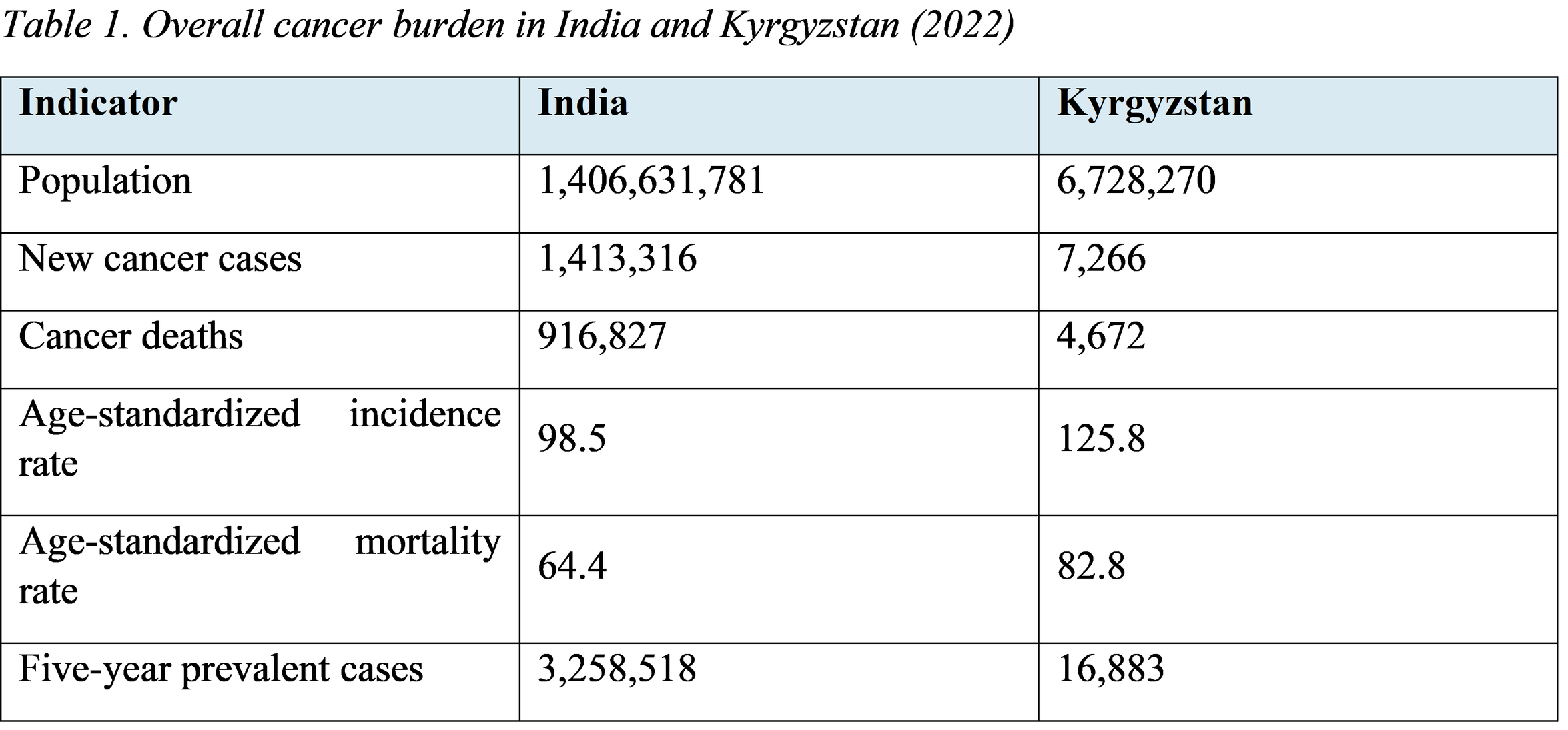
Source: IARC, GLOBOCAN 2022. Rates are per 100,000 population where applicable.
The findings indicate that India has a substantially higher absolute number of cancer deaths. However, Kyrgyzstan has a higher age-standardized mortality rate, suggesting a greater cancer mortality burden per standardized population.
5.2 Comparison of Sex-Specific Cancer Mortality
Sex-specific analysis demonstrates that males experience higher age-standardized cancer mortality rates than females in both countries.
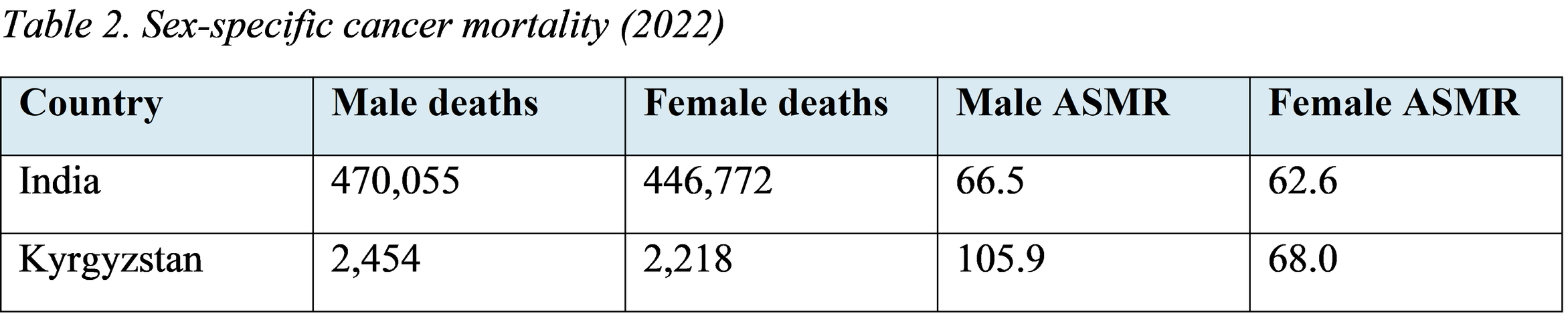
ASMR: Age-standardized mortality rate per 100,000 population.
In India, male mortality was slightly higher than female mortality. In Kyrgyzstan, the difference between male and female age-standardized mortality rates was more pronounced. These findings indicate the importance of gender-specific cancer prevention strategies, particularly those addressing tobacco exposure, occupational risk factors, and cancers affecting women.
5.3 Leading Cancer Types in India
India demonstrates a diverse cancer mortality pattern. Important contributors include breast cancer, cancers of the lip and oral cavity, lung cancer, cervical cancer, and other gastrointestinal malignancies. Tobacco-related cancers remain an important public health concern, particularly in populations with high exposure to smoking and smokeless tobacco products. Breast and cervical cancer mortality also highlight the need for improved women's health services, awareness, screening, and timely referral for treatment.
5.4 Leading Cancer Types in Kyrgyzstan
In Kyrgyzstan, stomach cancer, lung cancer, and liver cancer are among the most important contributors to cancer mortality. Stomach cancer represents a particularly important concern. Possible contributing factors requiring further investigation include Helicobacter pylori infection, dietary patterns, smoking, and delayed diagnosis. Lung cancer mortality emphasizes the importance of tobacco control and early clinical assessment of respiratory symptoms. Liver cancer also requires attention to viral hepatitis prevention, diagnosis, and appropriate long-term management.
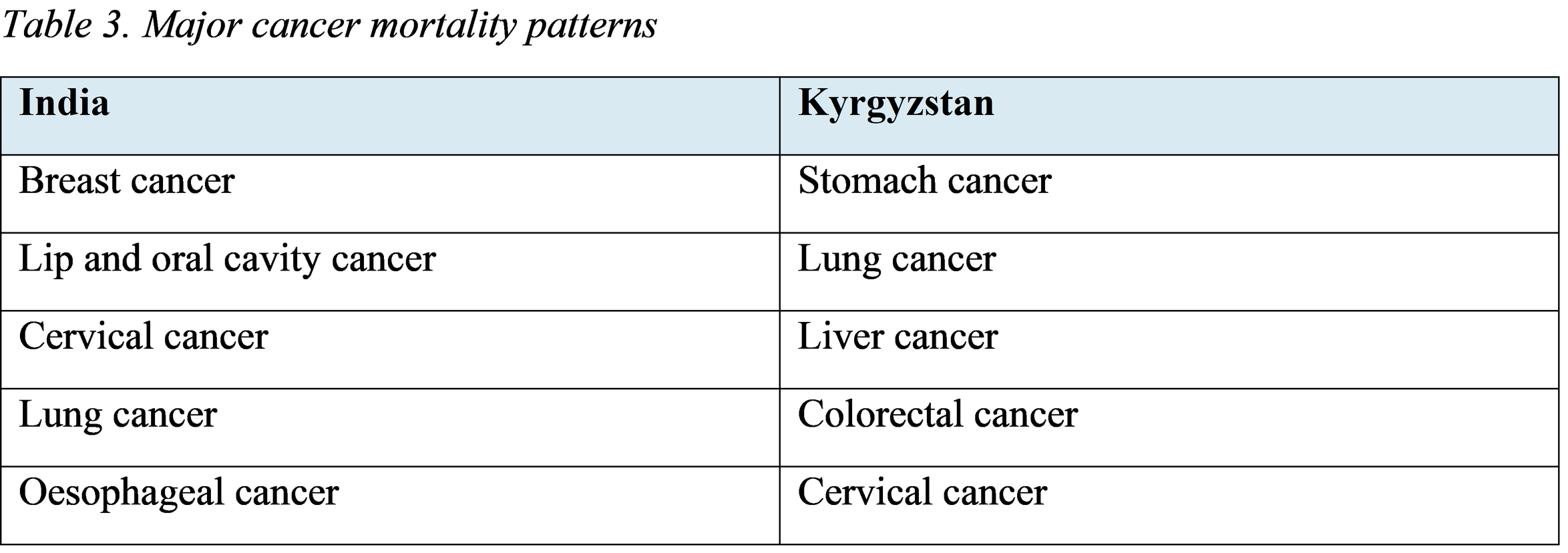
The listed sites represent important cancer mortality priorities; the ranking is not intended as a fully harmonized top-five ranking between the countries.
5.5 Comparative Interpretation of Mortality Patterns
1. India experiences a much higher absolute number of cancer deaths due to its substantially larger population.
2. Kyrgyzstan has a higher age-standardized cancer mortality rate than India, highlighting the importance of examining mortality rates rather than absolute counts alone.
3. The leading cancer types differ between the two countries, indicating that cancer prevention programmes should consider country-specific epidemiological patterns.
These differences demonstrate the need for targeted cancer-control strategies rather than relying on a single universal approach.
6. Discussion
6.1 Interpretation of Comparative Findings
The present comparative analysis demonstrates important differences in cancer mortality between India and Kyrgyzstan. India's estimated 916,827 cancer deaths in 2022 reflect a substantial national public health burden. The large population contributes to the high absolute number of deaths, making cancer prevention and treatment an important priority for the national healthcare system. Kyrgyzstan recorded 4,672 cancer deaths, but its age-standardized mortality rate of 82.8 per 100,000 was higher than India's rate of 64.4 per 100,000. This finding suggests that the cancer mortality burden remains significant in Kyrgyzstan despite its smaller population. The difference in mortality rates may be influenced by variations in cancer types, risk-factor exposure, stage at diagnosis, healthcare accessibility, treatment availability, and cancer registration systems. However, these factors cannot be established as direct causes from the present descriptive comparison.
6.2 Gender Differences in Cancer Mortality
Male cancer mortality rates were higher than female rates in both countries. In India, tobacco-related malignancies, particularly cancers of the oral cavity and lungs, contribute importantly to the male cancer burden. In Kyrgyzstan, the higher male age-standardized mortality rate may reflect differences in smoking patterns, occupational exposures, lifestyle factors, and cancer detection. These possible explanations require further country-specific investigation. Female cancer mortality also requires substantial attention. Breast and cervical cancers are important causes of cancer-related morbidity and mortality in India, while cervical and breast cancers are important among women in Kyrgyzstan. Strengthening women's health programmes, early diagnosis, and appropriate screening and treatment services could help reduce avoidable cancer deaths.
6.3 Healthcare Infrastructure and Access to Treatment
Healthcare accessibility plays an important role in cancer survival. In India, the availability of oncology services varies between urban and rural regions. Patients living in remote areas may experience difficulties accessing diagnostic imaging, biopsy services, radiotherapy, chemotherapy, and specialist consultations. In Kyrgyzstan, geographical distribution and the availability of specialized oncology services may also influence the time between symptom recognition, diagnosis, and treatment. Both countries require stronger referral systems, affordable diagnostic services, multidisciplinary cancer treatment, and improved continuity of care.
6.4 Role of Prevention and Early Detection
A substantial proportion of cancer risk is associated with modifiable factors. Public health interventions can therefore contribute to reducing future cancer mortality. Important preventive measures include tobacco cessation and stronger tobacco-control policies; reduction of harmful alcohol consumption; healthy nutrition and regular physical activity; prevention and management of hepatitis B and C infections; HPV vaccination; appropriate breast and cervical cancer screening; early evaluation of suspicious symptoms; and public awareness regarding cancer warning signs. The implementation of these strategies should be adapted to the specific cancer patterns and healthcare resources of each country.
6.5 Public Health Implications
The results demonstrate that cancer mortality should be addressed through both population-based prevention and improvements in clinical healthcare delivery. For India, priorities include strengthening rural cancer screening, tobacco-control interventions, early detection of oral and breast cancers, and affordable access to comprehensive oncology treatment. For Kyrgyzstan, strengthening early detection of stomach, lung, and liver cancers, improving access to diagnostic investigations, and expanding specialized oncology services are important priorities. Both countries should improve national cancer registries and mortality reporting systems to support evidence-based health planning.
7. Strengths and Limitations
7.1 Strengths
The study provides a comparative overview of cancer mortality in two countries with different demographic and healthcare characteristics. The use of internationally standardized IARC data improves comparability between the populations. The inclusion of absolute mortality, age-standardized rates, sex-specific differences, and cancer-site patterns provides a multidimensional understanding of the cancer burden. The study also identifies important areas for future public health research and intervention.
7.2 Limitations
1. The study relies on secondary estimates rather than individually verified clinical records.
2. The analysis is based on GLOBOCAN 2022 estimates and may not represent the exact number of registered cancer deaths in either country.
3. Differences in cancer registration coverage, diagnostic capacity, and death certification may influence the accuracy and comparability of national estimates.
4. The descriptive study design cannot establish causal relationships between risk factors, healthcare accessibility, and cancer mortality.
5. Detailed regional comparisons, socioeconomic stratification, and stage-specific survival data were not included.
7.3 Future Recommendations
1. Longitudinal analysis of cancer mortality trends in both countries.
2. Comparison of urban and rural cancer mortality.
3. Evaluation of cancer screening coverage and early diagnosis.
4. Assessment of socioeconomic inequalities in cancer treatment.
5. Investigation of tobacco, alcohol, dietary, and infectious risk factors.
6. Evaluation of cancer treatment outcomes and survival rates.
7. Strengthening national cancer registries and standardized reporting.
8. Public Health Recommendations
For India:
● Expand community-based screening and early diagnosis programmes.
● Strengthen tobacco and smokeless tobacco control.
● Improve access to affordable oncology services in rural areas.
● Increase awareness of breast, cervical, and oral cancers.
● Improve referral systems for timely cancer treatment.
For Kyrgyzstan:
● Strengthen early detection of stomach, lung, and liver cancers.
● Improve access to diagnostic imaging and pathological services.
● Expand specialized oncology services outside major urban centres.
● Strengthen tobacco-control and hepatitis-prevention programmes.
● Improve cancer registration and national mortality surveillance.
For both countries:
● Strengthen cancer prevention and health education.
● Improve access to essential cancer medicines.
● Develop multidisciplinary cancer-care programmes.
● Promote HPV and hepatitis B vaccination.
● Improve palliative care and supportive services.
● Establish regular monitoring of cancer mortality indicators.
9. Conclusion
The present comparative public health analysis demonstrates that cancer mortality is an important healthcare challenge in both India and Kyrgyzstan. In 2022, India recorded an estimated 916,827 cancer deaths, whereas Kyrgyzstan recorded 4,672 deaths. However, the age-standardized mortality rate was higher in Kyrgyzstan (82.8 per 100,000) than in India (64.4 per 100,000). Male cancer mortality rates were higher than female rates in both countries. The leading cancer mortality patterns also differed, emphasizing the importance of country-specific prevention and treatment strategies. India requires continued attention to its large absolute cancer burden, particularly through improved screening, tobacco control, early diagnosis, and affordable oncology treatment. Kyrgyzstan requires strengthened early detection, specialized cancer services, and improved diagnostic and treatment accessibility. In conclusion, reducing cancer mortality in both countries requires a comprehensive public health approach integrating prevention, early diagnosis, effective treatment, cancer registration, and equitable healthcare access. International cooperation and evidence-based national cancer-control policies can contribute significantly to improving cancer outcomes and reducing preventable deaths.
10. References
1. International Agency for Research on Cancer. (2024). Global Cancer Observatory: Cancer Today – India, GLOBOCAN 2022. World Health Organization. https://gco.iarc.who.int/
2. International Agency for Research on Cancer. (2024). Global Cancer Observatory: Cancer Today – Kyrgyzstan, GLOBOCAN 2022. World Health Organization. https://gco.iarc.who.int/
3. World Health Organization. (2024). Cancer country profiles and cancer prevention and control resources. https://www.who.int/health-topics/cancer
4. World Health Organization Regional Office for South-East Asia. (2024). Cancer in the South-East Asia Region: Population and burden of cancer (2022). WHO. https://iris.who.int/
5. Bray, F., Laversanne, M., Sung, H., Ferlay, J., Siegel, R. L., Soerjomataram, I., & Jemal, A. (2024). Global cancer statistics 2022: GLOBOCAN estimates of incidence and mortality worldwide for 36 cancers in 185 countries. CA: A Cancer Journal for Clinicians, 74(3), 229–263. https://doi.org/10.3322/caac.21834
6. Unveiling the cancer epidemic in India: A glimpse into GLOBOCAN 2022 and past patterns. (2025). Cancer Epidemiology. https://pubmed.ncbi.nlm.nih.gov/40070552/
7. International Agency for Research on Cancer. (2022). Cancer prevention and early detection. World Health Organization. https://www.iarc.who.int/