
Research and present occupational hazards in one major industry from home country (India)
Mining industry (literature search, hazard identification, industry mapping).
1. Dr. Turusbekova Akshoola Kozmanbetovna
2. Sarfaraz Hussain
(Teacher, International Medical Faculty, Osh State University, Kyrgyzstan
Student, International Medical Faculty, Osh State University, Kyrgyzstan)
Abstract
The mining sector is a foundational element of the Indian economy, yet it remains one of the most hazardous environments for its workforce. This report provides a comprehensive analysis of occupational risks in the Indian mining industry, spanning physical, chemical, biological, and psychosocial dimensions. Key findings highlight the prevalence of ground movement accidents in underground mines, accounting for 43.75% of fatalities, and the emergence of transportation-related injuries in opencast operations. Long-term health issues, particularly silicosis and coal workers' pneumoconiosis, remain significant, with some clusters reporting silicosis rates as high as 52%. The report also evaluates the transition from the legacy Mines Act of 1952 to the modernized Occupational Safety, Health, and Working Conditions (OSHWC) Code 2020. Strategic recommendations focus on technological modernization through blast-free mining and digital safety governance to achieve the "Vision Zero" goal by 2047.
Keywords: Occupational Health and Safety (OHS), Indian Mining Industry, Silicosis, Methane Explosions, OSHWC Code 2020, Geomechanical Risks, Vision Zero 2047, Coal Workers' Pneumoconiosis (CWP).
The mining sector in India represents a cornerstone of the national economy, providing the vital raw materials necessary for industrialization, infrastructure development, and energy security.1 As the country maintains its trajectory toward becoming a major global economic power, the demand for mineral resources continues to escalate, necessitating intensive extraction activities.1 However, the inherent nature of mining—characterized by the alteration of geological structures and exposure to toxic environments—presents a complex landscape of occupational hazards.3 These risks often lead to acute injuries or chronic, debilitating diseases.6 This report provides an exhaustive mapping of the industry, categorizes the multifaceted hazards, and evaluates the shifting regulatory framework from the foundational Mines Act of 1952 to the modernizing Occupational Safety, Health, and Working Conditions (OSHWC) Code of 2020.
National Mineral Scenario and Industry Mapping
India is endowed with significant resources of metallic and non-metallic minerals. The distribution of these minerals is dictated by the country's diverse lithology, ranging from ancient peninsular shields to younger sedimentary formations.9
Geographical Distribution and Mineral Belts
The mineral wealth of India is primarily concentrated in five major belts. The North Eastern Peninsular Belt, encompassing Jharkhand, West Bengal, and Odisha, possesses 93% of the country's iron ore and 84% of its coal.9 The Central Belt (Chhattisgarh, Andhra Pradesh, Madhya Pradesh, and Maharashtra) is rich in bauxite, manganese, and limestone.9 Recent explorations have further expanded this map, with significant lithium reserves discovered in Jammu and Kashmir, Rajasthan, and Karnataka.9
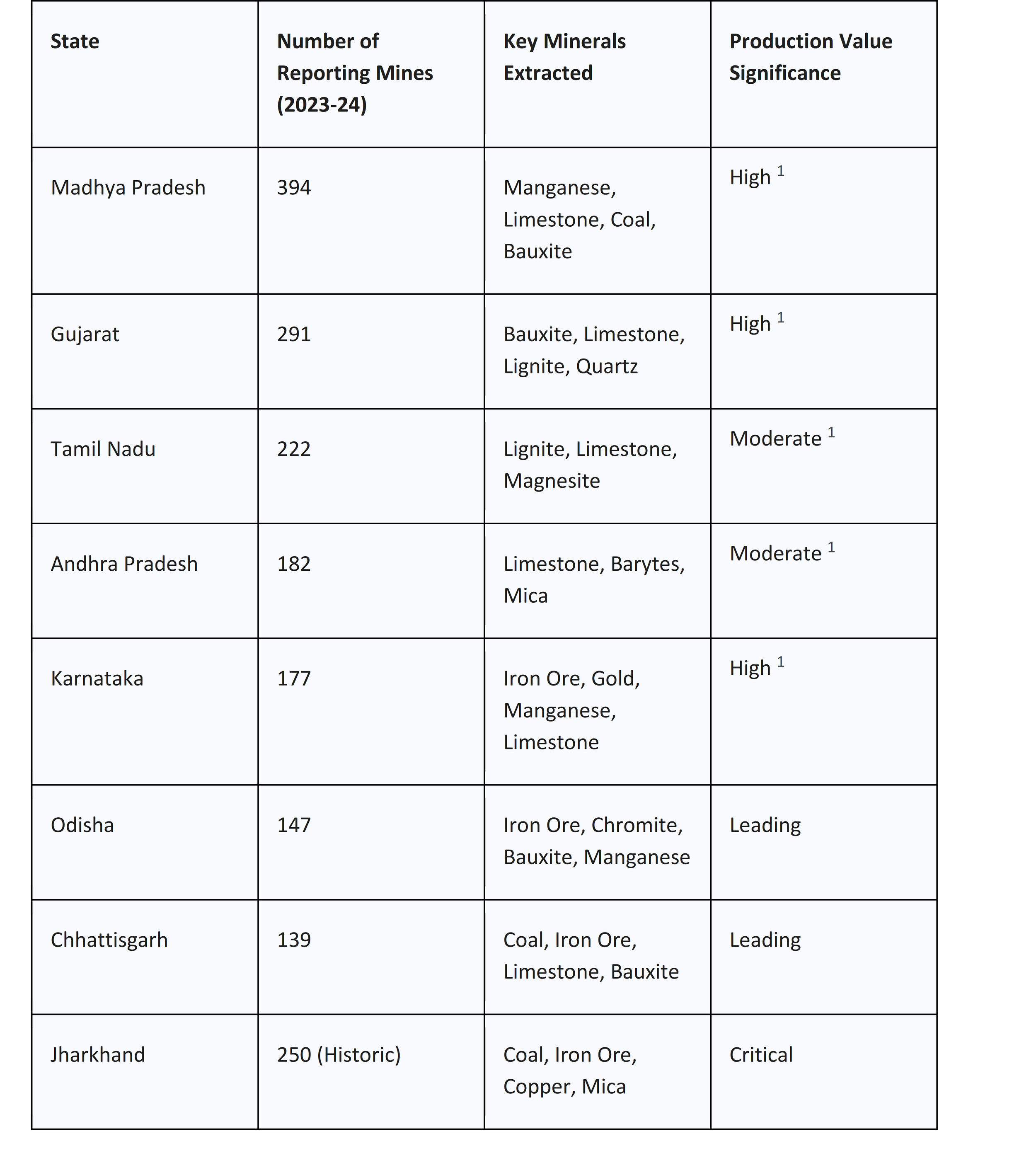
Sectoral Composition and Economic Contribution
The metallic mineral segment accounts for the vast majority of the sector's value, estimated at INR 1,27,599 crore in 2023-24 (90.3% of total mineral production value).1 The coal sector remains the most significant component in terms of both energy security and labor employment, centered in fields like Jharia (Jharkhand), Korba (Chhattisgarh), and Talcher (Odisha).
Categorization of Mining Operations and Operational Risk
The risks associated with mining are heavily influenced by the extraction method—opencast or underground.3
Opencast versus Underground Mining
Opencast mining involves large-scale blasting and the movement of Heavy Earth Moving Machinery (HEMM).14 Underground mining presents more acute risks, including roof collapses and methane explosions.3 Underground coal mines are categorized by "degree of gassiness," which dictates safety protocols.
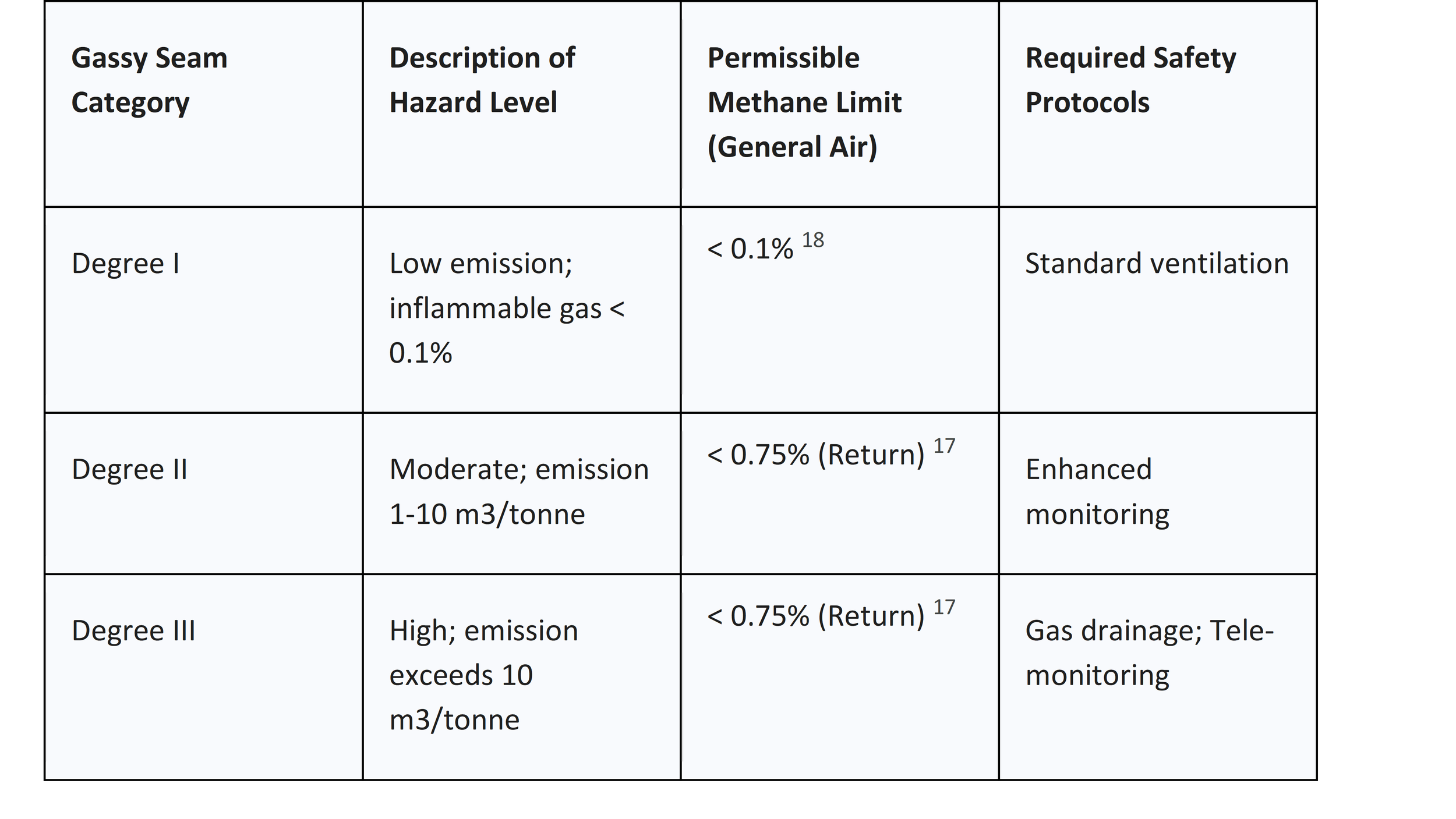
Statistical Evaluation of Occupational Accidents
Analysis of Directorate General of Mines Safety (DGMS) data indicates a long-term decline in fatal accidents (from 165 in 1992 to 24 in 2022 in coal mines).15 However, ground movement in underground coal mines still accounts for 43.75% of fatalities.3 Transportation machinery is the leading cause of death in opencast operations, particularly during night shifts.3
Physical and Geomechanical Hazards
Physical hazards are linked to the disturbance of geological equilibrium.3
● Strata Control: Roof and side falls are frequent causes of traumatic injury in underground mines.3 Manual handling and traditional support systems in semi-mechanized mines perpetuate these risks.19
● Slope Stability: Deep pits and overburden dumps in opencast mines face instability risks.24 The DGMS mandates systematic monitoring of slopes to detect pre-failure movements.13
● Mechanical Risks: Dumpers and trucks face collisions and brake failures, while conveyor systems pose entanglement risks.14
Atmospheric and Chemical Hazards
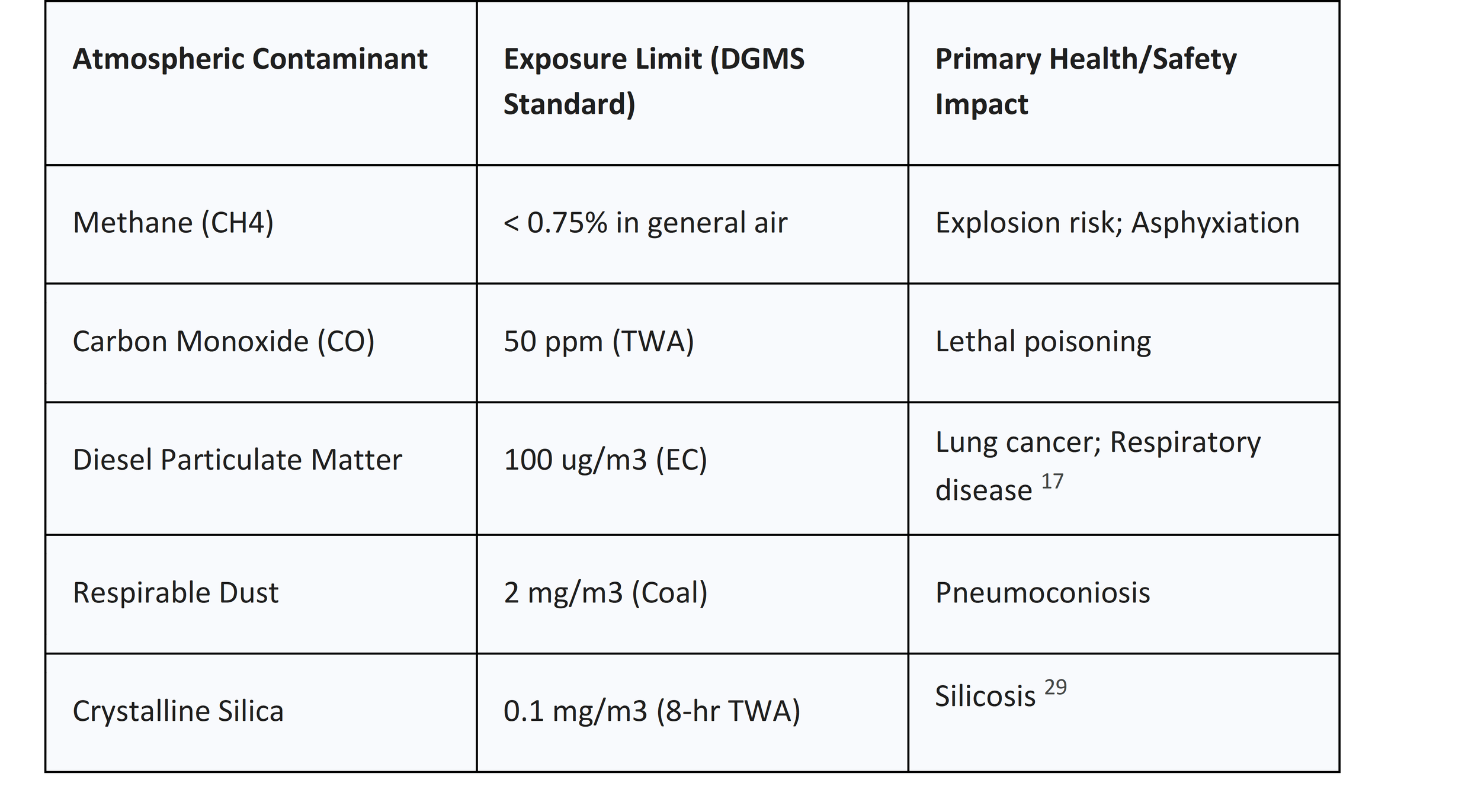
Underground atmospheres can accumulate toxic and inflammable gases.16
● Methane (CH4): Highly explosive between 5% and 15% concentration.16 In 2010, the Anjan Hill disaster showed that methane leaks can trigger secondary coal dust explosions. Methane also acts as a chemical asphyxiant by forming methemoglobin.16
● Carbon Monoxide (CO): Known as the "silent killer," CO is a byproduct of mine fires with an affinity for hemoglobin 200 times higher than oxygen.
● Diesel Fumes: Diesel Particulate Matter (DPM) from underground locomotives poses long-term risks for lung cancer and COPD.
Occupational Respiratory Diseases
Dust-related lung diseases are the most pervasive long-term health hazards in Indian mining.4
● Silicosis: Caused by crystalline silica in sandstone or quartz.8 A meta-analysis found a pooled prevalence of 25.98% among Indian mining and stone industry workers.32 Rajasthan clusters have reported rates as high as 52%.32
● Coal Workers' Pneumoconiosis (CWP): Chronic exposure to a 2 mg/m3 dust environment is estimated to cause category 1 or greater pneumoconiosis in 9% of miners over a 40-year career. Diagnosis is often confounded by high tuberculosis (TB) prevalence; 58% of miners diagnosed with silicosis were previously treated for TB.
Biological and Environmental Contamination
The mining environment can serve as a reservoir for pathogens.36
● Zoonotic Infections: Leptospirosis seroprevalence among miners in Tamil Nadu was 38.5%, reaching 65.3% in Pudukkottai blue metal miners due to water-logged environments and rat infestations.38
● Groundwater Contamination: Mining tailings are sources of arsenic (As), lead (Pb), and cadmium (Cd) contamination in groundwater.36 Arsenic concentrations in the Cuddapah Basin have reached up to 60.5 ug/L, well above the 10 ug/L WHO limit.36
Ergonomic Hazards and Musculoskeletal Disorders (MSDs)
Mining involves repetitive motion and heavy lifting, leading to high MSD prevalence (70% to 77% of workers).20
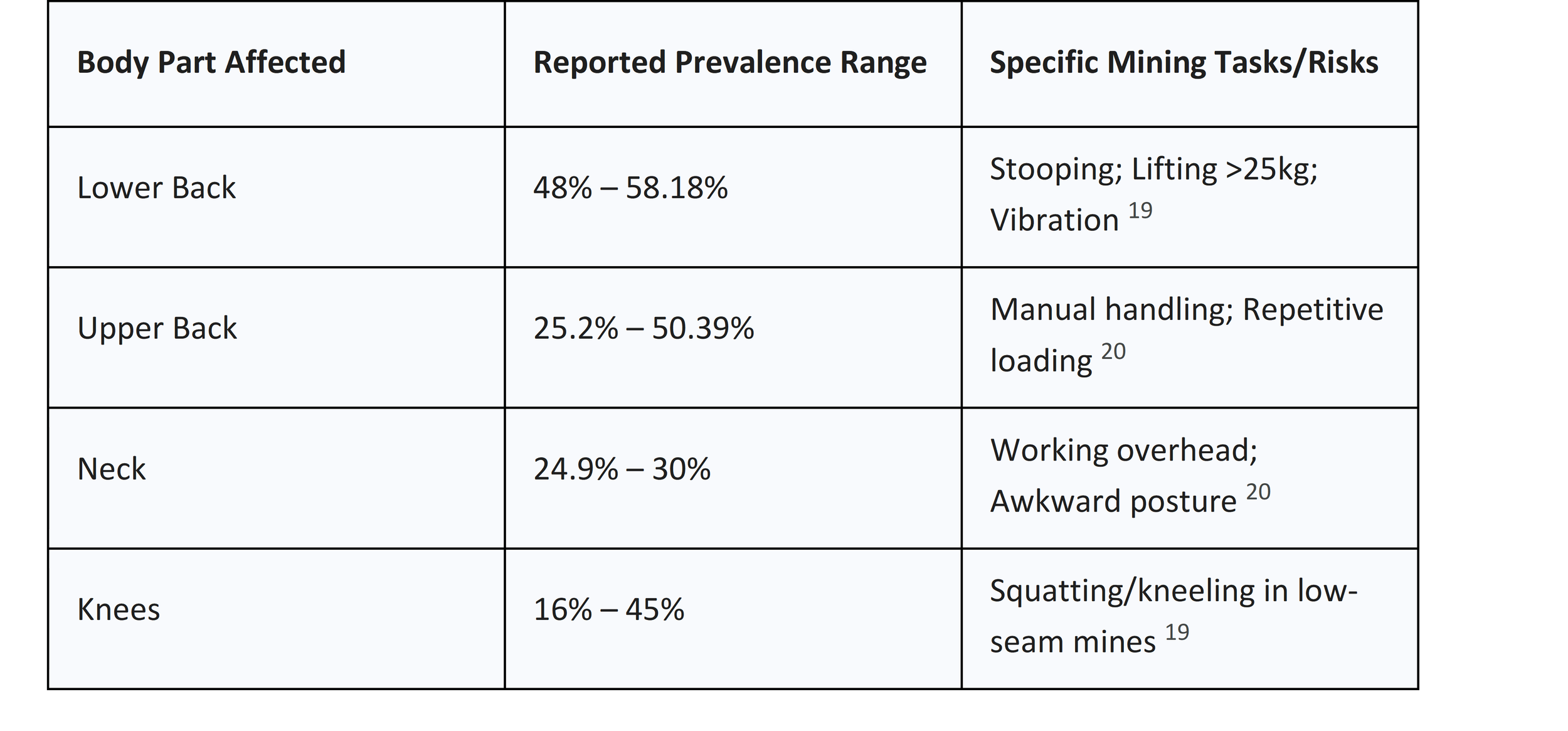
Whole-body vibration (WBV) from operating loaders and dumpers is a significant predictor of degenerative spinal disorders.20
Psychosocial Hazards and Mental Health
The combination of high job demands and isolation contributes to significant occupational stress.7 Over 80% of natural deaths at work in the mining sector are due to cardiovascular causes, such as stress-linked heart attacks.51 Factors include illiteracy, debt, and the "Fly-In-Fly-Out" (FIFO) system, which impoverishes the quality of rest and increases the likelihood of human error.7
Human Factors and the Regulatory Landscape
Human error accounts for an estimated 88% of mining accidents.5 To predict these risks, researchers use the Fuzzy Reasoning Approach (FRA), mapping variables like worker age, experience, and shift timing to generate risk scores.5
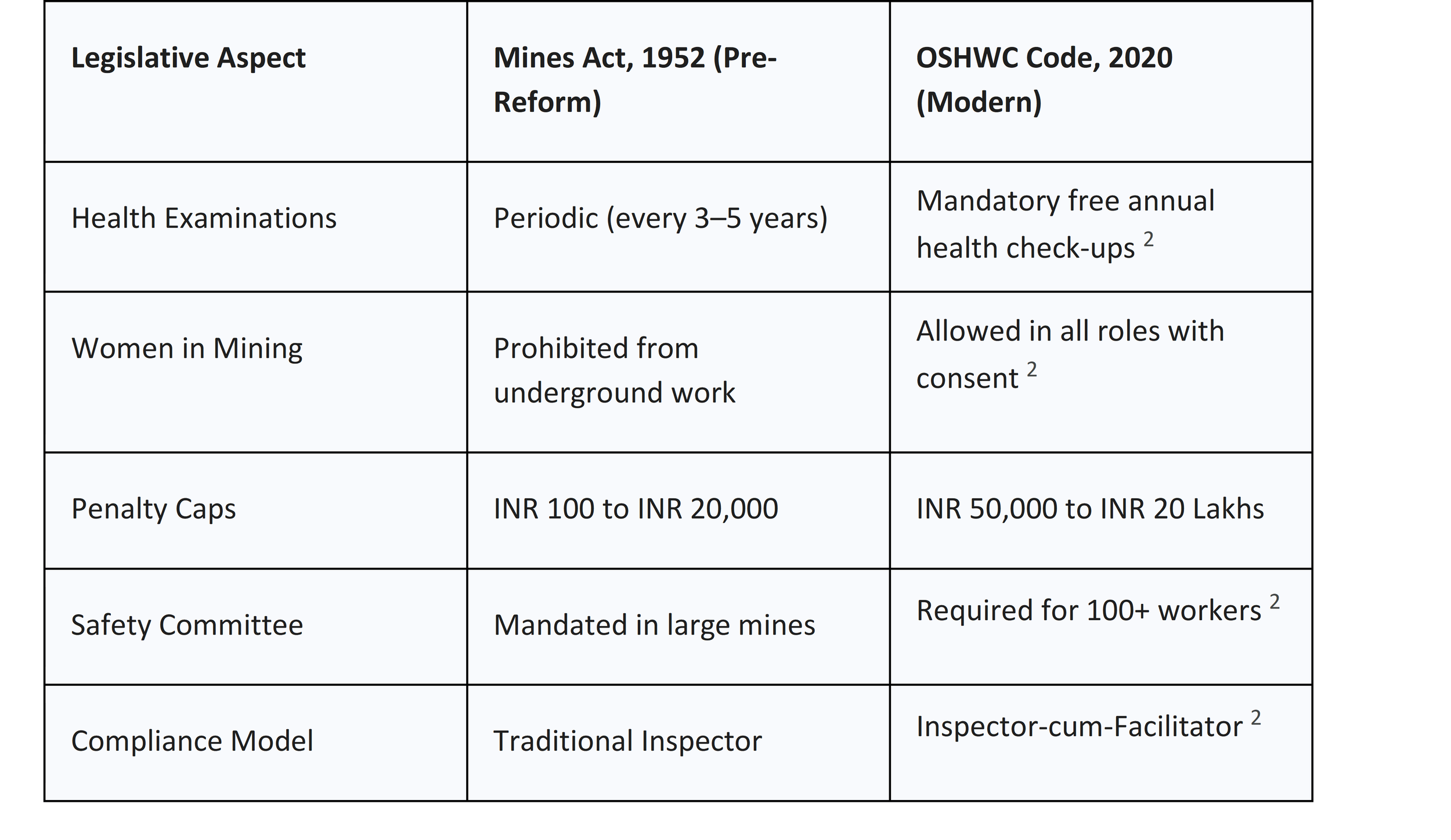
Transition to the OSHWC Code 2020
The Indian regulatory framework is moving from the Mines Act of 1952 to the Occupational Safety, Health, and Working Conditions (OSHWC) Code of 2020.2
Future Outlook and Strategic Recommendations
The Indian mining industry is pursuing "Vision Zero" (Zero Harm Potential) by 2047.24
1. Technological Mitigation: Expanding mass production technology (MPT) like continuous miners and surface miners eliminates the need for blasting and reduces worker exposure to unstable ground.
2. Real-Time Monitoring: Implementing GPS tracking for HEMMs and automated gas detection systems is vital for preventing transportation accidents.
3. Formalization: Extending health benefits and compensation to the unorganized and informal sectors is essential, as over 90% of workers currently operate outside formal safeguards.4
By integrating ergonomic design, environmental remediation, and rigorous implementation of the OSHWC Code 2020, India can build a resilient mining sector that prioritizes the health and dignity of its workforce.64
References-
1. Ministry of Mines, Government of India, Home, accessed January 11, 2026, https://mines.gov.in/webportal/nationalmineralscenario
2. New Labour Codes to Empower India's Mine Workers, accessed January 11, 2026, https://static.pib.gov.in/WriteReadData/specificdocs/documents/2025/dec/doc2025126720401.pdf
3. Associations of Occupational and Demographic Factors with Cause ..., accessed January 11, 2026, https://informaticsjournals.co.in/index.php/jmmf/article/download/47341/32196/103657
4. A Legal analysis on Occupational health of Mining ... - SEEJPH, accessed January 11, 2026, https://www.seejph.com/index.php/seejph/article/download/5493/3969/9080
5. Safety of Workers in Indian Mines: Study, Analysis, and Prediction ..., accessed January 11, 2026, https://pmc.ncbi.nlm.nih.gov/articles/PMC5605840/
6. An Overview of Human Health Hazards in Indian Mining Industry | Request PDF, accessed January 11, 2026, https://www.researchgate.net/publication/370664072_An_Overview_of_Human_Health_Hazards_in_Indian_Mining_Industry
7. Mental health in mine workers: a literature review - PMC - NIH, accessed January 11, 2026, https://pmc.ncbi.nlm.nih.gov/articles/PMC8655752/
8. Silicosis prevalence and related issues in India: a scoping review - PubMed, accessed January 11, 2026, https://pubmed.ncbi.nlm.nih.gov/39881375/
9. Mining in India - Wikipedia, accessed January 11, 2026, https://en.wikipedia.org/wiki/Mining_in_India
10. Arsenic Contamination in Indian Groundwater: From Origin to Mitigation Approaches for a Sustainable Future - MDPI, accessed January 11, 2026, https://www.mdpi.com/2073-4441/15/23/4125
11. Coal mine workers - PIB, accessed January 11, 2026, https://www.pib.gov.in/PressReleasePage.aspx?PRID=2099176
12. 30 die after blast in Indian mine - Gulf News, accessed January 11, 2026, https://gulfnews.com/world/asia/india/30-die-after-blast-in-indian-mine-1.254285
13. MAJOR INITIATIVES OF DGMS FOR OSH IN MINES, accessed January 11, 2026, https://mines.gov.in/admin/storage/ckeditor/DAY_2_PPT_18_1737544792.pdf
14. Enhancing Safety in India's Coal Mining Sector: Measures, Challenges, and Progress, accessed January 11, 2026, https://rmaindia.org/enhancing-safety-in-indias-coal-mining-sector-measures-challenges-and-progress/
15. Accident Analysis Because of HEMMs | PDF | Hydrocarbons | Resource Extraction - Scribd, accessed January 11, 2026, https://www.scribd.com/document/881969001/Accident-Analysis-Because-of-HEMMs
16. Methane leak may have been the culprit - The Hindu, accessed January 11, 2026, https://www.thehindu.com/news/states/Methane-leak-may-have-been-the-culprit/article16299169.ece
17. भारत सरकार / Government of India - श्रम एवं रोजगार मंत्रालय / Ministry of Labour & Employment खान सुरक्षा महानिदेशालय / Directorate General of Mines Safety - DGMS, accessed January 11, 2026, https://www.dgms.gov.in/writereaddata/UploadFile/DGMS_04637184121810426988.pdf
18. DGMS - The Coal Mines Regulations, 1957, accessed January 11, 2026, https://www.dgms.gov.in/writereaddata/UploadFile/Coal_Mines_Regulation_1957.pdf
19. (PDF) A Study on the Prevalence of Musculoskeletal Disorders among the Coalminers of Eastern Coalfields of India - ResearchGate, accessed January 11, 2026, https://www.researchgate.net/publication/314876646_A_Study_on_the_Prevalence_of_Musculoskeletal_Disorders_among_the_Coalminers_of_Eastern_Coalfields_of_India
20. prevalence and work-related risk factors of musculoskeletal disorders among miners at kalumbila - medRxiv, accessed January 11, 2026, https://www.medrxiv.org/content/10.1101/2024.05.15.24307432v1.full.pdf
21. Prevalence of musculoskeletal disorders and assessment of workplace factors: A case of coal mine in Pakistan - Aalborg University's Research Portal, accessed January 11, 2026, https://vbn.aau.dk/en/publications/prevalence-of-musculoskeletal-disorders-and-assessment-of-workpla/
22. SAFETY IN COAL MINES, accessed January 11, 2026, https://coal.gov.in/sites/default/files/2025-02/chap14AnnualReport2025en2.pdf
23. The Occupational Safety, Health and Working Conditions Code, 2019 - PRS India, accessed January 11, 2026, https://prsindia.org/billtrack/the-occupational-safety-health-and-working-conditions-code-2019
24. SAFETY IN COAL MINES, accessed January 11, 2026, https://www.coal.nic.in/sites/default/files/2023-03/chap14AnnualReport2023en.pdf
25. Annual Report 2024 | LABS Initiative, accessed January 11, 2026, https://labsinitiative.com/wp-content/uploads/2025/04/LABS-Annual-Report-2024.pdf
26. Death trap underground - The Hindu, accessed January 11, 2026, https://www.thehindu.com/features/magazine/Death-trap-underground/article16302652.ece
27. (PDF) Statistical analysis of methane explosions in Turkey's underground coal mines and some recommendations for the prevention of these accidents: 2010–2017 - ResearchGate, accessed January 11, 2026, https://www.researchgate.net/publication/342928221_Statistical_analysis_of_methane_explosions_in_Turkey's_underground_coal_mines_and_some_recommendations_for_the_prevention_of_these_accidents_2010-2017
28. DGMS Diesel Equipment Safety Circular 2020 – DPM Limits, Ventilation & Exam Notes, accessed January 11, 2026, https://onlineminingexam.graphy.com/blog/dgms-diesel-equipment-safety-circular-2020-dpm-limits-ventilation-exam-notes
29. DGMS (Tech.) (S&T) Circular No.01 Dhanbad, Dated 21 January 2010 To: All Owners, Agents and Mangers of Mines Subject: R - e-library WCL, accessed January 11, 2026, https://elibrarywcl.files.wordpress.com/2015/02/dgms-tech-st-circular-no-01-of-2010-respirable-dust.pdf
30. A review of pathogenic airborne fungi and bacteria: unveiling occurrence, sources, and profound human health implication - Frontiers, accessed January 11, 2026, https://www.frontiersin.org/journals/microbiology/articles/10.3389/fmicb.2024.1428415/full
31. Occupational Safety and Health of Coal Miners in India: A Study, accessed January 11, 2026, https://journaljemt.com/index.php/JEMT/article/view/1363
32. India's Textile Industry : Weaving the Future of Global manufacturing - Kirtane & Pandit Chartered Accountants, accessed January 11, 2026, https://www.kirtanepandit.com/pdf/1760524845.India's%20Textile%20Industry%20-%20Weaving%20the%20Future%20of%20Global%20Manufacturing.pdf
33. Byssinosis - Wikipedia, accessed January 11, 2026, https://en.wikipedia.org/wiki/Byssinosis
34. (PDF) Occupational Stress among Textile Industry Worker - ResearchGate, accessed January 11, 2026, https://www.researchgate.net/publication/360453863_Occupational_Stress_among_Textile_Industry_Worker
35. (PDF) Silicosis prevalence and related issues in India: a scoping review - ResearchGate, accessed January 11, 2026, https://www.researchgate.net/publication/388495781_Silicosis_prevalence_and_related_issues_in_India_a_scoping_review
36. Contamination of Indian Groundwater and Associated Health Effects - ResearchGate, accessed January 11, 2026, https://www.researchgate.net/publication/392731546_Contamination_of_Indian_Groundwater_and_Associated_Health_Effects
37. Prevention & Control of Leptospirosis in India: Human Health Initiatives, accessed January 11, 2026, https://ncdc.mohfw.gov.in/wp-content/uploads/2025/08/NCDC-Quarterly-Journal-with-QR-Code-47-52.pdf
38. Leptospirosis Seroprevalence among Blue Metal Mine Workers of ..., accessed January 11, 2026, https://pmc.ncbi.nlm.nih.gov/articles/PMC4944705/
39. Labour Codes: Transforming India's Textile Sector with Simplified Compliance and Stronger Worker Welfare - PIB, accessed January 11, 2026, https://www.pib.gov.in/FactsheetDetails.aspx?id=150508&NoteId=150508&ModuleId=16®=1&lang=1
40. DGMS (Tech.) Circular No. 5 of 2020, Dhanbad, dated 24.02. 2020, accessed January 11, 2026, https://www.dgms.gov.in/writereaddata/UploadFile/DGMSTechCircular_05.pdf
41. Integrated risk assessment of groundwater contamination and respiratory outcomes in mining-impacted regions: A case study of Picher, Oklahoma, accessed January 11, 2026, https://journalijsra.com/sites/default/files/fulltext_pdf/IJSRA-2024-1647.pdf
42. Groundwater contamination through potentially harmful metals and its implications in groundwater management - Frontiers, accessed January 11, 2026, https://www.frontiersin.org/journals/environmental-science/articles/10.3389/fenvs.2022.1021596/full
43. Assessment of groundwater quality and human health risk from nitrate contamination using a multivariate statistical analysis - IWA Publishing, accessed January 11, 2026, https://iwaponline.com/jwh/article/22/2/350/99830/Assessment-of-groundwater-quality-and-human-health
44. A systematic review of work-related health problems of factory workers in the textile and fashion industry - Oxford Academic, accessed January 11, 2026, https://academic.oup.com/joh/article/66/1/uiae007/7591975
45. Ergonomic Hazards in the Indian Construction Industry: A Comprehensive Review of Risks, Impacts, and Interventions - International Research Journal of Multidisciplinary Scope (IRJMS), accessed January 11, 2026, https://www.irjms.com/wp-content/uploads/2025/01/Manuscript_IRJMS_02229_WS.pdf
46. Chemical Safety in Textile Industry: 11 Smart Protocols for Long-Term Safety, accessed January 11, 2026, https://biopolchemicals.com/textile-chemicals/chemical-safety-in-textile-industry/
47. Occupational health hazards in textiles industry - Hind- Research Journal, accessed January 11, 2026, http://researchjournal.co.in/upload/assignments/9_267-271.pdf
48. The Prevalence of Musculoskeletal Disorders among Miners around the World: A Systematic Review and Meta-Analysis - NIH, accessed January 11, 2026, https://pmc.ncbi.nlm.nih.gov/articles/PMC8219631/
49. Textile and Handloom Workers in the Country - PIB, accessed January 11, 2026, https://www.pib.gov.in/PressReleasePage.aspx?PRID=1593028
50. Prevalence and Nature of Ergonomic Hazards Among Construction Workers in India: A Cross-Sectional Study - MDPI, accessed January 11, 2026, https://www.mdpi.com/2313-576X/11/3/62
51. Occupational Health Scenario in Mines: An Indian Perspective, accessed January 11, 2026, https://rfppl.co.in/subscription/upload_pdf/p---51-54-)-jbb-vol.-8-no.2-jul-dec-2023-(1)-1723197980.pdf
52. Prevalence and predictors of occupational stress among quarry workers in rural Rajasthan, India | Journal of Public Mental Health | Emerald Publishing, accessed January 11, 2026, https://www.emerald.com/jpmh/article/16/4/132/234727/Prevalence-and-predictors-of-occupational-stress
53. Psychological distress among workers at a mine - PMC - NIH, accessed January 11, 2026, https://pmc.ncbi.nlm.nih.gov/articles/PMC12223964/
54. Mental health in mine workers: a literature review - Semantic Scholar, accessed January 11, 2026, https://pdfs.semanticscholar.org/751c/a34939f011c8b8af6824ef393bdb9eed8be2.pdf
55. India – Government of India Issues Draft Rules on Four Labour Codes - KPMG International, accessed January 11, 2026, https://kpmg.com/xx/en/our-insights/gms-flash-alert/2026/flash-alert-2026-007.html
56. pilot health insurance scheme for powerloom weavers - Textile Commissioner, accessed January 11, 2026, https://www.txcindia.gov.in/html/HIS%20for%20Website.pdf
57. Workers Health and Safety in the Textile Industries in Delhi - European Economic Letters (EEL), accessed January 11, 2026, https://eelet.org.uk/index.php/journal/article/download/274/230
58. India's Mining Law Revolution: OSHWC Code, 2020 Replaces The Mines Act, 1952, accessed January 11, 2026, https://mininggyan.com/blog/indias-mining-law-revolution-oshwc-code-2020-replaces-the-mines-act-1952/
59. Uncovering the Ergonomic Risks Threatening the Health of Underground Female Coal Mineworkers - MDPI, accessed January 11, 2026, https://www.mdpi.com/2313-576X/12/1/1
60. INDIA'S TEXTILE INDUSTRY WEAVING A MODERN FUTURE - Vision IAS, accessed January 11, 2026, https://cdn.visionias.in/value_added_material/446f5-threads-of-transformation--indias-textile-industry-weaving-a-modern-future.pdf
61. (PDF) Indian Textile Industry and Its Impact on the Environment and ..., accessed January 11, 2026, https://www.researchgate.net/publication/305774515_Indian_Textile_Industry_and_Its_Impact_on_the_Environment_and_Health
62. इंडोशन्यूज़ INDOSHNEWS - DGFASLI, accessed January 11, 2026, https://dgfasli.gov.in/public/Admin/Cms/NewsLetter//68418a32bf8243.74803514.pdf
63. Pathogen Safety Data Sheets: Infectious Substances – Histoplasma capsulatum, accessed January 11, 2026, https://www.canada.ca/en/public-health/services/laboratory-biosafety-biosecurity/pathogen-safety-data-sheets-risk-assessment/histoplasma-capsulatum.html
How India's New OSH Code Reshapes Labor Compliance for Foreign Investors, accessed January 11, 2026, https://www.india-briefing.com/news/how-indias-new-osh-code-reshapes-labor-compliance-40915.html/