
Research and present occupational hazards in one major industry from your home country (India),
Agriculture industry (literature search, hazard identification, industry mapping).
1. Dr.Turusbekova Akshoola Kozmanbetovna
2. Shubham Verma
(Teacher, International Medical Faculty, Osh State University, Kyrgyzstan
Student, International Medical Faculty, Osh State University, Kyrgyzstan)
Abstract
The Indian agricultural sector represents a cornerstone of the national economy, sustaining approximately 55% of the country’s workforce and contributing significantly to the Gross Domestic Product. Despite its economic criticality, the industry is characterized by an intricate matrix of occupational hazards that disproportionately affect the informal and smallholder farming communities. This research report provides a granular mapping of the industry, distinguishing between the highly mechanised regions of the North and the labor-intensive practices of the East and South. Through an extensive literature search encompassing data from the National Sample Survey Office, the Indian Council of Agricultural Research, and the International Labour Organization, this study identifies and categorizes physical, chemical, mechanical, biological, and psychosocial hazards. Particular attention is paid to the rising incidence of machinery-related injuries, chronic pesticide toxicity, thermal stress exacerbated by climate change, and the prevalence of zoonotic diseases such as leptospirosis. The report further evaluates the gendered dimensions of agricultural work, highlighting the ergonomic mismatches faced by the increasing female workforce. Finally, an analytical critique of the Occupational Safety, Health and Working Conditions Code 2020 is presented, uncovering significant regulatory gaps for unorganized workers and proposing strategic interventions based on engineering, enforcement, and education.
Keywords: Indian Agriculture, Occupational Health, Pesticide Toxicity, Smallholder Farming, OSH Code 2020, Zoonotic Diseases, Ergonomics, Heat Stress.
Industry Mapping and Structural Dynamics of Indian Agriculture
The agricultural landscape of India is defined by its sheer scale and the profound complexity of its agro-climatic zones. The sector has successfully identified 12 major crops that collectively account for nearly 90% of the total cultivated area in the country.1 This vast expanse is managed primarily through a smallholder farming model, which presents formidable challenges for effective occupational health monitoring and safety management.1 According to the 10th Agriculture Census of 2015–2016, smallholder and marginal farmers—those possessing less than two hectares of land—represent 86.2% of the total farming population, yet they own only 47.3% of the arable land.2 This creates an environment where approximately 126 million farmers operate on average holdings of just 0.6 hectares, a scale that often precludes the accumulation of surplus capital necessary for investing in safety equipment or modern, safer technologies.2
The structural divide between formal and informal farming systems is most visible in the seed and input markets. The formal seed sector, comprising both public and private organizations, meets only 15–20% of the total seed requirement.3 Over 70% of seed usage, particularly for food crops, relies on farm-saved seeds, which often carry risks of low germination, disease contamination, and pest infestation, thereby increasing the labor intensity required for crop maintenance.3 Regional disparities in agricultural efficiency are also stark. States like Punjab and Haryana, which were at the forefront of the Green Revolution, demonstrate higher efficiency due to the intensive use of modern inputs, irrigation, and high-yielding variety (HYV) seeds.4 Conversely, in states like Uttar Pradesh and Rajasthan, the lack of infrastructure and extension services limits smallholder productivity and increases the reliance on traditional, more hazardous labor practices.4
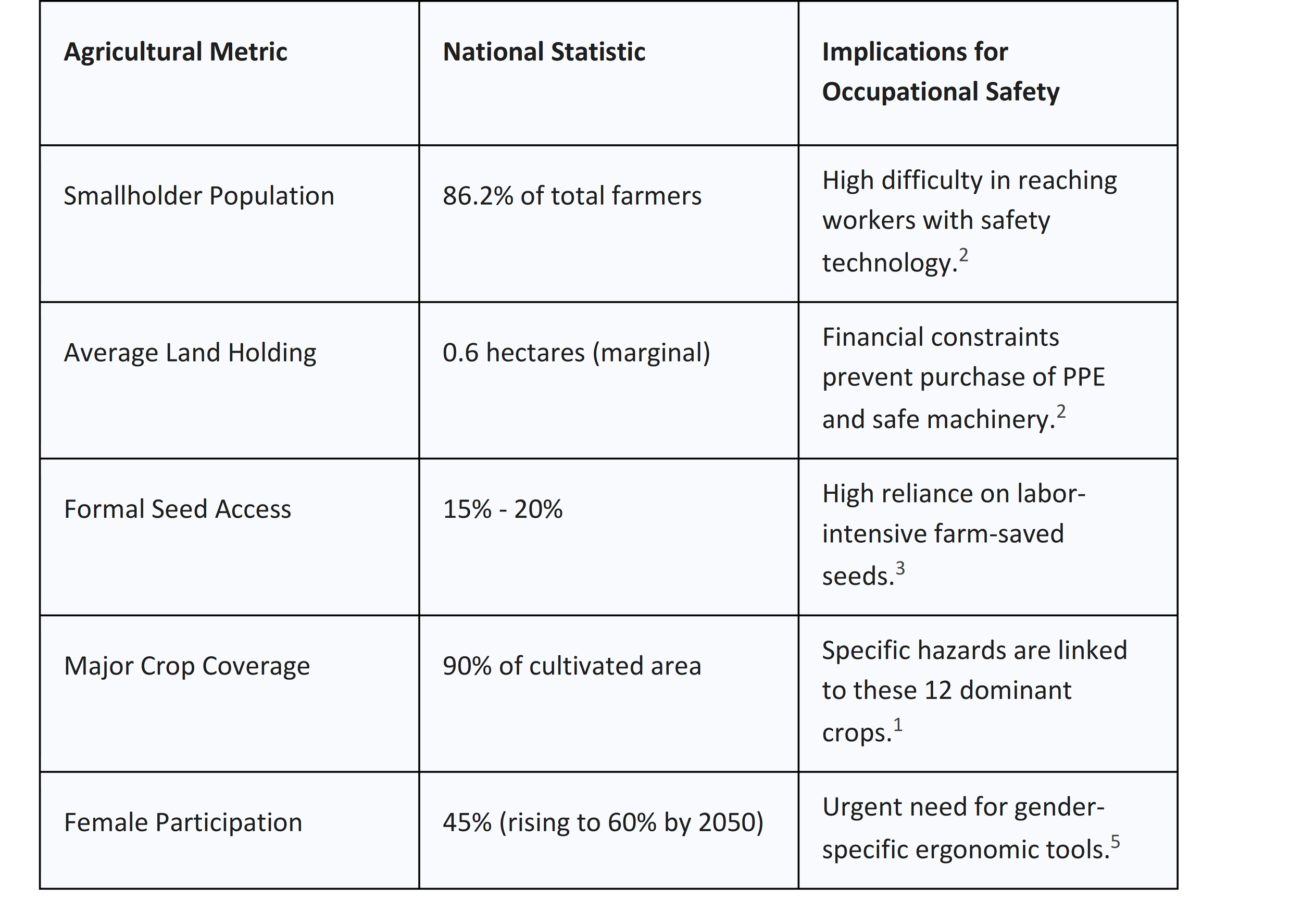
The socio-economic profile of the workforce is undergoing a significant transition. Job-driven out-migration of rural youths and the globalization of food choices under corporate industrial agriculture are altering traditional farming landscapes.2 This out-migration has led to the "feminization" of Indian agriculture, with female workers now constituting 45% of the workforce, a figure projected to reach 60% by 2050.5 These women often manage the "double burden" of agricultural labor and household maintenance, which, when combined with chronic undernutrition and the lack of social security, heightens their vulnerability to occupational illnesses.6 Poverty remains a constant feature in the lives of smallholders, where basic consumption often exceeds income, leading to a cycle of indebtedness that forces workers to accept hazardous conditions in exchange for employment security.4
Identification and Taxonomy of Mechanical Hazards
Mechanical hazards represent a leading cause of acute physical trauma in the Indian agricultural sector. As farm mechanization has increased—with mechanical and electrical power now contributing more than 90% of total farm power—the incidence of machinery-related accidents has risen commensurately.5 Approximately 230 million agricultural workers operate a diverse array of tools and machines, ranging from simple hand tools like sickles to complex equipment like tractors and combine harvesters.5
Incidence and Severity of Machinery Accidents
The agricultural accident scenario is characterized by a high frequency of non-fatal injuries but a significant portion of life-altering fatalities. Nationwide surveys indicate an overall accident incidence rate of approximately 334 to 374.5 per 100,000 workers annually.5 Of these accidents, roughly 80.2% are attributed to farm machines and hand tools, while the remaining 19.8% stem from sources like snake bites, animal attacks, or lightning strikes.5
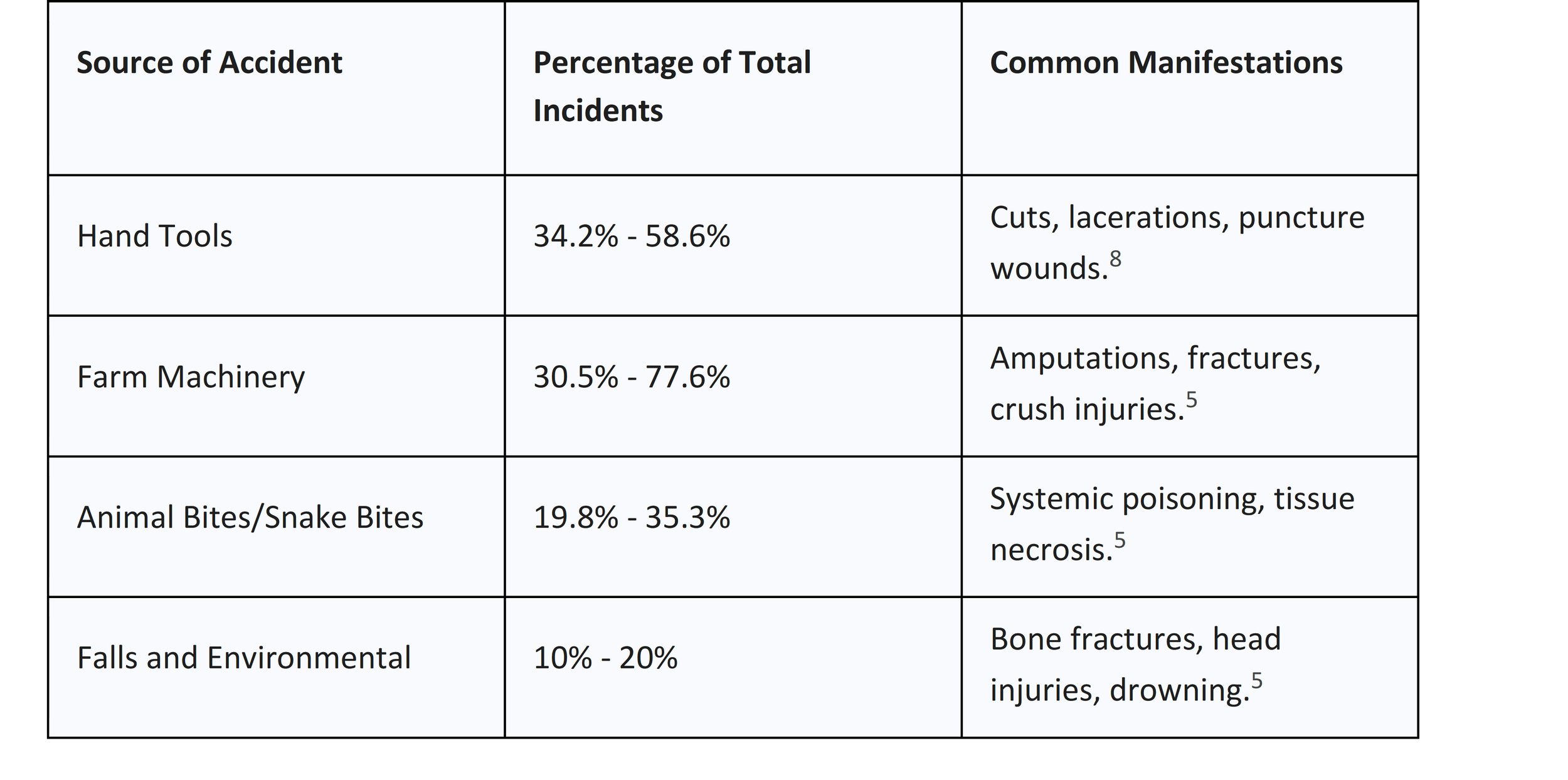
Localized studies provide a more granular view of this crisis. In rural Mysuru, for instance, the prevalence of work-related injuries among farmers reached 61.9% within a single year.8 These injuries were predominantly caused by hand tools and occurred most frequently during the morning hours of the rainy season.8 Similarly, research in Madhya Pradesh estimated that over 17,000 agricultural incidents occurred in the state annually, resulting in thousands of deaths and permanent disabilities, with a total monetary loss estimated at 27 million US dollars per year.10
The Role of Specific Farm Equipment in Morbidity
The chaff cutter, or fodder cutter, is identified as one of the most hazardous machines in rural India. A study of compensation cases in the Sonipat district revealed that the chaff cutter was associated with 47% of all disabling injuries, 80% of which resulted in the amputation of fingers.9 The mechanisms of injury typically involve hands getting entrapped in the rollers during feeding, often due to diverted attention, loose clothing, or children playing near the machinery.9
Tractors, while essential for modern productivity, pose both acute and chronic risks. Beyond the risk of overturning—which accounts for a large portion of fatal accidents—tractors are a primary source of noise and vibration.9 Noise levels on tractors in various operations range from 90 to 110 dB(A), consistently exceeding the safe limits prescribed by OSHA and NIOSH.9 Consequently, tractor-driving farmers show a significantly higher prevalence of high-frequency hearing loss compared to non-tractor drivers.9 Chronic vibration exposure is also linked to musculoskeletal disorders, with many drivers reporting persistent backache and spinal degenerative changes.9
Chemical Hazards and the Pesticide Epidemic
Chemical hazards in Indian agriculture are dominated by the extensive and often unregulated use of pesticides, fertilizers, and herbicides. Pesticides are designed to disrupt biological systems, and their impact on human health is both acute and chronic.11 India is one of the world's leading users of pesticides, treating approximately 40% of its total cultivated area with these chemicals.13
Acute Toxicity and Public Health Burden
Acute pesticide poisoning is a major global health problem, with an estimated 385 million people suffering from unintentional poisoning annually.14 In India, approximately 145 million cases of unintentional acute poisoning are reported each year, leading to around 10,000 deaths.14 The symptoms of acute exposure—manifesting within 48 hours—include respiratory tract irritation, sore throat, cough, nausea, vomiting, dizziness, and, in severe cases, loss of consciousness or death.15
The accessibility of highly hazardous pesticides in rural communities also contributes to a significant suicide rate. It is estimated that 20–30% of all suicides in India involve intentional pesticide ingestion, with the true number of deaths possibly reaching 70,000 per year when accounting for underreporting.14 The proximity of these chemicals to the domestic environment means that children and family members are also at risk of accidental ingestion.14
Chronic Exposure and Neurological Decline
The long-term health consequences of low-level, repeated pesticide exposure are arguably more insidious. Chronic exposure is consistently associated with non-communicable diseases, including cancer, neurological disorders, and endocrine disruptions.11
Recent alarming evidence from West Bengal suggests that long-term use of these chemicals contributes to a decline in cognitive function, including memory and decision-making abilities.12 Over one-fifth of farmers screened in localized studies showed signs of cognitive decline or depression.12 The risk is particularly high for those who spray pesticides on a weekly basis over many years, as these chemicals can disrupt neurotransmitters, trigger brain cell inflammation, and inhibit enzymes essential for nerve signaling.12
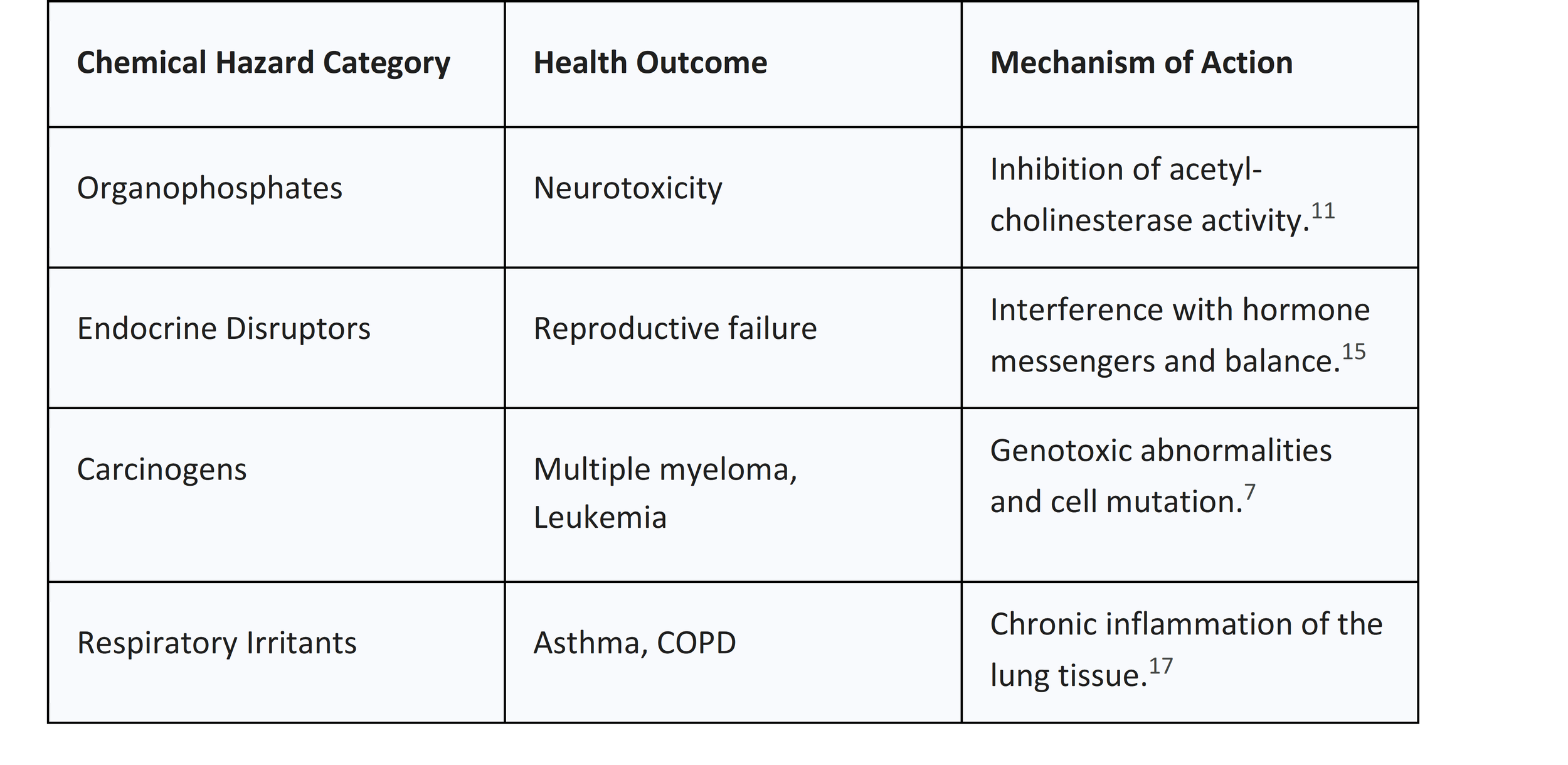
The "cocktail effect"—where the toxicity of individual chemicals is enhanced or altered when combined—remains one of the most worrying aspects of pesticide use.15 Farmers frequently use mixtures of different agents, leading to cumulative toxicity that is difficult to diagnose and treat within the existing rural healthcare infrastructure.15
Physical and Climatic Hazards in a Warming Climate
Agricultural work in India is primarily performed outdoors, exposing workers to the full intensity of solar radiation, extreme temperatures, and volatile weather conditions. These environmental factors are increasingly recognized as critical occupational hazards, especially in the context of global climate change.18
Thermal Stress and Heat-Related Illnesses
Workers in the food production chain are exceptionally vulnerable to heat stress due to the combination of strenuous physical labor and exposure to ambient temperatures that often exceed 35 degrees Celsius.18 The Lancet Countdown indicates that heat-related deaths in India increased by 55% between the early 2000s and 2021, with 167.2 billion potential labor hours lost in a single year due to heat exposure.19
Heat-related illnesses (HRI) exist on a continuum, ranging from mild symptoms like heavy sweating and muscle cramps to life-threatening heat strokes.18 At a wet-bulb globe temperature (WBGT) exceeding recommended thresholds, workers experience dehydration, which reduces blood flow to the kidneys and causes concentrated urine.21 Studies in Tamil Nadu’s salt pans and Andhra Pradesh’s agricultural clusters show that 93% of workers report symptoms of heat strain, and nearly 60% suffer from chronic dehydration.19
Chronic Kidney Disease of Unknown Etiology (CKDu)
One of the most severe long-term impacts of occupational heat exposure is the rise of Chronic Kidney Disease of unknown etiology (CKDu). This epidemic is particularly prevalent in "hotspots" like the Uddanam region of Andhra Pradesh.21 Severe hyperthermia-induced volume depletion can lead to acute kidney injury (AKI); repeated episodes of AKI, in turn, result in irreversible loss of kidney function.21 In Uddanam, 76% of individuals screened in certain studies had an estimated glomerular filtration rate (eGFR) below 90 mL/min/1.73m², with heat-exposed workers showing a two-fold increase in risk.21
UV Exposure and Other Physical Factors
Prolonged exposure to ultraviolet (UV) radiation is a known risk factor for skin diseases and certain types of cancer.22 Elevated risks for melanoma and multiple myeloma have been observed in agricultural cohorts.7 Additionally, workers face risks from noise and vibration, as previously discussed, as well as ionizing and non-ionizing radiation in specialized farming environments.23
Biological Hazards and Zoonotic Transmission
The agricultural environment is a fertile ground for biological hazards, including bacteria, viruses, parasites, and fungi. Workers are exposed through direct contact with livestock, contaminated soil, or irrigation water.24
Leptospirosis and Melioidosis
Leptospirosis, often called "paddy field worker disease," is a major zoonotic concern in India. It is transmitted via the urine of infected animals, which contaminates the warm, humid environment of rice paddies.26 Data analysis indicates a high prevalence in coastal states like Andhra Pradesh (64.7%) and Kerala (60.6%).26 The disease can range from subclinical infection to lethal pulmonary hemorrhage, yet it remains frequently underdiagnosed.26
Melioidosis, caused by the soil-dwelling bacterium Burkholderia pseudomallei, is another emerging threat.28 Field workers, particularly those in paddy fields, are the most common occupational group affected.28 The infection is potentially fatal, with mortality rates as high as 90% without early laboratory diagnosis and timely antimicrobial therapy.29 Diabetes mellitus is a primary predisposing factor, present in up to 75% of confirmed cases.30
Soil-Borne Parasites and Vector-Borne Diseases
Barefoot farming in irrigated fields significantly increases the risk of hookworm infection, with prevalence rates as high as 38% in certain tribal districts.32 Chronic hookworm blood loss contributes to the high rates of anemia observed among marginalized agricultural laborers.32 Furthermore, agricultural irrigation channels often support the breeding of disease vectors, leading to localized outbreaks of lymphatic filariasis and visceral leishmaniasis, particularly in areas with poor sanitation infrastructure.32
Ergonomic Hazards and the Gendered Workforce
As the Indian agricultural workforce becomes increasingly feminized, the ergonomic challenges faced by women have come to the forefront of occupational health research. Women currently contribute one-third of the agricultural labor force and nearly 48% of self-employed farmers.23
Anthropometric Mismatches and Musculoskeletal Disorders
Most agricultural tools and machines in India are designed for male populations, ignoring the physiological differences in stature, physical strength, and vital capacity between genders.23 Women have approximately 20% less hemoglobin and 11% less vital capacity than men, making the use of heavy, traditional tools more taxing.23
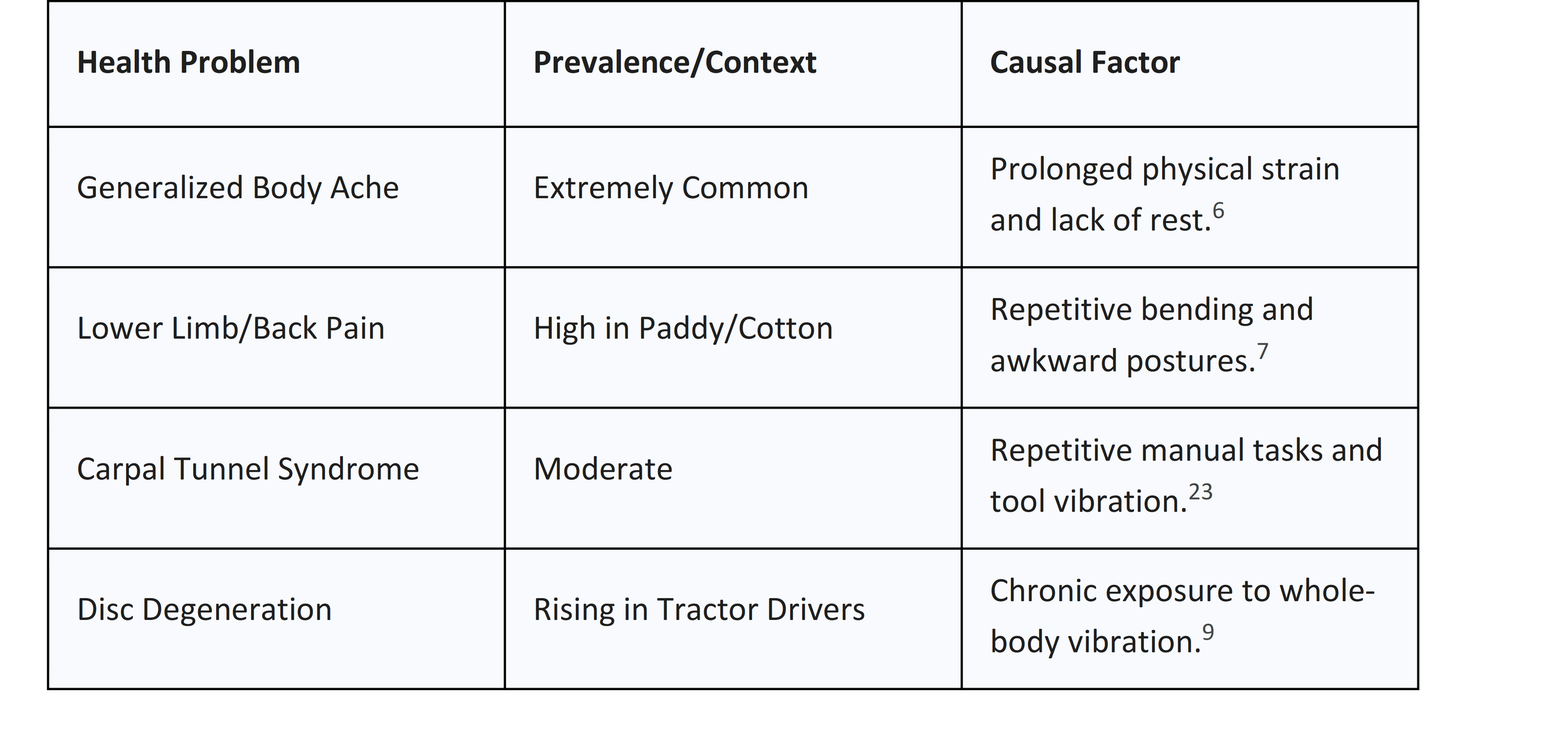
Musculoskeletal disorders (MSDs) are the most prevalent health problem among these workers, primarily affecting the back, shoulders, arms, and knees.7 The use of biomass fuels for cooking also adds to the physical burden, exposing women to high levels of carbon monoxide and poor illumination, which contributes to visual stress and respiratory issues.23
Psychosocial Hazards and Mental Health
Psychosocial stress in agriculture stems from economic insecurity, the work-family life imbalance, and societal factors such as gender discrimination.6 The "agrarian crisis"—characterized by rising input costs, volatile markets, and climate change—has led to a tragic rise in farmer suicides, with approximately 400,000 farmers committing suicide between 1995 and 2018.7 These stressors are often compounded by domestic issues such as alcoholism in spouses and the lack of control over household earnings.6
Analysis of the Regulatory Framework: OSH Code 2020
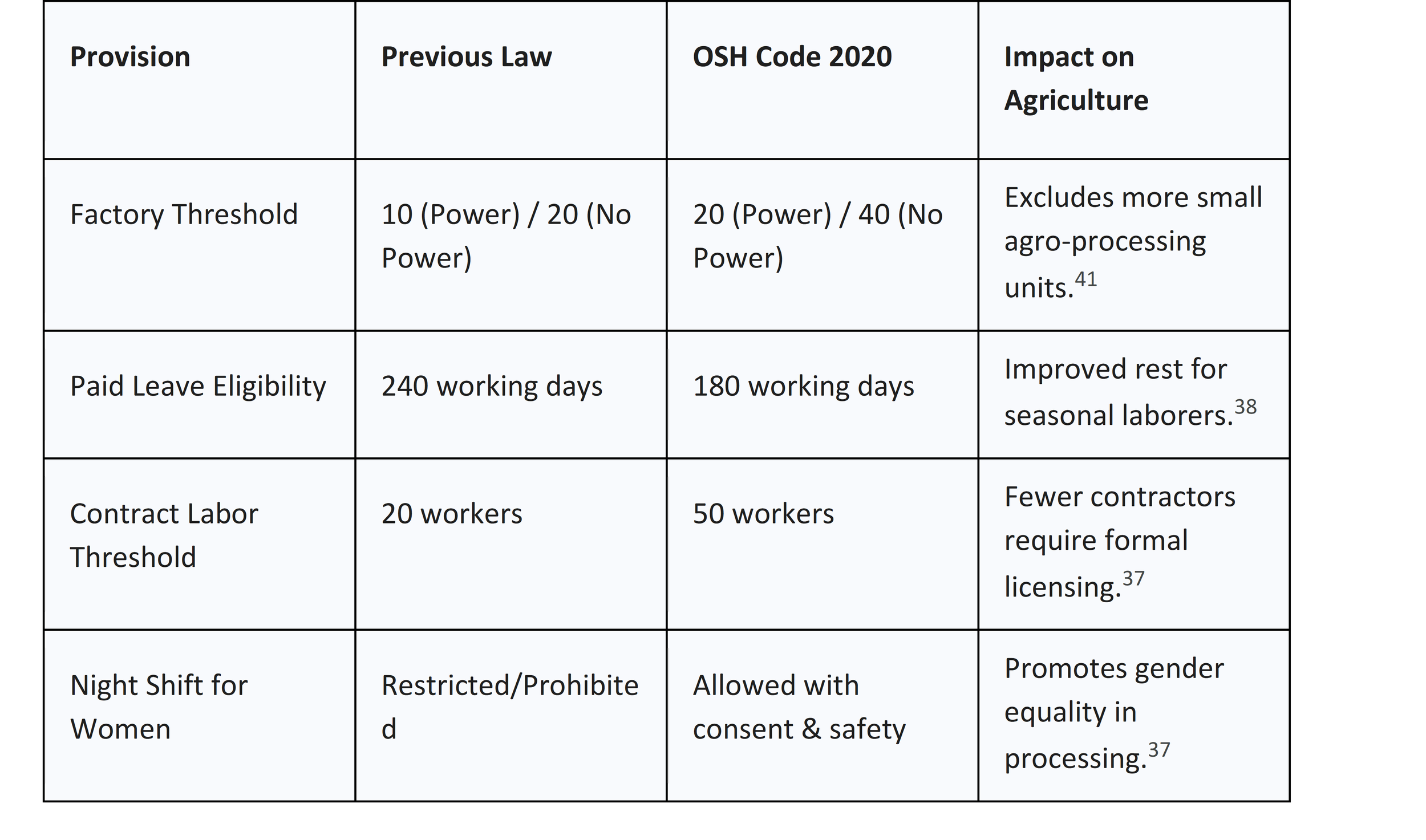
The Occupational Safety, Health and Working Conditions (OSH) Code 2020 was enacted to simplify and modernize India's labor laws, subsuming 13 central legislations into a single framework.36 While it introduces several pro-worker provisions, its impact on the agricultural sector is limited by significant structural barriers.
Key Reforms and Universal Provisions
The OSH Code expands the definition of "worker" and "establishment," theoretically providing universal health and safety coverage for all sectors.37 Significant pro-worker provisions include:
● Mandatory appointment letters to ensure transparency in wages and benefits.37
● Free annual health check-ups for all employees.38
● Portability of benefits for inter-state migrant workers.37
● Lower eligibility thresholds for paid leave (reduced from 240 to 180 days).38
● Victim compensation, where at least 50% of fines imposed on employers must be paid to the injured worker or their heirs.36
Regulatory Gaps and Critiques
Despite these advancements, the agricultural sector remains largely outside the effective reach of the OSH Code. The primary limitation is the threshold for what constitutes an "establishment." Most safety and welfare facilities are mandated only for establishments with 10 or more workers.39 Since the vast majority of Indian farms are smallholdings or operate in the informal sector, millions of workers remain without statutory safety guarantees.40
Furthermore, the Code shifts much of the substantive law-making power from Parliament to the executive through "delegated legislation," leading to concerns that safety standards may be diluted to favor ease of doing business.40 The replacement of inspectors with "inspector-cum-facilitators" is also seen as a double-edged sword; while it may reduce harassment, it risks weakening the enforcement of safety protocols in high-risk environments like plantations and pesticide-intensive farms.37
Engineering and Strategic Interventions for Risk Mitigation
To address the identified hazards, the Indian Council of Agricultural Research (ICAR) and other agencies have developed several engineering and educational interventions aimed at enhancing human comfort and minimizing accidents.5
Ergonomic Equipment Design
The All India Coordinated Research Project on Ergonomics and Safety in Agriculture (AICRP on ESAAS) focuses on the application of ergonomic principles to farm tools.5 Interventions include:
● Rollover protective structures (ROPS) for tractors to reduce fatalities from overturning.5
● Safe feeding chutes for threshers and chaff cutters to prevent limb entrapment.5
● Non-woven fabric filters and respirators to protect against the high dust content (often above 500 mg/m³) generated by combine harvesters.5
● Efficient spraying safety kits to minimize chemical exposure during application.5
Public Health and Educational Strategies
Education and training are recognized as crucial elements in reducing the burden of occupational illness.13 Recommendations include:
● Training on the correct use and maintenance of hand tools and personal protective equipment (PPE).13
● Implementation of "Heat Action Plans" that include mandatory rest breaks in shaded areas and electrolyte consumption.18
● Enhanced awareness campaigns regarding the long-term cognitive and mental health risks of pesticide exposure.12
● Improving access to rural healthcare services, specifically for early diagnosis of zoonotic diseases and kidney function screening.21
Conclusion
The Indian agricultural industry remains a high-risk occupational environment where traditional labor practices intersect with modern mechanization and chemical inputs to create a complex hazard profile. While technological advancements have enhanced productivity, the lack of corresponding safety infrastructure has led to a significant burden of injuries and chronic diseases. The rising "feminization" of the workforce and the intensifying impacts of climate change necessitate a shift toward more inclusive, gender-sensitive, and environmentally adaptive safety protocols. Although the OSH Code 2020 offers a modernized framework for labor regulation, its effectiveness in the agricultural sector will depend on its ability to transcend institutional thresholds and reach the unorganized smallholder communities that form the heart of Indian farming. Future efforts must prioritize the integration of occupational health into primary healthcare, the enforcement of stringent quality controls for inputs, and the widespread adoption of ergonomic, safe technology to ensure a sustainable and healthy future for the nation’s agricultural workforce.
References -
1. Farm-Level, In-Season Crop Identification for India - arXiv, accessed January 11, 2026, https://arxiv.org/html/2507.02972v1
2. The Future of Smallholder Farming in India: Some Sustainability Considerations - MDPI, accessed January 11, 2026, https://www.mdpi.com/2071-1050/12/9/3751
3. Impact of Formal Seed Sources on Smallholder Farming in India: Evidence from NSS Survey using Propensity Score Matching - Indian Society Of Agricultural Economics, accessed January 11, 2026, https://www.isaeindia.com/publication/download-pdf/366
4. Comparative insights into smallholder agriculture in Uttar Pradesh and Rajasthan:A Field Study - Center for Sustainable Development, accessed January 11, 2026, https://csd.columbia.edu/sites/default/files/content/docs/ICT%20India/Papers/ICT_India_Working_Paper_23.pdf
5. Occupational health and safety issues in Indian Agriculture - ResearchGate, accessed January 11, 2026, https://www.researchgate.net/publication/389926342_Occupational_health_and_safety_issues_in_Indian_Agriculture
6. Occupational Health of Agricultural Women Workers in India - PMC, accessed January 11, 2026, https://pmc.ncbi.nlm.nih.gov/articles/PMC7877425/
7. Health and Injury Outcomes among Agricultural Workers of India - ResearchGate, accessed January 11, 2026, https://www.researchgate.net/publication/391373209_Health_and_Injury_Outcomes_among_Agricultural_Workers_of_India
8. Occupational injuries: Prevalence, Patterns and Associated ... - NICPD, accessed January 11, 2026, https://nicpd.ac.in/ojs-/index.php/gjmedph/article/download/3822/2957/6904
9. Souvenir - Part-2.cdr, accessed January 11, 2026, https://www.sqfiei.in/19thsafetyconvention/techpaper06.pdf
10. Agricultural Injuries in Central India: Nature, Magnitude, and Economic Impact, accessed January 11, 2026, https://elibrary.asabe.org/abstract.asp?aid=7221
11. A systematic review of pesticide exposure, associated risks, and long-term human health impacts - PubMed Central, accessed January 11, 2026, https://pmc.ncbi.nlm.nih.gov/articles/PMC11664077/
12. Are pesticides stealing farmers’ memories? Alarming signs emerge from West Bengal’s fields, accessed January 11, 2026, https://timesofindia.indiatimes.com/city/kolkata/are-pesticides-stealing-farmers-memories-alarming-signs-emerge-from-west-bengals-fields/articleshow/126203331.cms
13. Health-Related Challenges and Programs Among Agriculture Workers: A Narrative Review, accessed January 11, 2026, https://pmc.ncbi.nlm.nih.gov/articles/PMC11056488/
14. Pesticide poisoning in India: prevalence, challenges & opportunities, accessed January 11, 2026, https://centrepsp.org/media/blog/pesticide-poisoning-in-india-prevalence-challenges-opportunities/
15. Health Effects of Pesticides, accessed January 11, 2026, https://www.pan-uk.org/health-effects-of-pesticides/
16. Effect of Occupational Exposure of Pesticides on Health of Farmers of the Agricultural Fields of Sorbhug Area of Lower - Nature Environment and Pollution Technology, accessed January 11, 2026, http://www.neptjournal.com/upload-images/NL-32-14-(14)B-1613com.pdf
17. Occupational Health and Services – Indian Scenario - Asia Monitor Resource Centre, accessed January 11, 2026, https://amrcentre.org/wp-content/uploads/2024/09/Occupational-status-report-India.pdf
18. Impacts of Climate Change and Heat Stress on Farmworkers' Health: A Scoping Review, accessed January 11, 2026, https://www.frontiersin.org/journals/public-health/articles/10.3389/fpubh.2022.782811/full
19. Heat Stress: A Hazardous Occupational Risk for Vulnerable Workers - PMC - NIH, accessed January 11, 2026, https://pmc.ncbi.nlm.nih.gov/articles/PMC10334395/
20. (PDF) Global warming and Health Hazards to Indian Farmers - ResearchGate, accessed January 11, 2026, https://www.researchgate.net/publication/369009015_Global_warming_and_Health_Hazards_to_Indian_Farmers
21. Investigating the Impact of Heat Exposure Among Agricultural Communities in a CKDu Hotspot - Indian Journal of Nephrology, accessed January 11, 2026, https://indianjnephrol.org/investigating-the-impact-of-heat-exposure-among-agricultural-communities-in-a-ckdu-hotspot/
22. Occupational safety and health in the agricultural sector: a bibliographic review - PMC, accessed January 11, 2026, https://pmc.ncbi.nlm.nih.gov/articles/PMC10835407/
23. Occupational Health Hazard of Farm Women - ICAR-CIWA, accessed January 11, 2026, https://icar-ciwa.org.in/gks/Downloads/Technical%20Bulletins/Occupational%20Health_Final.pdf
24. Seroprevalence and potential risk factors of Leptospira interrogans serovar Hardjo infection in dairy cattle of Tanahun district - CSIRO Publishing, accessed January 11, 2026, https://www.publish.csiro.au/AN/pdf/AN24101
25. (PDF) Agriculture and Zoonotic Diseases in Farmers in India - ResearchGate, accessed January 11, 2026, https://www.researchgate.net/publication/380711262_Agriculture_and_Zoonotic_Diseases_in_Farmers_in_India
26. Epidemiological Status of Leptospirosis in India - Semantic Scholar, accessed January 11, 2026, https://pdfs.semanticscholar.org/d57a/6a3efef0a4e9f985af974c893ae0e2cffae9.pdf
27. Leptospirosis and the Environment: A Review and Future Directions - PMC, accessed January 11, 2026, https://pmc.ncbi.nlm.nih.gov/articles/PMC10538202/
28. Health Risks to Agricultural Communities: Impact of B. pseudomallei Contamination in Soil and Water Sources in Goa, India - Acta Scientific, accessed January 11, 2026, https://actascientific.com/ASMI/ASMI-08-1478.php
29. Melioidosis: An Indian Perspective - JAPI, accessed January 11, 2026, https://japi.org/article/japi-73-5-63
30. Two Decades of Melioidosis in India: A Comprehensive Epidemiological Review - PMC, accessed January 11, 2026, https://pmc.ncbi.nlm.nih.gov/articles/PMC12030058/
31. Melioidosis: A new emerging infection in West Coastal Maharashtra - IP Int J Med Microbiol Trop Dis, accessed January 11, 2026, https://ijmmtd.org/archive/volume/10/issue/1/article/8858
32. Neglected by Design: Occupational Parasitic Infections in India's Lower Castes - PMC, accessed January 11, 2026, https://pmc.ncbi.nlm.nih.gov/articles/PMC12742599/
33. Safety and health in agriculture - International Labour Organization, accessed January 11, 2026, https://www.ilo.org/resource/other/safety-and-health-agriculture
34. Occupational health problems among agricultural and plantation workers - ResearchGate, accessed January 11, 2026, https://www.researchgate.net/publication/12040393_Occupational_health_problems_among_agricultural_and_plantation_workers
35. Occupational Health and Safety Laws in Agricultural Sector: An Emerging Need in India, accessed January 11, 2026, https://www.researchgate.net/publication/393701215_Occupational_Health_and_Safety_Laws_in_Agricultural_Sector_An_Emerging_Need_in_India
36. Occupational Safety, Health and Working Conditions (OSH) Code, 2020 - PIB, accessed January 11, 2026, https://www.pib.gov.in/PressReleasePage.aspx?PRID=2192802
37. How India's New OSH Code Reshapes Labor Compliance for Foreign Investors, accessed January 11, 2026, https://www.india-briefing.com/news/how-indias-new-osh-code-reshapes-labor-compliance-40915.html/
38. Occupational Safety, Health and Working Conditions (OSH) Code ..., accessed January 11, 2026, https://static.pib.gov.in/WriteReadData/specificdocs/documents/2025/nov/doc20251122702801.pdf
39. FAQs on Occupational Safety, Health and Working Conditions (OSH) Code, 2020 | Ministry of Labour & Employment|Government of India, accessed January 11, 2026, https://labour.gov.in/en/faqs-occupational-safety-health-and-working-conditions-osh-code-2020
40. India's New Labour Codes: A critical appraisal | SabrangIndia, accessed January 11, 2026, https://sabrangindia.in/indias-new-labour-codes-a-critical-appraisal/
41. The Occupational Safety, Health And Working Conditions Code, 2020 - PRS India, accessed January 11, 2026, https://prsindia.org/billtrack/the-occupational-safety-health-and-working-conditions-code-2020
42. Incidence of occupational injuries among adults residing in a ... - NIH, accessed January 11, 2026, https://pmc.ncbi.nlm.nih.gov/articles/PMC6572944/
43. Safety + Health for All Workers in India – Key Achievements, accessed January 11, 2026, https://www.ilo.org/sites/default/files/2025-01/KeyAchievementsOSHIndia.pdf