
The Language of Hormones: Main Clinical Syndromes of the Endocrine System
1. Kebekova Aizat Ashimzhanovna
2. Ahmed Sheriff Zarina Mohammed Asif
3. Chathoth Kunnummal Sreyas
4. Sheik Dawood Oli Liyuja Fathima
(1. Lecturer, International Medical Faculty, Osh State University, Osh, Kyrgyz Republic
2. Student, International Medical Faculty, Osh State University, Osh, Kyrgyz Republic
3. Student, International Medical Faculty, Osh State University, Osh, Kyrgyz Republic
4. Student, International Medical Faculty, Osh State University, Osh, Kyrgyz Republic)
Abstract
The endocrine system communicates in a language of circulating hormones, and its diseases announce themselves through a surprisingly limited repertoire of clinical syndromes: excess, deficiency, and resistance. This article reviews the main syndromes of the endocrine system as encountered in contemporary clinical practice such as diabetes mellitus and the metabolic syndrome, thyrotoxicosis and hypothyroidism, hypercortisolism and adrenal insufficiency, disorders of mineralocorticoid and catecholamine excess, the pituitary syndromes of acromegaly, hyperprolactinemia, hypopituitarism, and disordered water balance, the calcium-regulating syndromes of hyper- and hypoparathyroidism, the gonadal syndromes of polycystic ovary syndrome and hypogonadism, and the polyglandular autoimmune syndromes. Each is examined through its pathophysiology, clinical presentation, diagnostic strategy, and current treatment, with particular attention to developments through 2025: the organ-protective reframing of diabetes management around GLP-1 receptor agonists and SGLT2 inhibitors in the ADA Standards of Care 2025, refined consensus on the diagnosis and medical therapy of Cushing's syndrome, and updated approaches to thyroid disease and adrenal disorders. The central argument is that despite enormous molecular progress, endocrinology remains a quintessentially clinical discipline: the syndromes are recognized at the bedside, confirmed in the laboratory, and treated across decades of a patient's life, and the clinician who masters their recognition holds one of the broadest diagnostic toolkits in medicine.
Keywords: endocrine disorders; diabetes mellitus; thyroid; adrenal; pituitary; hypercortisolism; hypothyroidism; polycystic ovary syndrome
1. Introduction
Endocrinology is the specialty of patterns. A woman gains weight, bruises easily, and finds her blood pressure climbing; a young man sweats, trembles, and loses weight despite eating voraciously; a middle-aged patient complains only of fatigue that no amount of sleep relieves. Each of these is a sentence in the language of hormones, and the task of the clinician is translation. The endocrine system includes hypothalamus, pituitary, thyroid, parathyroids, adrenals, pancreatic islets, gonads, and a growing list of hormonally active tissues from adipose to heart which governs metabolism, growth, reproduction, salt and water, calcium, and the response to stress. When it fails, it does so in one of three fundamental ways: a gland produces too much hormone (hyperfunction), too little (hypofunction), or target tissues fail to respond (resistance). Nearly every endocrine syndrome in clinical practice can be mapped onto this triad, and it is this underlying logic that gives the field its coherence.
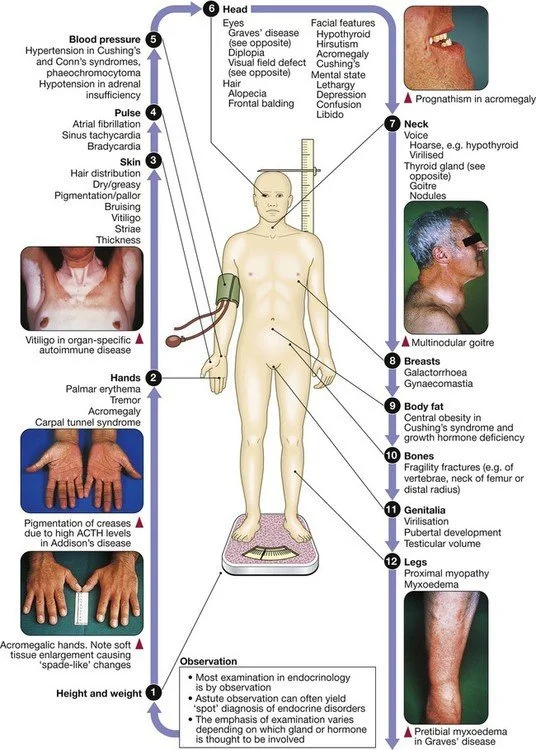
The clinical importance of mastering these syndromes is difficult to overstate. Diabetes mellitus alone affects roughly one in nine adults worldwide, thyroid dysfunction is among the most common laboratory abnormalities in primary care, and polycystic ovary syndrome may affect up to one in ten women of reproductive age. At the other extreme, conditions such as pheochromocytoma or Cushing's syndrome are rare but treatable causes of hypertension whose recognition can be life-saving; missing them costs years of morbidity and sometimes lives. What has changed most in the past decade is not the recognition of the syndromes but their treatment: diabetes care has been transformed from glucose-lowering into organ protection, Cushing's syndrome has acquired an armamentarium of targeted medical therapies formalized in the 2021 Pituitary Society consensus update, and adrenal insufficiency has been given its first dedicated international clinical practice guideline in 2024, jointly issued by the Endocrine Society and the European Society of Endocrinology (Hahner et al., 2024). This article systematically reviews the main syndromes of the endocrine system, organized by axis, integrating pathophysiology, clinical presentation, diagnostic reasoning, and contemporary management. It is written for the medical student and clinician who wishes to see the field whole: not as a list of diseases, but as a grammar of hormonal excess and deficiency.
2. Methods
This article was prepared as a narrative review informed by a structured search of the peer-reviewed literature and current clinical practice guidelines. PubMed, Google Scholar, and major society guideline repositories were searched through November 2025 using combinations of the terms "endocrine syndrome," "diabetes mellitus," "Standards of Care in Diabetes 2025," "hypothyroidism," "thyrotoxicosis," "Cushing syndrome," "adrenal insufficiency," "acromegaly," "hyperprolactinemia," "pheochromocytoma," "primary aldosteronism," "hyperparathyroidism," "polycystic ovary syndrome," and "polyglandular autoimmune syndrome." Priority was assigned to international guidelines (American Diabetes Association, Endocrine Society, American Thyroid Association, Pituitary Society, European Society of Endocrinology), landmark randomized trials, and recent authoritative reviews. Foundational literature was retained where it defined the clinical syndromes or established enduring diagnostic and therapeutic principles. All synthesis, clinical framing, and interpretation are original to this article; specific quantitative claims are attributed to their primary sources.
3. Results
3.1 Diabetes mellitus and the metabolic syndrome
No endocrine syndrome rivals diabetes mellitus in prevalence or consequence. Its cardinal presentation — the triad of polyuria, polydipsia, and unexplained weight loss with hyperglycemia — is as old as clinical medicine, and in type 1 diabetes it typically evolves over weeks to months, sometimes presenting catastrophically as diabetic ketoacidosis with dehydration, Kussmaul breathing, and altered consciousness. Type 2 diabetes, by contrast, is a syndrome of stealth: most patients are asymptomatic at diagnosis and are identified through screening, while the microvascular complications (retinopathy, nephropathy, neuropathy) and macrovascular disease accumulate silently over years. Diagnosis rests on fasting plasma glucose ≥126 mg/dL, HbA1c ≥6.5%, random glucose ≥200 mg/dL with symptoms, or an abnormal oral glucose tolerance test, with confirmation on a second occasion unless hyperglycemia is unequivocal.
The therapeutic philosophy of diabetes has undergone a genuine revolution. Where the twentieth century asked "how low can the glucose go," the twenty-first asks "which drugs protect the heart and kidney." The ADA Standards of Care in Diabetes 2025 recommend GLP-1 receptor agonists for people with type 2 diabetes and chronic kidney disease to reduce cardiovascular risk and protect renal function, and recommend GLP-1 receptor agonists or dual GIP/GLP-1 agonists for patients with obesity and heart failure with preserved ejection fraction to improve both glucose and heart failure symptoms (American Diabetes Association, 2025). SGLT2 inhibitors occupy a parallel pillar for patients with chronic kidney disease or heart failure, independent of glycemic targets, while metformin remains first-line background therapy and insulin remains indispensable in type 1 diabetes and in decompensated or advanced type 2 disease. The 2025 Standards also emphasize diabetes technology — continuous glucose monitoring is now recommended broadly, including for patients on non-insulin regimens — and sharpened attention to screening for complications, cardiovascular-kidney-metabolic risk, and comorbid obesity as a primary treatment target. The metabolic syndrome, the clustering of central obesity, hypertension, dyslipidemia, and insulin resistance, frames diabetes not as an isolated disorder of glucose but as the glycemic tip of a systemic vascular disease, and its management is fundamentally the management of that whole patient: weight, lipids, blood pressure, and lifestyle alongside glycemia.
3.2 Thyroid syndromes: thyrotoxicosis and hypothyroidism
The thyroid modulates the tempo of the body, and its two great syndromes are best remembered as acceleration and deceleration. Thyrotoxicosis — hormone excess at the tissue level, most commonly from Graves' disease, toxic nodular goiter, or thyroiditis — produces the sympathomimetic picture every student learns: weight loss despite voracious appetite, heat intolerance, sweating, tremor, palpitations and atrial fibrillation, anxiety, menstrual disturbance, proximal muscle weakness, and in Graves' disease the distinctive orbitopathy with lid retraction and exophthalmos. Diagnosis is anchored on a suppressed TSH with elevated free T4 and/or T3; etiological differentiation uses TSH-receptor antibodies (TRAb, positive in Graves'), radioactive iodine uptake, and thyroid ultrasound. Treatment follows the cause: thionamides (methimazole preferred except in the first trimester of pregnancy, where propylthiouracil is favored) as first-line for Graves', radioactive iodine or thyroidectomy as definitive options, and beta-blockers for symptomatic control of adrenergic features. The thyroid storm remains a life-threatening emergency requiring ICU-level care with high-dose thionamides, iodine, glucocorticoids, and aggressive supportive measures.
Hypothyroidism, overwhelmingly autoimmune (Hashimoto's) in iodine-replete regions, produces the mirror image: fatigue, cold intolerance, weight gain, constipation, dry skin, bradycardia, delayed relaxation of reflexes, depression, cognitive slowing, and in severe untreated cases the life-threatening decompensation of myxedema coma. The biochemical signature is elevated TSH with low free T4 in primary disease; treatment is levothyroxine replacement titrated to TSH, typically 1.6 μg/kg/day in young healthy adults, with dose adjusted upward in pregnancy and with careful, low-start dosing in the elderly and in coronary disease. Subclinical hypothyroidism — elevated TSH with normal free T4 — is common and generally managed conservatively below TSH 10 mIU/L, though treatment is favored in pregnancy, in young symptomatic patients, and with positive thyroid peroxidase antibodies.
3.3 Adrenal syndromes: cortisol excess, cortisol deficiency, and the adrenal medulla
Hypercortisolism, Cushing's syndrome, is perhaps the most feared "great mimicker" of endocrinology. Its hallmarks — central weight gain with thin extremities, moon facies, supraclavicular fat pads, wide purple striae, proximal myopathy, easy bruising, hypertension, hyperglycemia, osteoporosis, and neuropsychiatric disturbance — accrue over years, and diagnostic delay of several years is typical. Endogenous Cushing's is classified as ACTH-dependent (pituitary Cushing's disease, ~70%, or ectopic ACTH secretion) or ACTH-independent (adrenal adenoma, carcinoma, or bilateral hyperplasias). Diagnosis proceeds in two stages: establishing pathological cortisol excess with at least two first-line tests — 24-hour urinary free cortisol (ideally averaged over 2–3 collections), late-night salivary cortisol (sensitivity 75–90%, specificity 93–95% at a cutoff of 7.5 nmol/L), and the 1 mg overnight dexamethasone suppression test — followed by localization with plasma ACTH, pituitary MRI, adrenal imaging, and, where necessary, bilateral inferior petrosal sinus sampling (Fleseriu et al., 2021). Transsphenoidal adenomectomy by an experienced surgeon is first-line for Cushing's disease, with remission in approximately 80% of microadenomas and 60% of macroadenomas; medical therapy has expanded dramatically, and the 2021 consensus provides detailed guidance on adrenal steroidogenesis inhibitors (ketoconazole, metyrapone, osilodrostat, the latter with 86% maintenance of UFC normalization in randomized withdrawal), pituitary-directed agents (pasireotide, cabergoline), and the glucocorticoid receptor antagonist mifepristone, alongside radiotherapy and bilateral adrenalectomy for refractory disease (Fleseriu et al., 2021). Lifelong surveillance for recurrence is mandatory.
At the opposite pole stands adrenal insufficiency. Primary adrenal failure (Addison's disease, predominantly autoimmune in developed nations, with tuberculosis still leading globally) presents insidiously with fatigue, weight loss, nausea, salt craving, orthostatic hypotension, and the pathognomonic hyperpigmentation of elevated ACTH; hyponatremia, hyperkalemia, and hypoglycemia complete the biochemical picture. Secondary and tertiary forms — most commonly iatrogenic from chronic glucocorticoid therapy, the single most frequent cause overall — lack hyperpigmentation and hyperkalemia. Diagnosis rests on the cosyntropin stimulation test (peak cortisol below ~18 μg/dL, assay-dependent), confirmed by ACTH measurement. Treatment is glucocorticoid replacement with hydrocortisone in divided doses (15–25 mg/day) or equivalent, plus fludrocortisone in primary disease; the 2024 Endocrine Society/ESE joint guideline stresses patient education, sick-day rules, and provision of emergency steroid injectables, because the adrenal crisis — hypotension, vomiting, hyponatremia, hypoglycemia, collapse — remains a preventable cause of death in diagnosed patients (Hahner et al., 2024). Endocrinologists summarize this with a stark aphorism: in adrenal insufficiency, the most important medication is the one the patient knows to take before the ambulance arrives.
The adrenal medulla contributes its own dramatic syndrome: pheochromocytoma and paraganglioma, catecholamine-secreting tumors presenting with paroxysms of headache, sweating, palpitations, and episodic hypertension — the classic "rule of 10s" now obsolete, since roughly 15% are extra-adrenal, 10–15% malignant, and up to 40% hereditary, making genetic testing recommended for essentially all patients. Plasma free or urinary fractionated metanephrines are the screening test of choice, and alpha-adrenergic blockade must always precede surgery. Primary aldosteronism, meanwhile, has been rehabilitated from a "rare" cause of hypertension to its most common curable form — affecting an estimated 5–13% of hypertensives — screened by the aldosterone-to-renin ratio and managed with adrenalectomy for unilateral disease or mineralocorticoid receptor antagonists (spironolactone, eplerenone) for bilateral disease.
3.4 Pituitary syndromes
The pituitary, master gland of the anterior axes, produces syndromes of both excess and deficiency, and its stalk sits astride the water balance of the posterior gland. Acromegaly, from growth-hormone–secreting adenomas, is the archetype of insidious excess: gradual coarsening of facial features, enlarging hands and feet (the wedding ring that no longer fits, the shoe size that creeps upward), prognathism, macroglossia, sleep apnea, arthropathy, hypertension, and diabetes — typically evolving for nearly a decade before diagnosis. Screening is by IGF-1, confirmed by failure of GH suppression below 1 ng/mL (or lower with modern assays) during an oral glucose tolerance test; transsphenoidal surgery is first-line, with somatostatin receptor ligands (octreotide, lanreotide), the GH receptor antagonist pegvisomant, and dopamine agonists as medical options, and the oral octreotide capsule now an established alternative for injectable-responsive patients. Hyperprolactinemia, most often from a prolactinoma, is the most common functioning pituitary syndrome: galactorrhea, amenorrhea, infertility, and decreased libido in women; hypogonadism, erectile dysfunction, and mass effects in men. Macroprolactinomas produce headache and bitemporal hemianopia by chiasmal compression. Uniquely among pituitary tumors, prolactinomas are treated medically as first-line: dopamine agonists, cabergoline preferred over bromocriptine for efficacy and tolerability, normalize prolactin and shrink tumor in the great majority. Hypopituitarism, whether from tumor, surgery, radiation, infiltrative disease, Sheehan's syndrome, or traumatic brain injury, presents as the sequential loss of axes — growth hormone and gonadotropins first, then TSH and ACTH — and demands replacement in the correct order: cortisol before thyroid hormone, because initiating levothyroxine in untreated cortisol deficiency can precipitate adrenal crisis.
The posterior pituitary and hypothalamic thirst axis generate the twin syndromes of water balance. Central diabetes insipidus is the failure of ADH secretion which produces massive hypotonic polyuria and polydipsia with rising serum sodium; the syndrome of inappropriate antidiuresis (SIADH) — excess ADH action — produces euvolemic hyponatremia, a diagnostic staple of the hospital ward. Treatment of SIADH rests on fluid restriction and, in selected cases, urea, loop diuretics with salt, or vasopressin receptor antagonists; correction of chronic hyponatremia must be deliberately slow to avoid osmotic demyelination, one of the most feared iatrogenic complications in all of medicine.
3.5 Calcium-regulating syndromes
The parathyroid glands govern calcium with remarkable precision, and their two syndromes are among the most frequently tested in clinical medicine. Primary hyperparathyroidism — one adenoma in ~85% of cases — is most often discovered asymptomatically on routine calcium panels, though its classical teaching of "stones, bones, groans, and psychiatric moans" (nephrolithiasis, osteoporosis, abdominal symptoms, depression and cognitive change) still describes advanced disease. Diagnosis requires elevated or inappropriately normal PTH with hypercalcemia; parathyroidectomy is curative and indicated for symptomatic disease and for asymptomatic patients meeting age, calcium, bone density, or renal criteria. Hypoparathyroidism, most commonly postsurgical, produces the opposite: hypocalcemia with paresthesias, carpopedal spasm, Chvostek's and Trousseau's signs, and in severe cases laryngospasm and seizures. Treatment has modernized with recombinant PTH (rhPTH 1-84) therapy for patients inadequately controlled on conventional calcium and active vitamin D — with regulatory landscapes shifting in 2024–2025 as palopegteriparatide (TransCon PTH) gained approval as a once-daily prodrug — though conventional therapy remains the backbone for many.
3.6 Gonadal syndromes
Polycystic ovary syndrome is the most common endocrine disorder of reproductive-aged women, a syndrome defined by the Rotterdam criteria (any two of oligo/anovulation, clinical or biochemical hyperandrogenism, and polycystic ovarian morphology) and inextricably linked to insulin resistance, obesity, and long-term cardiometabolic risk. Its presentation — irregular menses, hirsutism, acne, infertility — belies its systemic nature; management combines lifestyle intervention as first-line, combined oral contraceptives for menstrual regulation and hyperandrogenism, letrozole for ovulation induction, and metformin for metabolic features, with the 2023 international evidence-based guideline emphasizing screening for diabetes, dyslipidemia, and mental health comorbidity across the lifespan (Teede et al., 2023). Male hypogonadism — libido loss, erectile dysfunction, infertility, reduced muscle mass, osteoporosis, with low testosterone and gonadotropins localizing primary versus central causes — and the menopause transition, now managed with increasingly individualized hormone therapy decisions, complete the gonadal axis.
3.7 Polyglandular syndromes
The endocrine system occasionally fails in patterns, and recognition of one syndrome mandates surveillance for others. Autoimmune polyglandular syndrome type 1 (APECED) presents in childhood with the classic triad of chronic mucocutaneous candidiasis, hypoparathyroidism, and Addison's disease; type 2 (Schmidt's syndrome) combines autoimmune adrenal insufficiency with autoimmune thyroid disease and/or type 1 diabetes, and its recognition carries practical urgency because undiagnosed adrenal insufficiency can be fatal when hypothyroidism is treated first. Multiple endocrine neoplasia syndromes — MEN1 (parathyroid, pituitary, pancreatic neuroendocrine tumors) and MEN2 (medullary thyroid carcinoma, pheochromocytoma, hyperparathyroidism) — are hereditary tumor syndromes in which genetic diagnosis and cascade screening have transformed outcomes.
4. Discussion
Surveying these syndromes together, several cross-cutting lessons emerge. The first is the primacy of clinical pattern recognition. Endocrine disease is diagnosed by the clinician who notices — the purple striae, the delayed ankle jerk, the paroxysmal headache with palpitations, the bride whose ring no longer fits — long before the laboratory is engaged; dynamic and confirmatory testing then confirms what the history and examination proposed. The second is the logic of axes: nearly every gland sits under hypothalamic-pituitary control, so that the same clinical syndrome (say, hypothyroidism) may arise at the gland itself or at the pituitary or hypothalamus, and correct localization — by the pattern of trophic and target hormones — determines treatment. The third is the principle of replacement and restraint: endocrinology is perhaps the most physiologic of specialties in therapy, replacing what is missing in the pattern the body would have produced, and removing or blocking what is excessive — but always with respect for feedback, since suppressing one axis can unmask or induce failure of another, as the cortisol-before-thyroxine rule and the sick-day rules of adrenal insufficiency illustrate.
The fourth lesson is that endocrine therapy has become increasingly outcomes-driven. Diabetes management is now defined less by HbA1c than by cardiovascular, renal, and heart-failure endpoints (American Diabetes Association, 2025); Cushing's therapy is guided by formal consensus on biochemical monitoring and medical options (Fleseriu et al., 2021); and adrenal insufficiency care has been codified around prevention of adrenal crisis (Hahner et al., 2024). The fifth is the human one. Endocrine syndromes are, disproportionately, chronic and lifelong: the patient with Addison's or type 1 diabetes or hypopituitarism manages their hormones every day, through illness, pregnancy, surgery, and stress, in partnership with the clinician. The "syndrome" on the page is, for the patient, a daily discipline, and the quality of education, the reliability of sick-day rules, and the accessibility of follow-up matter as much as the choice of molecule.
This review has limitations. It is a narrative synthesis, not a systematic review, and the breadth of the topic necessarily sacrifices depth in each subspecialty area. Practice varies between guidelines and health systems, and fast-moving areas like obesity pharmacotherapy, thyroid hormone formulations, adrenal PTH analogs which may evolve beyond the account given here. The reader is encouraged to consult the primary society guidelines for disease-specific decision-making.
5. Conclusion
The main syndromes of the endocrine system reduce, at their core, to three disturbances — excess, deficiency, and resistance — expressed across a half-dozen axes. Their mastery rewards the clinician handsomely: diabetes and thyroid disease populate every clinic; adrenal and pituitary syndromes, though rarer, are among the most satisfying diagnoses in medicine precisely because they are treatable, and sometimes curable, when recognized. The contemporary management of these syndromes is increasingly evidence-based, organ-protective, and patient-centered, yet the entry point remains unchanged: a clinician attentive to pattern, a history taken with care, and a physical examination performed with intention. The hormones speak quietly; the skill is learning to listen.
References
American Diabetes Association Professional Practice Committee. Standards of Care in Diabetes—2025. Diabetes Care. 2025;48(Suppl 1):S1–S352.
Fleseriu M, Auchus R, Bancos I, et al. Consensus on diagnosis and management of Cushing's disease: a guideline update. Lancet Diabetes Endocrinol. 2021;9(12):847–875.
Hahner S, Ross RJ, Arlt W, et al. Adrenal insufficiency. Nat Rev Dis Primers. 2021;7:19; and Endocrine Society/European Society of Endocrinology Joint Clinical Practice Guideline on Adrenal Insufficiency, 2024.
Pearce SHS, Brabant G, Duntas LH, et al. 2013 ETA Guideline: Management of Subclinical Hypothyroidism. Eur Thyroid J. 2013;2:215–228 (with subsequent updates).
Ross DS, Burch HB, Cooper DS, et al. 2016 American Thyroid Association Guidelines for Diagnosis and Management of Hyperthyroidism. Thyroid. 2016;26(10):1343–1421.
Jonklaas J, Bianco AC, Bauer AJ, et al. Guidelines for the Treatment of Hypothyroidism (American Thyroid Association Task Force). Thyroid. 2014;24(12):1670–1751.
Melmed S, Casanueva FF, Hoffman AR, et al. Diagnosis and treatment of hyperprolactinemia: an Endocrine Society clinical practice guideline. J Clin Endocrinol Metab. 2011;96(2):273–288.
Katznelson L, Laws ER Jr, Melmed S, et al. Acromegaly: an Endocrine Society clinical practice guideline. J Clin Endocrinol Metab. 2014;99(11):3933–3951.
Lenders JWM, Kerstens MN, Amar L, et al. Genetics, diagnosis, management and future directions of pheochromocytoma and paraganglioma: ESE practice guideline. Eur J Endocrinol. 2020;183(3):G1–G11.
Funder JW, Carey RM, Mantero F, et al. The management of primary aldosteronism: Endocrine Society clinical practice guideline. J Clin Endocrinol Metab. 2016;101(5):1889–1916.
Bilezikian JP, Brandi ML, Eastell R, et al. Guidelines for the management of asymptomatic primary hyperparathyroidism: summary statement from the Fourth International Workshop. J Clin Endocrinol Metab. 2014;99(10):3561–3569.
Khan AA, et al. Evaluation and management of hypoparathyroidism: 2022 International Task Force guidelines. J Bone Miner Res. 2022;37(12):2551–2585.
Teede HJ, Tay CT, Laven JJE, et al. Recommendations from the 2023 International Evidence-based Guideline for the Assessment and Management of Polycystic Ovary Syndrome. J Clin Endocrinol Metab. 2023;108(10):2447–2469.
Bhasin S, Brito JP, Cunningham GR, et al. Testosterone therapy in men with hypogonadism: Endocrine Society clinical practice guideline. J Clin Endocrinol Metab. 2018;103(5):1715–1744.
Bornstein SR, Allolio B, Arlt W, et al. Diagnosis and treatment of primary adrenal insufficiency: an Endocrine Society clinical practice guideline. J Clin Endocrinol Metab. 2016;101(2):364–389.
Bando H, Iguchi G. Diagnostic and therapeutic strategies for hypopituitarism. Front Endocrinol (Lausanne). 2023;14:1229302.
Nieman LK, Biller BMK, Findling JW, et al. The diagnosis of Cushing's syndrome: an Endocrine Society clinical practice guideline. J Clin Endocrinol Metab. 2008;93(5):1526–1540.
ElSayed NA, et al. Updates from the 2025 American Diabetes Association guidelines on standards of medical care in diabetes. Explor Endocr Metab Disord. 2025;2:101428.